Skip to content
Epomedicine

Mnemonics, Simplified Concepts & Thoughts

Epomedicine

Mnemonics, Simplified Concepts & Thoughts

Post-snake bite compartment syndrome : Predictors

Epomedicine, Aug 29, 2020Aug 29, 2020

The indentification of snake species is often difficult at the time of presentation of snake bite and as the interaction between the victim and snake venom is variable.

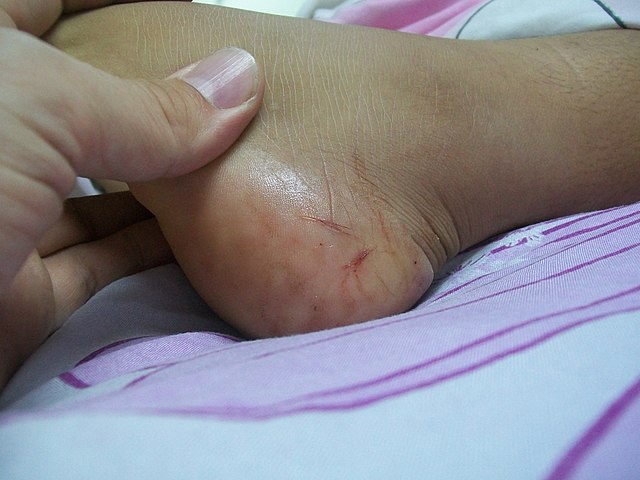
snake bite compartment syndrome
Bobjgalindo / CC BY-SA

Hsu et.al. conducted a single center retrospective study to find out the possible predictors of the post-snake bite compartment syndrome (PSCS). They found out that:

  1. Elevated WBC and AST can be useful predictors of PSCS
  2. Cutoff value for WBC: 11,650/μL
  3. Cutoff value for AST: 33.5 U/L
6 Ps and 3 As of Compartment Syndrome

What may be the explanation for WBC and AST as the markers of post-snake bite compartment syndrome?

These markers may indicate an increase in the inflammatory or cytokine reaction after a severe snakebite and envenomation. Proteins and cytokines produced during the acute phase will induce further leukocytosis. Release of AST from RBC from acute hemolysis and skeletal muscle from necrosis causes further rise in AST.

Advice from the study

Patients with snakebites and locoregional symptoms with elevated markers should be observed for 48 h to exclude the possibility of PSCS.

Further reading: Hsu, C., Chuang, J., Hsu, Y. et al. Predictors of the development of post-snakebite compartment syndrome. Scand J Trauma Resusc Emerg Med 23, 97 (2015). https://doi.org/10.1186/s13049-015-0179-y
  • Facebook
  • Twitter
PGMEE, MRCS, USMLE, MBBS, MD/MS Emergency medicine

Post navigation

Previous post
Next post

Related Posts

PGMEE, MRCS, USMLE, MBBS, MD/MS

Parasympathetic ganglia of Head and Neck

Aug 25, 2023Aug 26, 2023

Important points: Mnemonics: 1. COPS 3977 2. C is 3rd letter hence related to cranial nerve III 3. S for Sphenopalatine and Submandibular and S for Seven and is related to Superior Salivatory nucleus 4. All postganglionic fibers are carried by trigeminal nerve (Cranial nerve V) Ganglion Nucleus Pre-ganglionic Post-ganglionic…

Read More
PGMEE, MRCS, USMLE, MBBS, MD/MS elbow joint anatomy

Pediatric Lateral Condyle Humerus Fracture : Review

Nov 19, 2015May 25, 2023

A) Epidemiology: B) Mechanism of Injury: C) Classifications: a. Milch: Fracture line based – b. Jakob and Weiss: Displacement and articular congruency based – Modified Weiss classification: No need for arthrogram1. Type I: <2 mm displacement2. Type II: 2-4 mm displacement 3. Type III: >4 mm displacement (displacement of >4…

Read More
PGMEE, MRCS, USMLE, MBBS, MD/MS

Levels of Disease Prevention : Mnemonic

Aug 18, 2024Aug 18, 2024

Level Mnemonic Target population Goals Mode of intervention Primordial Prevent risk factors General population Prevent emergence of risk factors Health educationHealth promotion Primary Prevent disease General population Prevent disease onset Lifestyle modificationImmunization Secondary Screening Subclinical (asymptomatic) Prevent symptom onset Early diagnosisPrompt optimized & sustained care Tertiary Treatment Clinical (symptomatic) Prevent…

Read More

Leave a Reply Cancel reply

Your email address will not be published. Required fields are marked *

This site uses Akismet to reduce spam. Learn how your comment data is processed.

Epomedicine. Post-snake bite compartment syndrome : Predictors [Internet]. Epomedicine; 2020 Aug 29 [cited 2025 Dec 15]. Available from: https://epomedicine.com/medical-students/snake-bite-compartment-syndrome-predictors/.

Pre-clinical (Basic Sciences)

Anatomy

Biochemistry

Community medicine (PSM)

Embryology

Microbiology

Pathology

Pharmacology

Physiology

Clinical Sciences

Anesthesia

Dermatology

Emergency medicine

Forensic

Internal medicine

Gynecology & Obstetrics

Oncology

Ophthalmology

Orthopedics

Otorhinolaryngology (ENT)

Pediatrics

Psychiatry

Radiology

Surgery

RSS Ask Epomedicine

  • What to study for Clinical examination in Orthopedics?
  • What is the mechanism of AVNRT?

Epomedicine weekly

  • About Epomedicine
  • Contact Us
  • Author Guidelines
  • Submit Article
  • Editorial Board
  • USMLE
  • MRCS
  • Thesis
©2025 Epomedicine . All rights reserved.