Skip to content
Epomedicine

Mnemonics, Simplified Concepts & Thoughts

Epomedicine

Mnemonics, Simplified Concepts & Thoughts

Kienbock’s Disease : Mnemonic Approach

Dr. Sulabh Kumar Shrestha, MS Orthopedics, Jul 18, 2024Jul 18, 2024

Etiology

Mnemonic: RSTUV

  1. Radial inclination – decreased
  2. Shape of lunate (Type 1 has more proximal apex; Type 2 & 3 are more rectangular)
    • Type 1 lunate is seen with negative ulnar variance and possess highest risk of Kienbock’s disease
  3. Trauma (repetitive micro-fractures or single fracture)
  4. Ulnar variance – negative (increased radial-lunate contact stress)
  5. Vascular anatomy (3 patterns – X, Y, I)
    • “I” pattern (single vessel to lunate) – highest risk of avascular necrosis
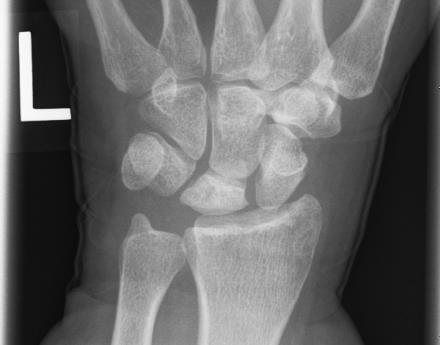
Kienbock's disease
Negative ulnar variance with Sclerosis of lunate (Kienbock’s disease)
Muzichick, CC BY-SA 4.0, via Wikimedia Commons

Lichtman Classification and Management

StageDescriptionTreatment
Mnemonic: ABCDMnemonic: ABCD
IAbnormal MRI (decreased T1 intensity; variable T2 intensity) or scintigraphyAnalgesics + immobilization
IIBone sclerosis ± Bone breaks (fracture lines)Bony procedures:
1. Negative or Neutral ulnar variance: Joint levelling procedure (Radius shortening osteotomy; Ulnar lengthening)

2. Positive ulnar variance: Revascularization procedures (pedicled vascularized bone graft from dorsal distal radius), Distal radius core decompression, Radial wedge osteotomy
IIICollapse of wrist with:
ANormal carpal alignmentSame as stage II
BFixed scaphoid rotationCarpal fusion (STT or SC)
Carpectomy (PRC)
IVDegenerative changes of wristDeliverance (Salvage)
1. Proximal row carpectomy (PRC – allows capitate to articulate into lunate fossa)
2. Wrist arthrodesis
3. Wrist denervation
4. Total wrist arthroplasty
dr. sulabh kumar shrestha
Dr. Sulabh Kumar Shrestha, MS Orthopedics

He is the section editor of Orthopedics in Epomedicine. He searches for and share simpler ways to make complicated medical topics simple. He also loves writing poetry, listening and playing music. He is currently pursuing Fellowship in Hip, Pelvi-acetabulum and Arthroplasty at B&B Hospital.
  • Facebook
  • Twitter
PGMEE, MRCS, USMLE, MBBS, MD/MS Musculoskeletal systemOrthopedics

Post navigation

Previous post
Next post

Related Posts

PGMEE, MRCS, USMLE, MBBS, MD/MS

Calcium Metabolism

Jul 6, 2022Jul 6, 2022

Functions Mnemonic: Six ‘C’s Contraction of muscles (Coupling of excitation-contraction) Conduction in nerves Cardiac function Coagulation in blood (Co-factor) Communication (intracellular messengers) for hormones, autacoids and transmitters Cementing (mineralization) of bone – Compressive strength Distribution Average young adult = 1200 gm calcium 99% in bone as calcium hydroxyapatite 1% in…

Read More
PGMEE, MRCS, USMLE, MBBS, MD/MS

Foot Drop : Differentials

Jun 8, 2023Jun 8, 2023

Foot drop can result from: L5 radiculopathy Lumbar plexopathy Sciatic neuropathy Peroneal neuropathy Causes Disc herniation, Spinal canal stenosis Pelvic surgery, hematoma, prolonged labor Hip surgery, Injection injury Compression/trauma Motor Weakness includes muscles and hip abductors Weakness includes hip abductors and anal sphincter Weakness includes tibial and hamstring muscles Weakness…

Read More
PGMEE, MRCS, USMLE, MBBS, MD/MS

Juncturae Tendinum

Oct 5, 2020Oct 5, 2020

Synonyms: Connexus intertendinei, Intertendinous connections Plural: Juncturae tendinae Location: Intermetacarpal spaces in dorsum of hand between the extensor digitorum tendons Morphologic types: The usual pattern is that it gets thicker from radial to ulnar side. Type 1: Thin filamentous (square, rhomboidal or triangular) – present only in 2nd metacarpal space…

Read More

Leave a Reply Cancel reply

Your email address will not be published. Required fields are marked *

This site uses Akismet to reduce spam. Learn how your comment data is processed.

Shrestha SK. Kienbock’s Disease : Mnemonic Approach [Internet]. Epomedicine; 2024 Jul 18 [cited 2025 Dec 15]. Available from: https://epomedicine.com/medical-students/kienbocks-disease-mnemonic-approach/.

Pre-clinical (Basic Sciences)

Anatomy

Biochemistry

Community medicine (PSM)

Embryology

Microbiology

Pathology

Pharmacology

Physiology

Clinical Sciences

Anesthesia

Dermatology

Emergency medicine

Forensic

Internal medicine

Gynecology & Obstetrics

Oncology

Ophthalmology

Orthopedics

Otorhinolaryngology (ENT)

Pediatrics

Psychiatry

Radiology

Surgery

RSS Ask Epomedicine

  • What to study for Clinical examination in Orthopedics?
  • What is the mechanism of AVNRT?

Epomedicine weekly

  • About Epomedicine
  • Contact Us
  • Author Guidelines
  • Submit Article
  • Editorial Board
  • USMLE
  • MRCS
  • Thesis
©2025 Epomedicine . All rights reserved.