Skip to content
Epomedicine

Mnemonics, Simplified Concepts & Thoughts

Epomedicine

Mnemonics, Simplified Concepts & Thoughts

ABG Interpretation Made Easy

Epomedicine, Jun 16, 2023May 18, 2024

Normal values

  1. pH: 7.35-7.45
  2. PaCO2: 35-45 mmHg (4.7-6 kPa)
  3. PaO2: 75-100 mmHg
  4. HCO3-: 22-26 mEq/L
  5. SaO2: 94-100%
  6. Base excess: -2 to +2 mmol/L
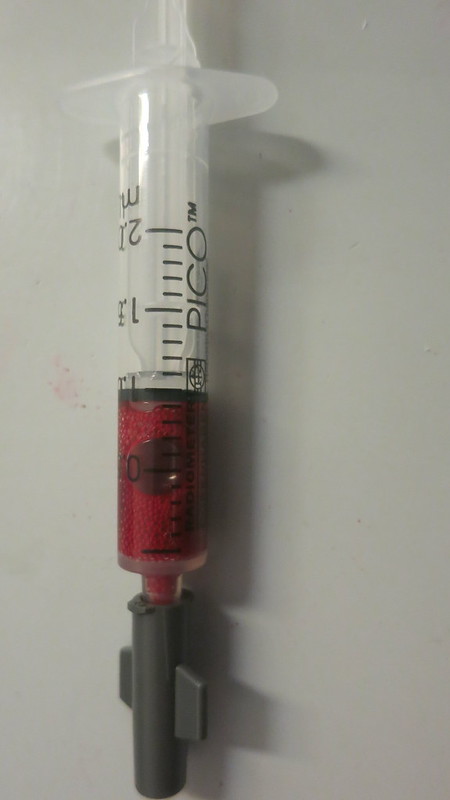
abg
“Arterial blood for arterial bloog gas analysis” by jlcampbell104 is marked with Public Domain Mark 1.0. To view the terms, visit https://creativecommons.org/publicdomain/mark/1.0/?ref=openverse.

Step 1: pH

  1. >7.45 = Alkalemia
  2. <7.35 = Acidemia
  3. 7.35-7.45 = Normal or Complete compensation

Step 2: pCO2

  1. Increased = Respiratory acidosis or compensation of metabolic alkalosis
    • Determine chronicity by looking at metabolic compensation:
      • Acute: 10 Δ pCO2 = 0.08 Δ pH (opposite direction)
      • Chronic: 10 Δ pCO2 = 0.03 Δ pH
  2. Decreased = Respiratory alkalosis or compensation of metabolic acidosis

Step 3: HCO3-

  1. Increased = Metabolic alkalosis (VOMED) or compensation of respiratory acidosis
  2. Decreased = Metabolic acidosis or compensation of respiratory alkalosis
    • Determine anion-gap (AG): Normal = 5-12 (or 2.5 X Albumin)
      • AG = Na – [Cl – HCO3]
        • AG increased = Anion gap acidosis (MUDPILES/GOLDMARK)
        • AG decreased = Non-anion gap (hyperchloremic) acidosis (GUT/HARDUP)

Step 4: Determine compensation

If there is metabolic acidosis or alkalosis, determine if there is appropriate respiratory compensation:

  1. Expected pCO2 = 1.5 X [HCO3] + 8 +/- 2 (Winter’s formula) OR
  2. Expected pCO2 = last 2 digits of pH

No respiratory compensation: Expected pCO2 = Measured pCO2

Respiratory compensation: Expected pCO2 ≠ Measure pCO2

Step 5: Delta ratio

ΔAG / ΔHCO3

  • 1 = No other derangements
  • >1.5 = Superimposed metabolic alkalosis
  • <0.8 = Superimposed non-anion gap metabolic acidosis

Mnemonics

MUDPILES:

  1. Methanol/Metformin
  2. Uremia
  3. DKA
  4. Paraldehyde
  5. INH
  6. Lactic acidosis
  7. Ethylene glycol
  8. Salicylates

GOLDMARK:

  1. Glycols
  2. Oxoproline
  3. L-lactate (standard lactate seen in lactic acidosis)
  4. D-lactate (exogenous lactate produced by gut bacteria)
  5. Methanol
  6. Aspirin
  7. Renal failure
  8. Ketones (diabetic, alcoholic, starvation)

GUT:

  1. Gastrointestinal losses (diarrhea, pancreatic fistula)
  2. Urinary losses
  3. Total parenteral nutrition

HARDCUP:

  1. Hyperchloremia
  2. Acetazolamide, Addison’s disease
  3. Renal tubular acidosis
  4. Diarrhea, iliostomies, fistula
  5. Cholestyramine
  6. Ureteroenterostomies
  7. Pancreatoenterostomies

VOMED:

  1. Vomiting or aspiration
  2. Overcorrection of chronic hypercarbia or any acidosis
  3. Mineralocorticoid excess
  4. Ethylene glycol poisoning/Early sepsis
  5. Diuretics/Diarrhea
  • Facebook
  • Twitter
PGMEE, MRCS, USMLE, MBBS, MD/MS AnesthesiaBiochemistryEmergency medicineInternal medicinePediatricsRenal and ElectroloyteRespiratory system

Post navigation

Previous post
Next post

Related Posts

PGMEE, MRCS, USMLE, MBBS, MD/MS

Apt Test in Newborn: Maternal vs Neonatal Blood

Nov 19, 2022Nov 19, 2022

We had few cases of suspected GI bleeding, admitted or referred to our NICU. One was case of Hematochezia and other was case of fresh blood in vomitus. Both babies were born to mother with Antepartum hemorrhage. The general condition of the babies were fine, and the vitals. There was…

Read More
PGMEE, MRCS, USMLE, MBBS, MD/MS

Modified Ficat-Arlet Staging for AVN hip : Mnemonic

Jun 15, 2020Jun 15, 2020

Ficat and Arlet first classified avascular necrosis of femoral head (AVN) in 1964 before the advent of MRI which was later modified and published in 1985 to include pre-radiographic stages relying on invasive testing procedures. The classification system later underwent further modifications that include MRI findings, patient symptoms and modifies…

Read More
PGMEE, MRCS, USMLE, MBBS, MD/MS

Radiological Lines for assessing Basilar Invagination : Mnemonic

Nov 24, 2024Feb 21, 2025

Mnemonic: Imagine a letter “Z“. a. McRae’s line has “R” and is at Roof. b. Chamberlain’s line starts with “C” and is at Center. c. McGregor’s line has “G” and is at Ground. a. McRae’s line (foramen magnum line): drawn from anterior margin of foramen (basion) to posterior margin of…

Read More

Leave a Reply Cancel reply

Your email address will not be published. Required fields are marked *

This site uses Akismet to reduce spam. Learn how your comment data is processed.

Pre-clinical (Basic Sciences)

Anatomy

Biochemistry

Community medicine (PSM)

Embryology

Microbiology

Pathology

Pharmacology

Physiology

Clinical Sciences

Anesthesia

Dermatology

Emergency medicine

Forensic

Internal medicine

Gynecology & Obstetrics

Oncology

Ophthalmology

Orthopedics

Otorhinolaryngology (ENT)

Pediatrics

Psychiatry

Radiology

Surgery

RSS Ask Epomedicine

  • What to study for Clinical examination in Orthopedics?
  • What is the mechanism of AVNRT?

Epomedicine weekly

  • About Epomedicine
  • Contact Us
  • Author Guidelines
  • Submit Article
  • Editorial Board
  • USMLE
  • MRCS
  • Thesis
©2026 Epomedicine | WordPress Theme by SuperbThemes