Skip to content
Epomedicine

Mnemonics, Simplified Concepts & Thoughts

Epomedicine

Mnemonics, Simplified Concepts & Thoughts

Neuroanatomy Notes

Dr. Sulabh Kumar Shrestha, MS Orthopedics, Sep 20, 2019Jul 25, 2021
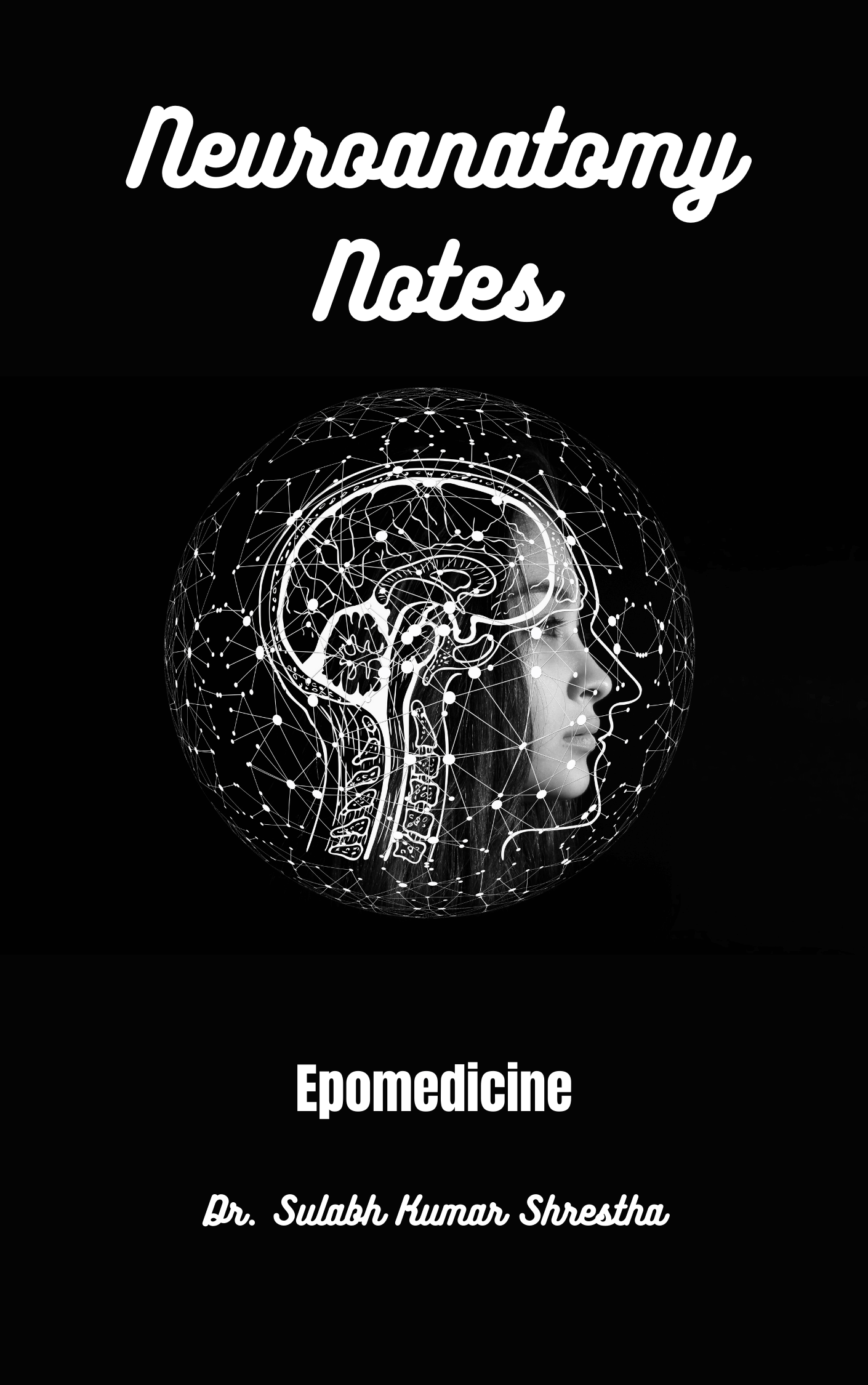
neuroanatomy notes cover

This is a compilation of high yield topics on neuroanatomy with visual mnemonics and illustrations targeted for undergraduate medical students who find difficulty in conceptualizing the nervous system.

Author: Dr. Sulabh Kumar Shrestha

Key features:

  1. Covers clinically and academically important topics
  2. Schematic diagrams
  3. Visual mnemonics
  4. Useful for medical students, PG and USMLE aspirants

Chapters:

  1. How to draw mid-brain cross-section?
  2. How to draw pons cross-section?
  3. How to draw medulla cross-section?
  4. Spinal cord cross-section and tracts simplified
  5. Vertebro-basilar arterial systems and syndromes
  6. Circle of willis – mnemonics and drawing
  7. Circle of willis and blood supply of forebrain
  8. Dural reflections and venous sinuses
  9. Microanatomy of cerebral cortex
  10. Brodmann areas and lesions
  11. Thalamic connections
  12. Nuclei of hypothalamus
  13. Internal capsule
  14. Simplified basal ganglia
  15. CSF circulation
  16. Trigeminal nerve
  17. Facial nerve
  18. Auditory pathway and Vestibular pathway
  19. 10 retinal layers
  20. Visual pathway
  21. Horizontal conjugate gaze pathway
  22. Limbic system
  23. Brown-sequard syndrome – Anatomical basis
  24. Lateral medullary syndrome (Wallenberg syndrome) – Anatomical basis
  25. Medial medullary syndrome (Djerine syndrome) – Anatomical basis
  26. Brachial plexus
  27. Lumbar plexus
Download
dr. sulabh kumar shrestha
Dr. Sulabh Kumar Shrestha, MS Orthopedics

He is the section editor of Orthopedics in Epomedicine. He searches for and share simpler ways to make complicated medical topics simple. He also loves writing poetry, listening and playing music. He is currently pursuing Fellowship in Hip, Pelvi-acetabulum and Arthroplasty at B&B Hospital.
39 shares
  • Facebook39
  • Twitter
PGMEE, MRCS, USMLE, MBBS, MD/MS AnatomyBooksNervous system

Post navigation

Previous post
Next post

Related Posts

PGMEE, MRCS, USMLE, MBBS, MD/MS pedigree analysis

Solving Pedigree Analysis in 3 steps

Jan 23, 2017

First: Look for Mitochondrial Inheritance Female transmits disease to all the offsprings (both males and females). Male doesn’t transmit the disease and only the females transmit the disease. If Mitochondrial inheritance is absent, go to second step. Second: Look if the gene is Dominant, Recessive Dominant: Atleast one member in…

Read More
PGMEE, MRCS, USMLE, MBBS, MD/MS

Antiarrhythmics Classification (Vaughan Williams)

May 27, 2024May 27, 2024

Understand the conducting system of heart, cardiac action potential and pacemaker action potential. Mnemonic to remember Vaughan Williams classification for anti-arrhythmic – Some Block Potassium Channel DAAM! Mnemonic Class Mechanism of action Comments Example Use Some IA Sodium channel blocker (moderate)Intermediate action Moderate ↓ phase 0 slope↑ EFR & AP…

Read More
PGMEE, MRCS, USMLE, MBBS, MD/MS protein-c-s mnemonic

Protein C and S pathway – Mnemonic

May 23, 2019May 23, 2019

Factor Va and VIIIa are different in coagulation cascade. They are the co-factors for factor Xa and IXa respectively. Another mnemonic: protein C Cuts Coagulation by Cutting Cofactors (Va and VIIIa) Protein S is cofactor for protein S. Protein C and S pathway using the mnemonic: Time To: Thrombin (factor…

Read More

Comments (2)

  1. salma says:
    Dec 1, 2020 at 10:33 pm

    Thank you so much for sharing this ! it’s amazing. However there are alot of blurred text in this documnet so I would appreciate it if u could fix that to facilitate learning

    Reply
  2. Ayvee says:
    Feb 23, 2023 at 1:31 am

    Please upload a newer version because some words are blurred and can’t be read properly.. Thanks!!!

    Reply

Leave a Reply to Ayvee Cancel reply

Your email address will not be published. Required fields are marked *

This site uses Akismet to reduce spam. Learn how your comment data is processed.

Pre-clinical (Basic Sciences)

Anatomy

Biochemistry

Community medicine (PSM)

Embryology

Microbiology

Pathology

Pharmacology

Physiology

Clinical Sciences

Anesthesia

Dermatology

Emergency medicine

Forensic

Internal medicine

Gynecology & Obstetrics

Oncology

Ophthalmology

Orthopedics

Otorhinolaryngology (ENT)

Pediatrics

Psychiatry

Radiology

Surgery

RSS Ask Epomedicine

  • What to study for Clinical examination in Orthopedics?
  • What is the mechanism of AVNRT?

Epomedicine weekly

  • About Epomedicine
  • Contact Us
  • Author Guidelines
  • Submit Article
  • Editorial Board
  • USMLE
  • MRCS
  • Thesis
©2026 Epomedicine | WordPress Theme by SuperbThemes