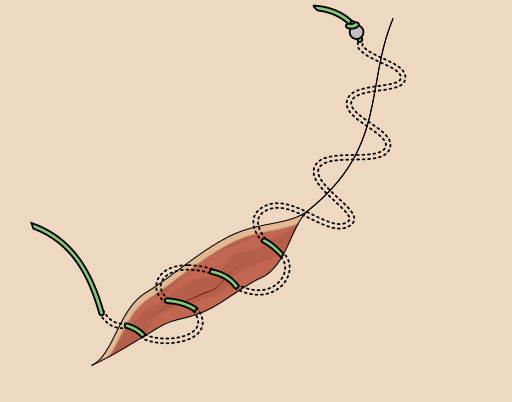
1. Start with a buried knot at distal apex of the wound. 2. Take a bite deep to the epidermis that should curve parallel to the skin surface and exit in the same plane approximately 5-10mm along the wound, taking care to stay at the same level. 3. Continue step…
Tag: Orthopedics
Section Editor: Dr. Sulabh Kumar Shrestha, MBBS, PGY1 Orthopedics
Clinical Skills and Approaches
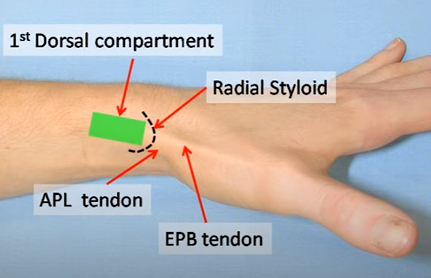
Injection technique for De Quervain’s Tenosynovitis
Syringe Preparation: Position: Comfortably seated with neutral forearm rotation with radial styloid facing upwards – position the wrist in slight ulnar deviation. Technique:
PGMEE, MRCS, USMLE, MBBS, MD/MS

SCFE : Mnemonic Approach
Approach to a limping child General points Classification Management depends on 4 factors which can be remembered using the mnemonic SCFE. Stability and Severity a. Loder classification: b. Severity: Severity Southwick angle on frog-leg lateral view (Difference of head-shaft angle from normal side) Wilson slip % on AP or frog-leg…
PGMEE, MRCS, USMLE, MBBS, MD/MS
Talus Anatomy : Mnemonic
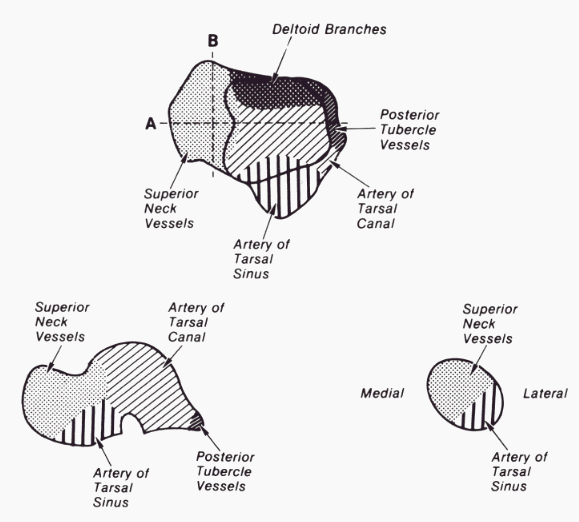
Mnemonic: 0, 1, 2, 3, 4, 5 0 : Attachments of muscles and tendons 1 : Sinus and Canal 2 : Processes and Tubercles 3 : Parts 4 : Blood vessels: 5 : Articulating surfaces
PGMEE, MRCS, USMLE, MBBS, MD/MS
Management of Skeletal Tuberculosis – Principles
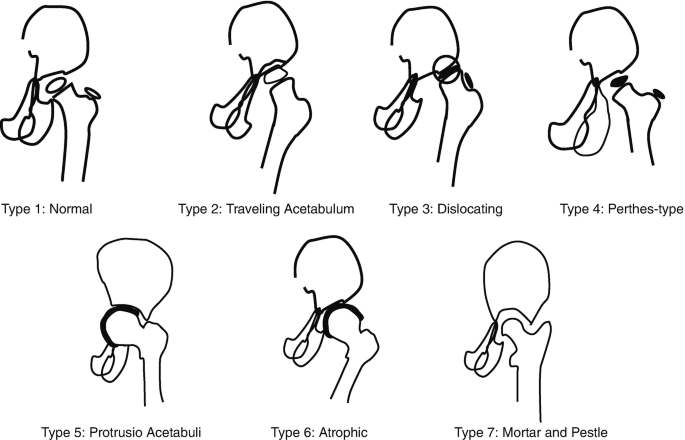
Classification Stage/Type Pott’s spine (Kumar’s) Pott’s paraplegia (Tuli) Hip and Knee Hip (Shanmugasundaram) I Predestructive (Straightening, spasm, hyperemia) Negligible (Objective plantar extensor response or ankle clonus) Synovitis (ROM 75-100%/Haziness, rarefaction)– Hip: FAbER, Apparent lengthening Normal (C) II Early destructive (Diminished space, paradiscal erosion, K<10) Mild (Subjective neuro-deficit but walks with…
PGMEE, MRCS, USMLE, MBBS, MD/MS
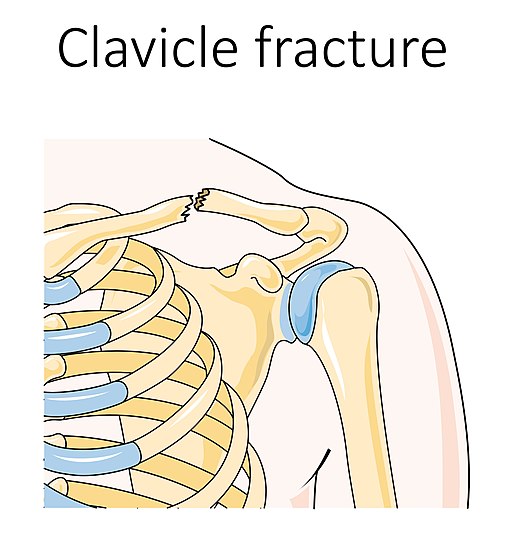
Clavicle Fractures : Last Minute Revision
1. 80-85% are mid-shaft fractures (other 10-15% are lateral 3rd and 5% are medial 3rd fractures) because of: 2. Deforming forces: 3. X-ray views: 4. Allman classification: Dameron and Rockwood classification for lateral 1/3 pediatric fractures: Type I: Mild strains of ligaments or periosteal tears Type II: Complete disruption of…
Clinical Skills and Approaches
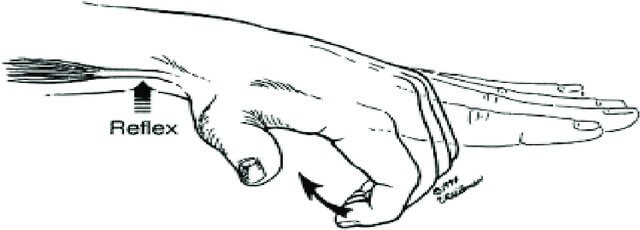
Inverted Reflexes
An inverted tendon reflex refers to the elicitation of the movement opposite to that normally seen when the reflex is elicited. Mechanism of Inverted Reflexes A lesion which simultaneously affects: This leads to 2 components: Mechanisms of hyperactive response: Types of Inverted Reflexes 1. Inverted supinator reflex: 2. Paradoxical triceps…
Clinical Skills and Approaches
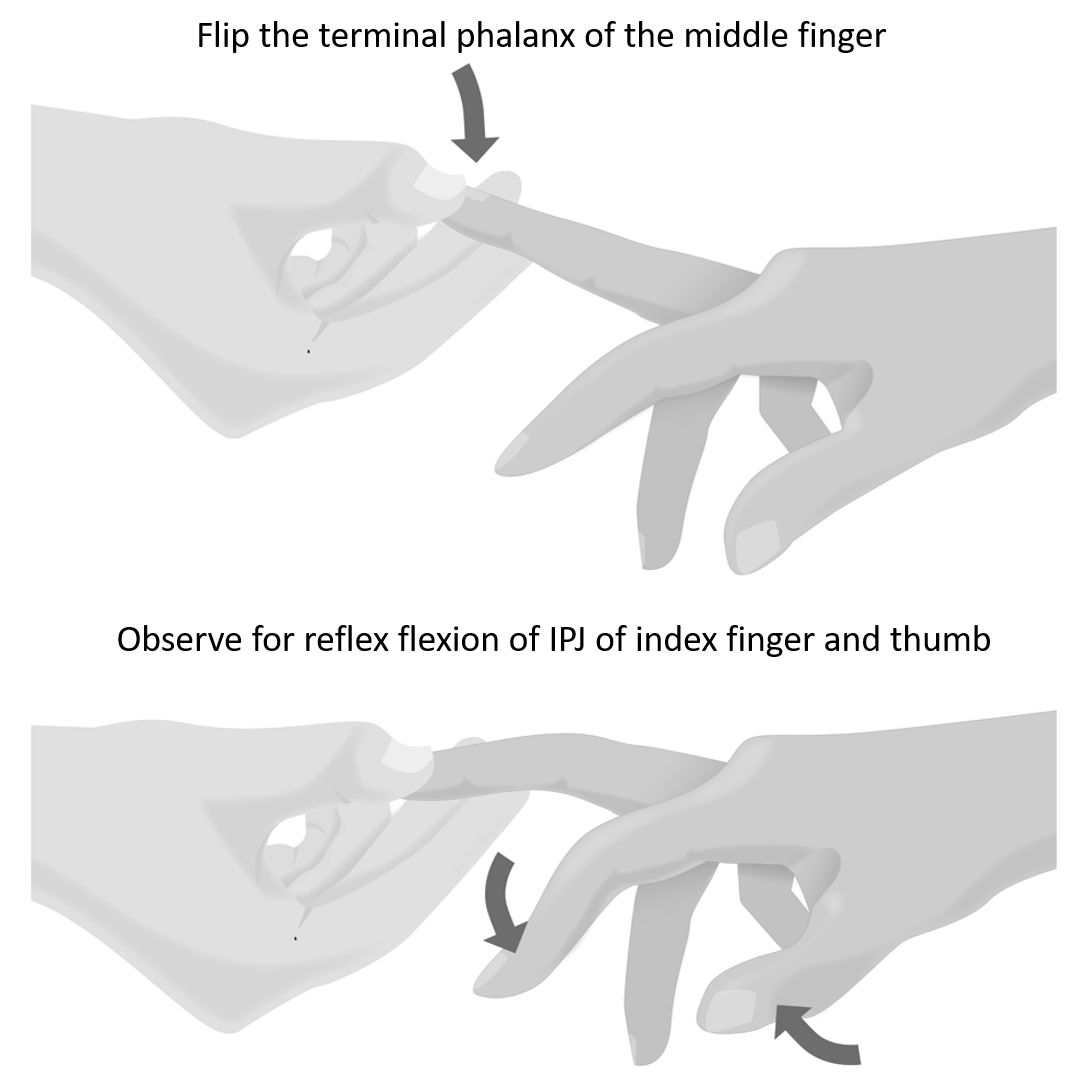
Hoffmann’s Sign
History Method of Eliciting Hoffmann’s Reflex Mechanism of Positive Hoffmann’s Reflex Sudden stretch of the finger flexors causes involuntary finger flexor contraction due to activation of a monosynaptic stretch reflex. Exaggeration of the reflex is caused by hyperreflexia in the setting of upper motor neuron dysfunction. Upper motor neuron lesions…