HISTORY
Mnemonic: 4D-3E-2Fg-2H
1. Define “Dizziness”:
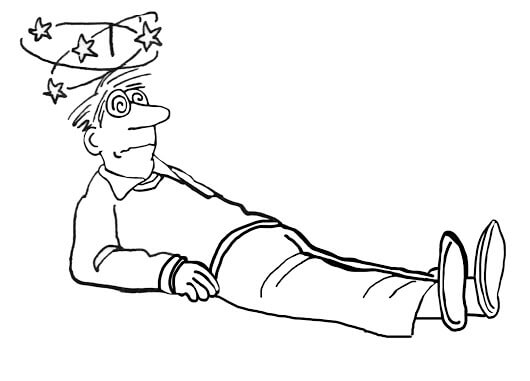
- Room is spinning/rocking/somersaulting – Vertigo
- Feel like “going to faint” – Near-syncope
- “Going to fall” or “Unsteady on feet” – Disequilibrium
- Feel like they’ve or are “left their body” or “floating/swimming” – Psychophysiologic dizziness
2. Duration of each episode:
- Seconds: BPPV
- Minutes: TIA or Vertebro-basilar insufficiency
- Hours: Meniere’s disease and Migraines
- Continuous for days: Labyrinthitis, Vestibular neuronitis
3. Diplopia, Dysarthria, Dysphagia, Gait abnormalities or orther focal neurologic complaints – Central cause of vertigo
4. Dysrhythmia symptoms – Chest pain, Shortness of breath or Palpitations
5. Exacerbation:
- With head turning, lying down, or rolling over in bed – vertigo
- Change in head position – BPPV
- Loud sounds – “Tulio phenomenon” (Perilymph fistula or Meniere’s disease)
- With standing from sitting/reclining position – orthostatic hypotension
- Walking or standing compared with sitting or lying – disequilibrium
- Stress – psychogenic vertigo
6. Eyes:
- Vertigo that decreases with visual fixation (more with eyes closed) – vestibular (peripheral) origin
- Vertigo that doesn’t lessen with visual fixation (same with eyes open or closed) – central origin
7. Ears:
- Hearing loss: Cerumen impaction, Otitis media, Cerebello-pontine angle tumors
- Tinnitus: Meniere’s disease, Acoustic neuroma, Medication toxicity
6. Febrile viral illness: Recent viral illness – Labyrinthitis or Vestibular neuronitis
7. Food association: Caffeine and lactate may precipitate panic attacks
8. Head trauma in past: BPPV
9. Headache: Migraine or Vertebro-basilar insufficiency
Examination
Eyes for Nystagmus
Vestibular origin:
- Fast component – beats towards the side of lesion
- Inhibited by visual fixation
- Direction of nystagmus doesn’t change with the direction of gaze
- Nystagmus is fatiguable
Central origin:
- Nystagmus is not inhibited by visual fixation
- Nystagmus changes direction with the change in direction of gaze
- Nystagmus is not fatiguable
Ears
- External auditory canal: vesicles (Ramsay-hunt syndrome), cerumen, cholesteatoma
- Tympanic membrane: signs of otitis media
- Hearing: unilateral hearing loss in labyrinthitis, cerumen impaction, meniere’s disease or acoustic neuroma
Neurologic Examination
- Cranial nerves
- Cerebellar signs
- Romberg’s sign:
- Sensory ataxia: Patient loses balance when eyes are closed (removal of visual compensation)
- Cerebellar ataxia: Patient loses balance on standing regardless of eyes being open or closed
- Gait
Clinical Tests
1. Orthostatic hypotension: fall in systolic blood pressure of at least 15–20mmHg within 2 minutes of standing upright.
3. Head thrust/impulse test: The patient’s head is quickly rotated about 15° to the side while the patient fixates on the examiner’s nose. With unilateral peripheral vestibular loss (like labyrinthitis or vestibular neuritis), the eyes cannot maintain focus, and a saccade (quick rotation of the eyes from one fixation point to another) will occur bringing the eyes back to the examiner’s nose.
4. Hennebert’s test: Reproduction of symptoms on pneumatic otoscopy
- True positive – perilymphatic fistula
- False positive – meniere’s disease and otosyphilis
Other examinations must not be missed:
- Vital signs
- Cardiovascular examination