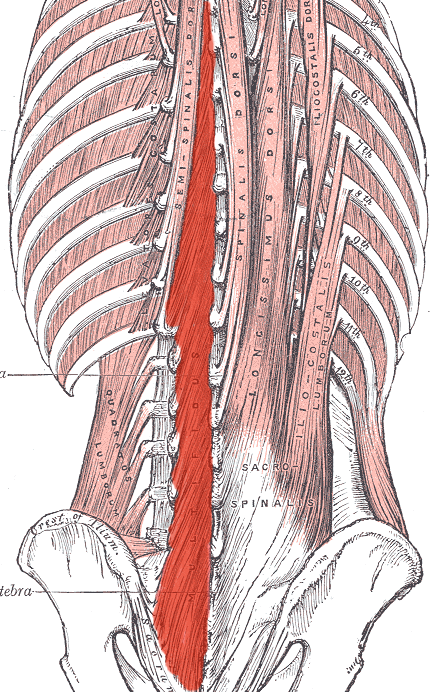
A. Superficial Group (Appendicular group) Arise from vertebral column and attach to shoulder (assist in movement of limbs) a. Most superficial: Trapezius (From external occipital protuberance, ligamentum nuchae and spinous process C7-T12) Latissimus dorsi (From spinous process T7-T12, thoracolumbar fascia and iliac crest) b. Covered by trapezius: Levator scapulae (From…
Category: PGMEE, MRCS, USMLE, MBBS, MD/MS
Medical knowledge in bullet points with understandable language, simplified images and graspable mnemonics.
PGMEE, MRCS, USMLE, MBBS, MD/MS
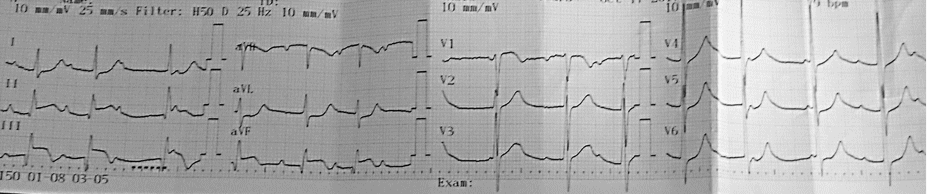
GRACE, HEART and TIMI score Mnemonics : Cardiac Chest Pain Risk Stratification
GRACE Score Mnemonic: GRACE A. Global Registry of Acute Coronary Events B. Renal: Creatinine C. Age D. Cardiac: Heart rate Systolic blood pressure Cardiac arrest at admission Killip class: I – No CHF II – Basal rales and/or JVD III – Pulmonary edema IV – Cardiogenic shock E. ECG and…
PGMEE, MRCS, USMLE, MBBS, MD/MS
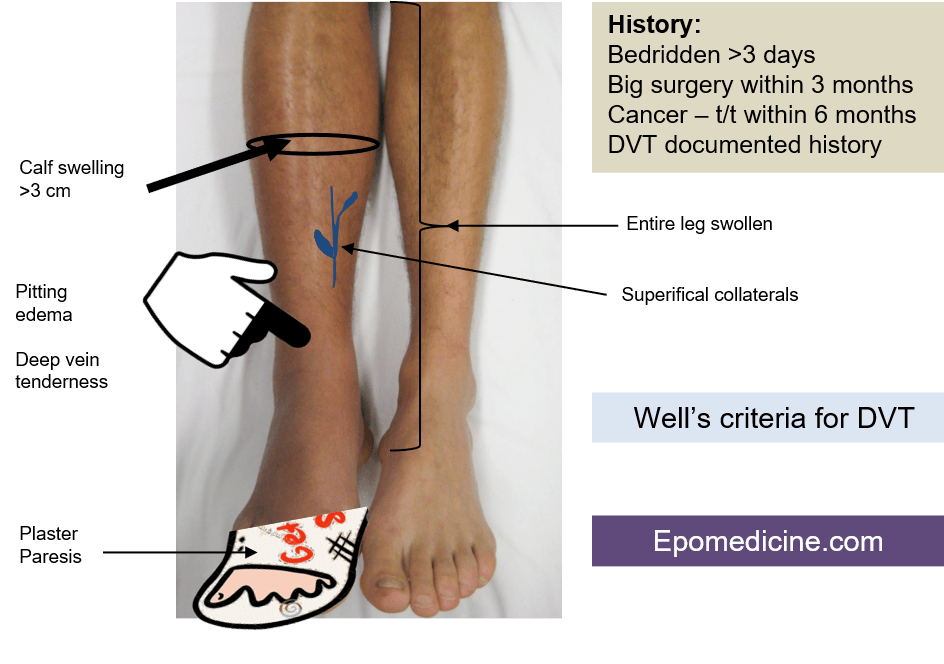
Well’s criteria for DVT with Mnemonic
Mnemonic: ABCD(CD)E(CDE) – 4P A: Alternate diagnosis of DVT more likely (-2) B: Bedridden recently >3 days or Big (major) surgery within 3 months (+1) C: Cancer – treatment or palliation within 6 months (+1) D: Deep venous involvement: Mnemonic – CD Collateral (non-varicose) superficial veins present (+1) Deep venous…
PGMEE, MRCS, USMLE, MBBS, MD/MS
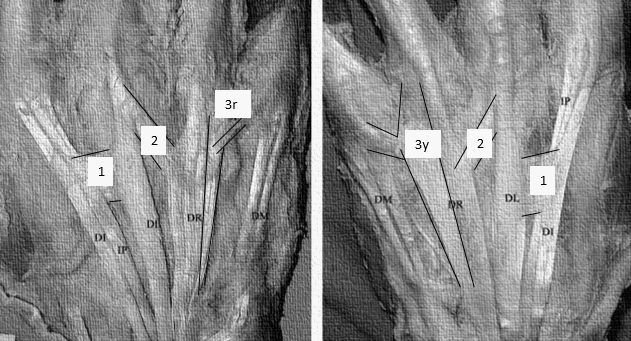
Juncturae Tendinum
Synonyms: Connexus intertendinei, Intertendinous connections Plural: Juncturae tendinae Location: Intermetacarpal spaces in dorsum of hand between the extensor digitorum tendons Morphologic types: The usual pattern is that it gets thicker from radial to ulnar side. Type 1: Thin filamentous (square, rhomboidal or triangular) – present only in 2nd metacarpal space…
PGMEE, MRCS, USMLE, MBBS, MD/MS
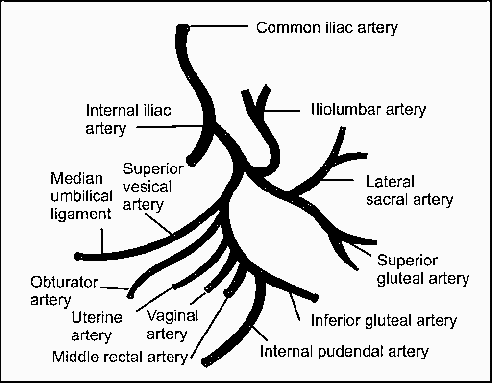
Internal Iliac Artery Anatomy : Simplified
Origin L5-S1 (common iliac artery bifurcation; anterior to SI joint) Course Extends down and posteriorly ~4 cm until superior margin of greater sciatic foramen and bifurcates into 2 trunks (in 60% cases) – Anterior trunk: continuation of the main artery towards ischial spine Posterior trunk: passes towards greater sciatic foramen…
PGMEE, MRCS, USMLE, MBBS, MD/MS
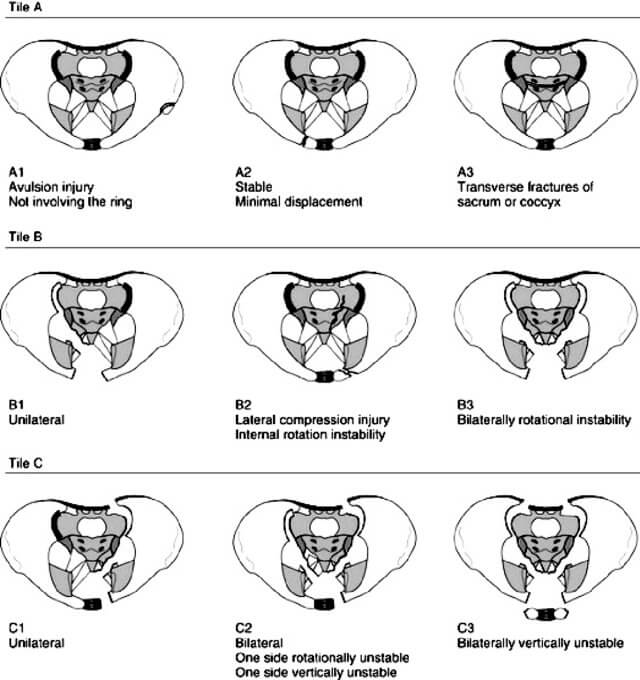
Pelvic Fracture Classification and Management : Simplified
Before proceeding to this topic, it would be wise to go through the topics listed below: Tile/AO Classification Tile classification divides pelvic fractures into three basic types according to stability based on the integrity of the posterior sacroiliac complex. Here is a mnemonic that can be used to remember tile…
PGMEE, MRCS, USMLE, MBBS, MD/MS
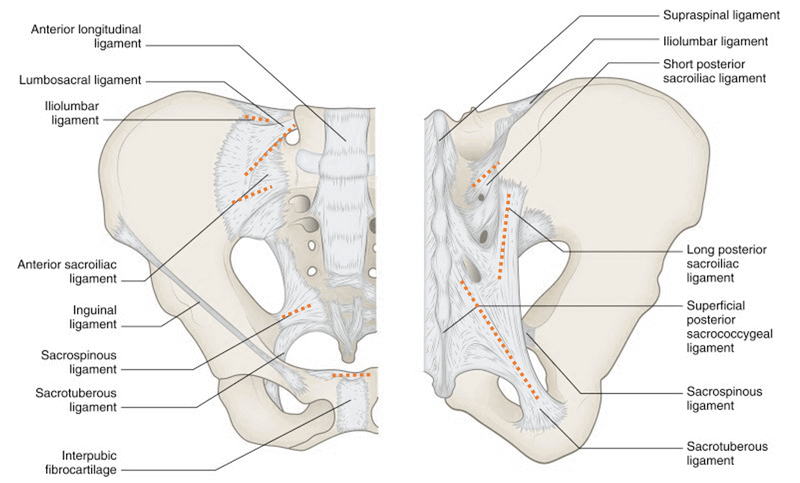
Ligaments of Pelvis
Inherent stability of the pelvis is provided by ligaments. The 3 groups of ligaments are: 1. Sacrum to Pelvis: Sacroiliac ligamentous complex: is divided into posterior (short and long) and anterior ligaments. Posterior ligaments provide most of the stability. Sacrotuberous ligament: runs from the posterolateral aspect of the sacrum and the…
PGMEE, MRCS, USMLE, MBBS, MD/MS
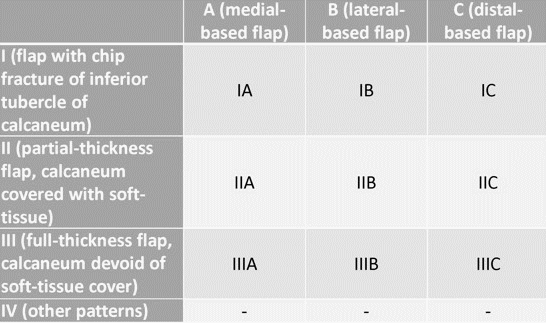
Heel Pad Avulsion Injuries
Special Anatomic Features of Heel Pad Heel pad form an almost fully contained cup-like structure consisting of skin overlying a shell of connective tissue within which fibrous septa ramify throughout the heel connecting the underlying periosteum of the calcaneus to the overlying reticular dermis, thereby anchoring skin to bone. Most…