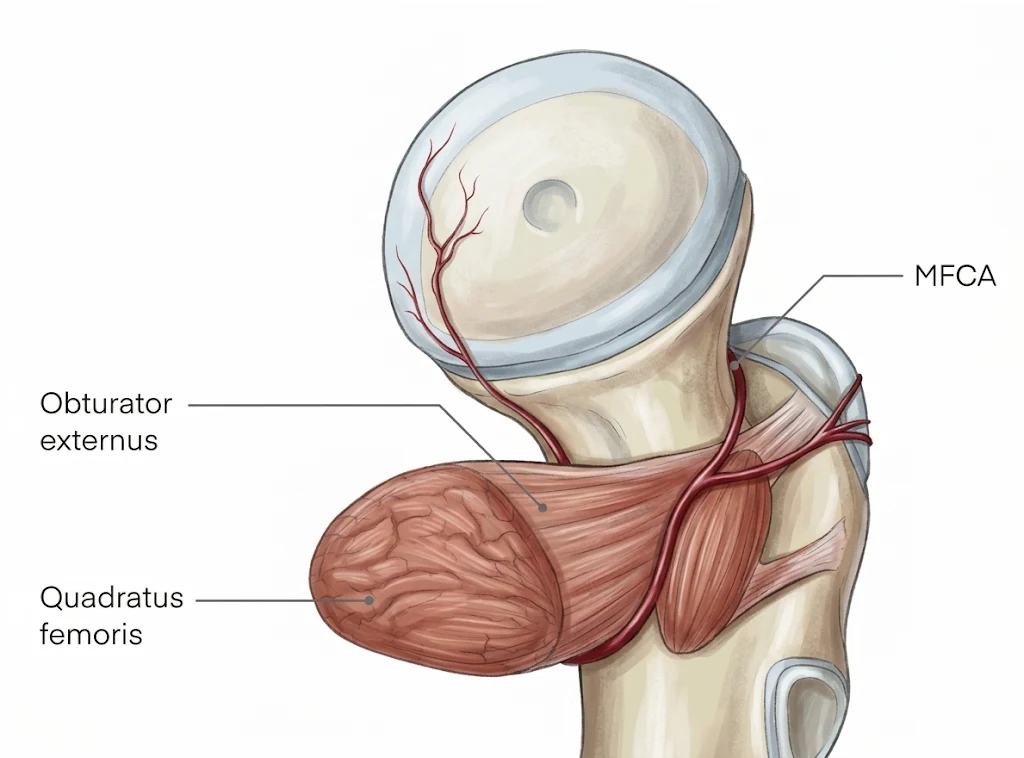
A posterior hip dislocation puts the femoral head at risk of avascular necrosis (AVN) in between 5-60% of patients, depending on the delay in reduction and the severity of fracture-dislocation. The classic explanation is that the dislocated head kinks, stretches or tears the vessels that feed it. A 2013 study…
Category: PGMEE, MRCS, USMLE, MBBS, MD/MS
Medical knowledge in bullet points with understandable language, simplified images and graspable mnemonics.
PGMEE, MRCS, USMLE, MBBS, MD/MS

Why a Toilet Paper Subscription Beats Bulk Buying
Bulk buying toilet paper has a straightforward appeal: buy more, pay less per roll, make fewer trips to the store. That logic holds up in a lot of cases. But it skips over what happens to a large stockpile between the day it’s purchased and the day the last roll…
PGMEE, MRCS, USMLE, MBBS, MD/MS
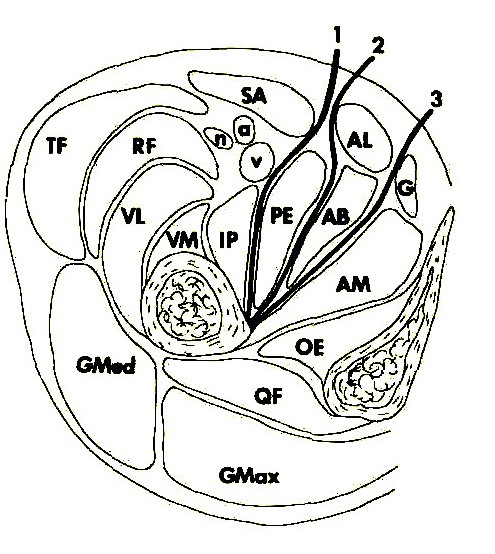
Medial Approaches to Hip
Indications: Surgical planes: Lowa/Iowa/Weinstein-Ponseti (Anteromedial) Ludloff (Anteromedial) Ferguson (Posteromedial) Developed in 1979 1908 1973 Superficial interval Between sartorius (anterior) and adductor longus (posterior) Between sartorius (anterior) and adductor longus (posterior) Between adductor longus (anterior) and gracilis (posterior) Deep interval Between femoral neurovascular bundle (anterior) and pectineus (posterior) Between pectineus (anterior)…
PGMEE, MRCS, USMLE, MBBS, MD/MS
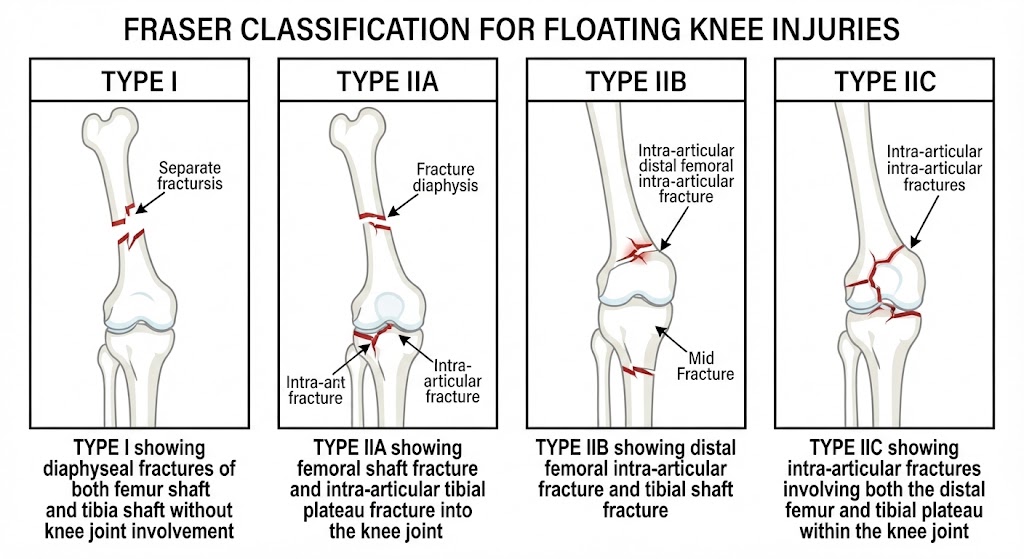
Floating Knee – Quick Review
The term “floating knee,” introduced by Blake and McBryde in 197 is used to describe fractures of the ipsilateral femur and tibia. Fractures can occur anywhere along the femur and the tibia and must occur in both bones to be considered a floating knee injury. Classification of Floating Knee Types…
PGMEE, MRCS, USMLE, MBBS, MD/MS
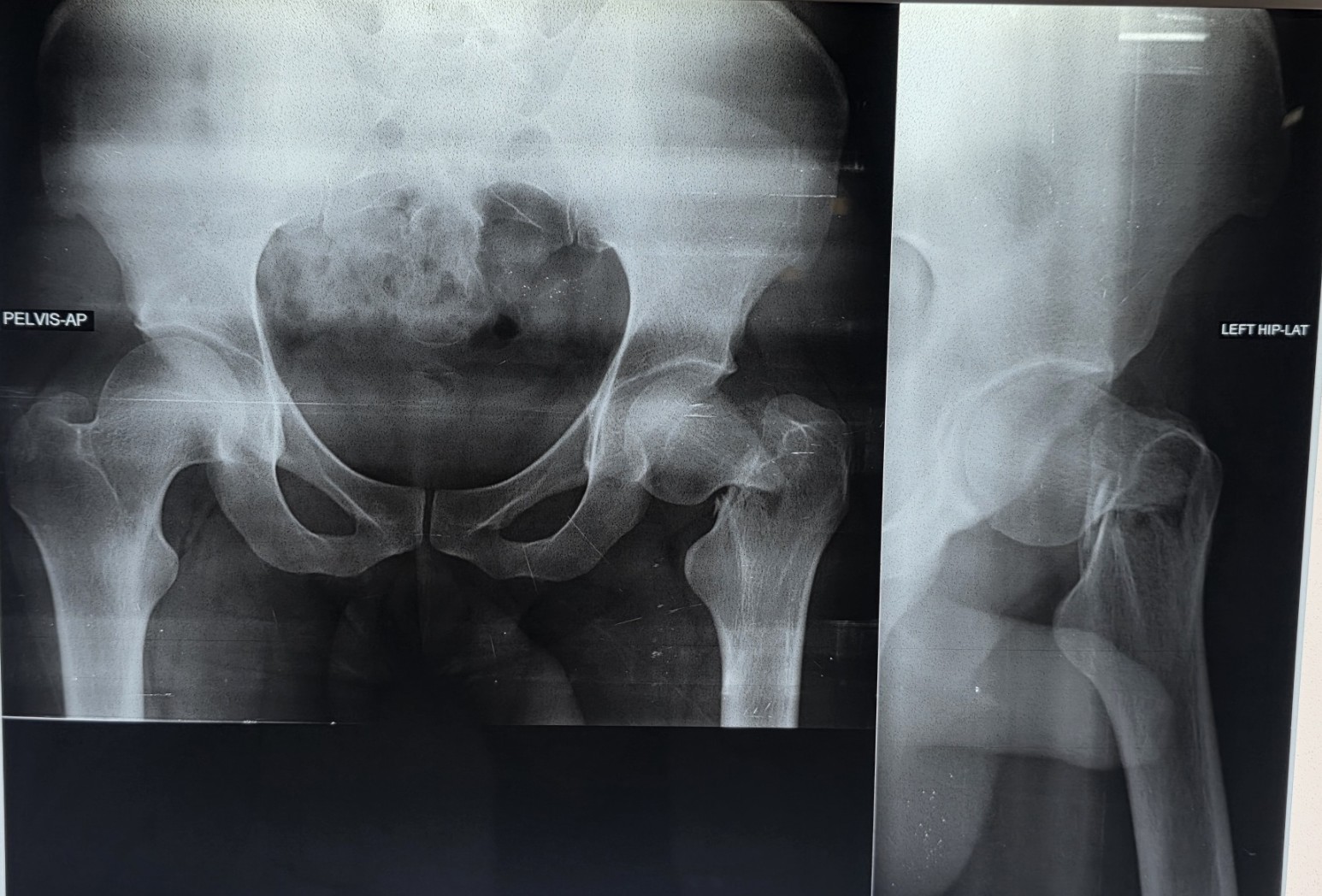
Ipsilateral Femoral Neck and Shaft Fracture
General Treatment Options 1. Reconstruction/cephalomedullary nail 2. Plate + screw/DHS fixation Other strategies include: Which Fracture First? For a displaced femoral neck fracture, reduction and temporary stabilization with guidewires can prevent further displacement. A practical sequence is: Stabilizing the shaft can facilitate reduction of the displaced neck fracture and help…
PGMEE, MRCS, USMLE, MBBS, MD/MS
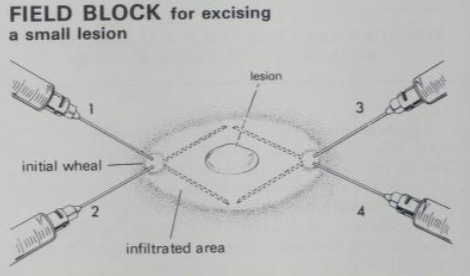
Infiltration Anaesthesia: Principles, Technique, and Practical Considerations
Infiltration anaesthesia is one of the simplest and most useful techniques of local anaesthesia, particularly when resources are limited or when general anaesthesia is undesirable. It can be used alone for minor procedures or combined with regional nerve blocks for larger operations. Common applications include wound suturing, circumcision, excision of…
PGMEE, MRCS, USMLE, MBBS, MD/MS
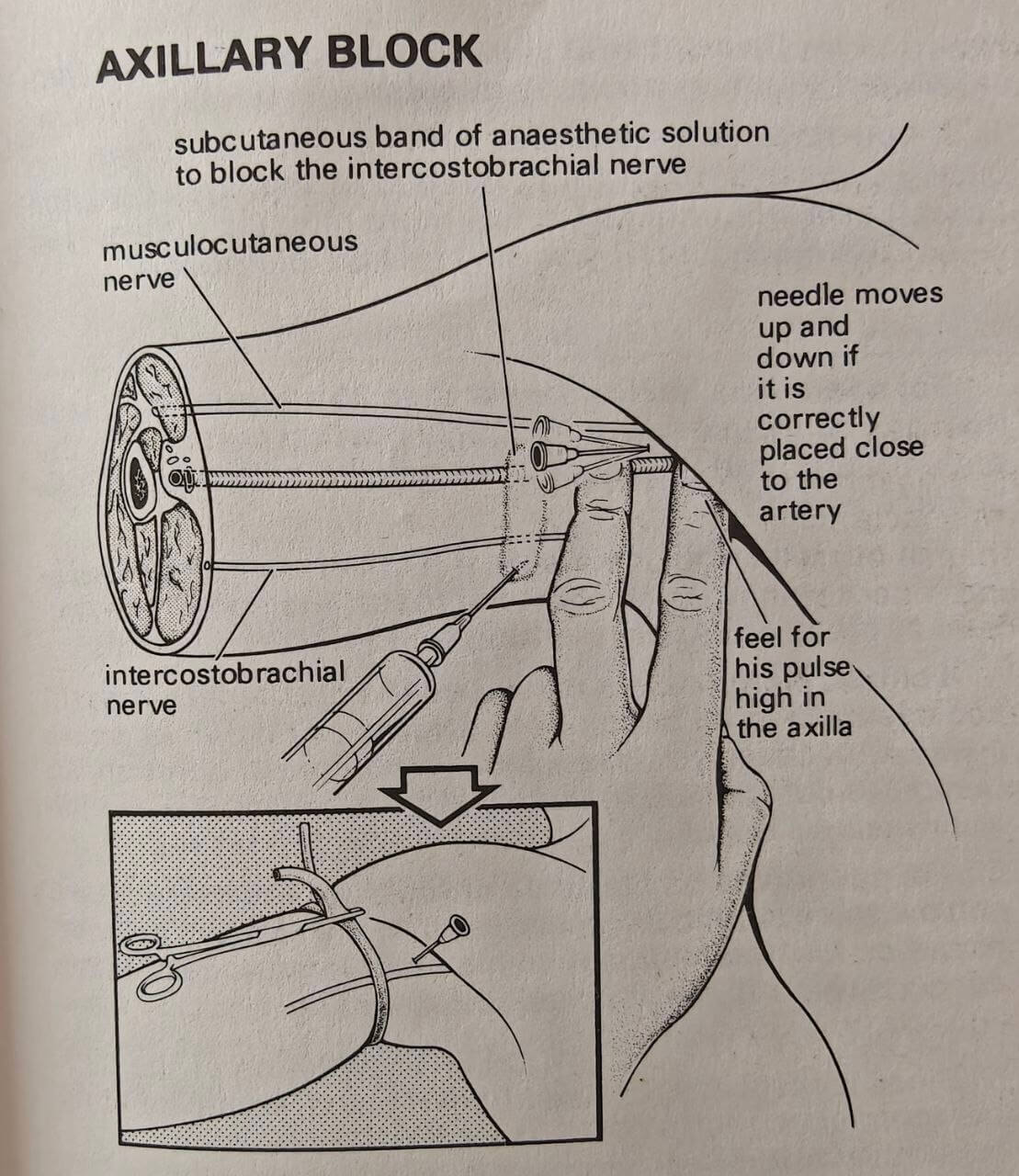
Axillary Block : Landmark Technique
Indications: Surgeries distal to and including patient’s elbow Contraindications: Dose: 0.5% bupivacaine and/or 2% lignocaine with adrenaline (below calculated maximum doses) + NS Equipment: Use a 0.8 X 40 mm needle Method: Pitfalls: Reference: Primary Anaesthesia – Edited by Maurice King
PGMEE, MRCS, USMLE, MBBS, MD/MS

MRI Basics Made Easy
Physics behind MRI has been explained here: The strength of signal depends on proton density and two relaxation times T1 and T2. T1 depends on the time proton takes to return to axis of magnetic field and T2 is the time proton takes to dephase. Most of the pathological lesions…