Skip to content
Epomedicine

Mnemonics, Simplified Concepts & Thoughts

Epomedicine

Mnemonics, Simplified Concepts & Thoughts

Internal Iliac Artery Anatomy : Simplified

Epomedicine, Oct 5, 2020Oct 5, 2020

Origin

L5-S1 (common iliac artery bifurcation; anterior to SI joint)

Course

Extends down and posteriorly ~4 cm until superior margin of greater sciatic foramen and bifurcates into 2 trunks (in 60% cases) –

  • Anterior trunk: continuation of the main artery towards ischial spine
  • Posterior trunk: passes towards greater sciatic foramen
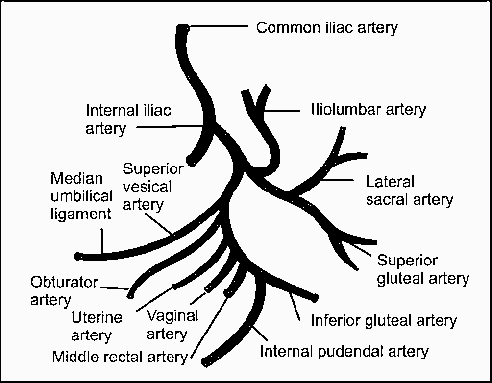
internal iliac artery anatomy

The anatomy is highly variable and may differ from books to books, person to person and even from right side to the left side in the same person.

Branches from anterior trunk

Four to pelvic viscera:
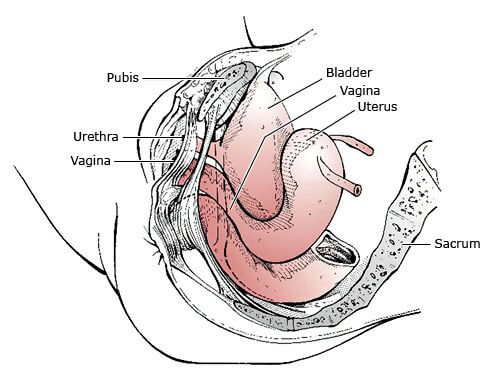
pelvic viscera
  1. Urinary bladder: Superior vesical artery, Inferior vesical artery (male)/Vaginal artery, Umbilical artery (in fetus; medial umbilical ligament in adults)
  2. Uterus/Vagin: Uterine artery, Vaginal artery (females)
  3. Rectum: Middle rectal artery

Three exits:
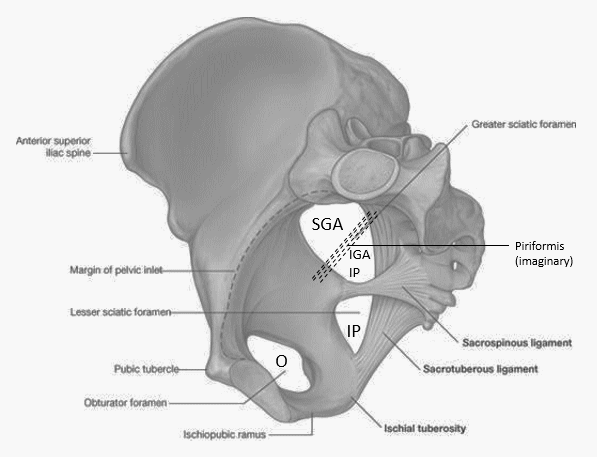
pelvic foramen arteries
O = Obturator; SGA = Superior gluteal artery; IGA = Inferior gluteal artery; IP = Internal pudendal artery
  • Obturator artery: Exits pelvis through obturator foramen
  • Internal pudendal artery: Exits pelvis through infra-piriform foramen
  • Inferior gluteal artery: Exits pelvis through infra-piriform foramen

Branches from posterior trunk:

Mnemonic: PILS (Posterior trunk, Iliolumbar, Lateral sacral, Superior gluteal)

  1. Iliolumbar artery: runs anterolaterally towards the medial border of the psoas major, where it divides into the lumbar and iliac branches.
  2. Lateral sacral artery: passes lateral to anterior sacral foramina
  3. Superior gluteal artery: exits pelvis through supra-piriform foramen

Corona mortis: Corona mortis is an anastomotic branch between the inferior epigastric (from external iliac) and obturator (from internal iliac) vessels. It is located behind the superior pubic ramus at a variable distance from the symphysis pubis (range 40-96 mm). Compression of the internal iliac alone will not completely stop the bleeding from this anomalous artery since it has a contribution from the external iliac artery.

Pelvic fractures: Fractures of both the pelvis and acetabulum may be associated with injury to the major pelvic vessels (primary injury or clot dislodgement or iatrogenic trauma). The sources of bleeding have been reported to be more posterior (internal iliac vessels or their posterior branches) in patients with unstable posterior pelvic fractures. In lateral compression fractures, commonly anterior vessels are injured (pudendal or obturator vessels).
  • Facebook
  • Twitter
PGMEE, MRCS, USMLE, MBBS, MD/MS AnatomyCardiovascular system

Post navigation

Previous post
Next post

Related Posts

PGMEE, MRCS, USMLE, MBBS, MD/MS erythropoietin mechanism

Erythropoietin (EPO) Physiology

Sep 2, 2017

Structure of erythropoietin (EPO) Glycoprotein hormone 165 amino acids Molecular mass – 30 kDa Site of production/synthesis of erythropoietin (EPO) Kidneys (75-90%): Peritubular interstitial cells Liver (15%; chief source in fetus and neonates): Centrilobular hepatocytes After birth, erythropoietin is not detectable until 8-12 weeks after birth leading to physiological anaemia…

Read More
PGMEE, MRCS, USMLE, MBBS, MD/MS coagulation cascade simple

Simple Coagulation Cascade with Mnemonics

Jan 17, 2017May 11, 2019

In medical school, coagulation cascade might be a pain to learn and teach as well. Plenty of roman numerals with arrows going here and there – is this the reason you hate coagulation cascade? I will pretty much try to simplify the whole thing with essential clinical correlation here. I…

Read More
PGMEE, MRCS, USMLE, MBBS, MD/MS internal capsule

Internal Capsule Simplified

Jul 30, 2016

Internal Capsule is a “boomerang” shaped (on horizontal section) and “funnel” shaped, i.e. tapering from superior to inferior (on sagittal section) white matter structure sandwiched between: Medially: Head of Caudate nucleus and Thalamus Laterally: Lenticular nucleus (Globus pallidus and Putamen) Parts of Internal Capsule 1. Anterior limb: Carries fibers to…

Read More

Leave a Reply Cancel reply

Your email address will not be published. Required fields are marked *

This site uses Akismet to reduce spam. Learn how your comment data is processed.

Pre-clinical (Basic Sciences)

Anatomy

Biochemistry

Community medicine (PSM)

Embryology

Microbiology

Pathology

Pharmacology

Physiology

Clinical Sciences

Anesthesia

Dermatology

Emergency medicine

Forensic

Internal medicine

Gynecology & Obstetrics

Oncology

Ophthalmology

Orthopedics

Otorhinolaryngology (ENT)

Pediatrics

Psychiatry

Radiology

Surgery

RSS Ask Epomedicine

  • What to study for Clinical examination in Orthopedics?
  • What is the mechanism of AVNRT?

Epomedicine weekly

  • About Epomedicine
  • Contact Us
  • Author Guidelines
  • Submit Article
  • Editorial Board
  • USMLE
  • MRCS
  • Thesis
©2026 Epomedicine | WordPress Theme by SuperbThemes