Skip to content
Epomedicine

Mnemonics, Simplified Concepts & Thoughts

Epomedicine

Mnemonics, Simplified Concepts & Thoughts

second messengers

Signaling Pathways of Hormones : Mnemonic

Epomedicine, Jul 17, 2018

second messengers

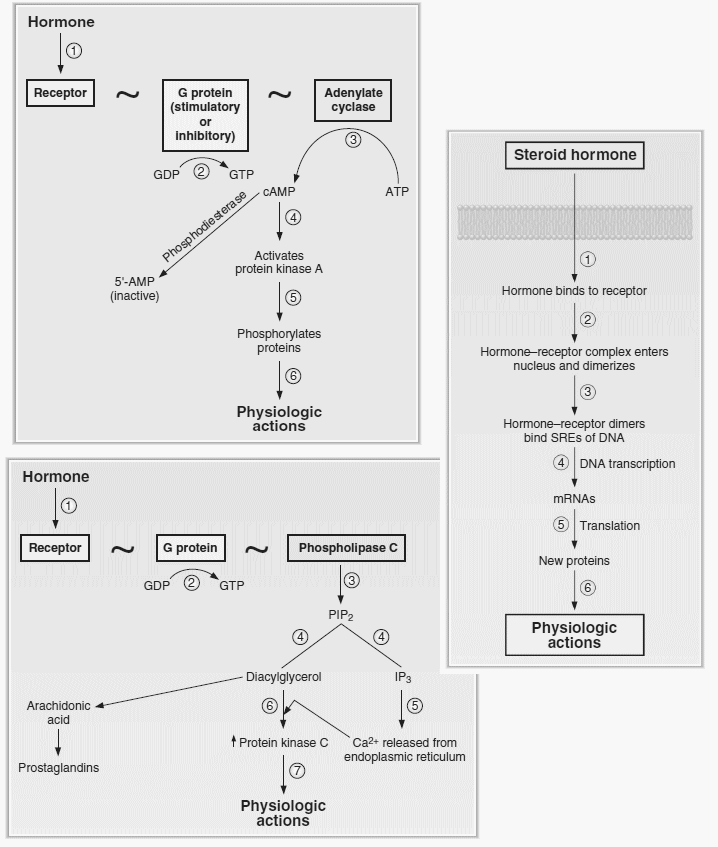
cAMP Mechanism

Mnemonic: FLAT CAMP B-HCGS

Remember “B-FLAT” mnemonic for hormones secreted by basophilic cells of the anterior pituitary. This is the same “FLAT” here.

Also CAMP matches cAMP.

Beta-HCG works by cAMP mechanism.

All 2 except Beta 1 and 5-HT1

So, this is an easy mnemonic to remember.

  1. FSH
  2. LH (+ Lipotropin)
  3. ACTH
  4. TSH
  5. CRH
  6. Aquaporin ADH (V2), Alpha 2 adrenergic (Both have 2) and Adenosine A2
  7. MSH and M2/M4
  8. PTH, Prolactin Inhibiting Factor (Dopamine), PGE2-EP2 and PGI2
  9. Beta adrenergics (Both 1 and 2 – Beta 1 and Beta 2)
  10. HCG and Histamine H2 (This is also 2)
  11. Calcitonin
  12. Glucagon and GABA-B (Assume B = 2)
  13. Somatostatin, Secretin and Serotonin (5HT-1 and 5-HT4)
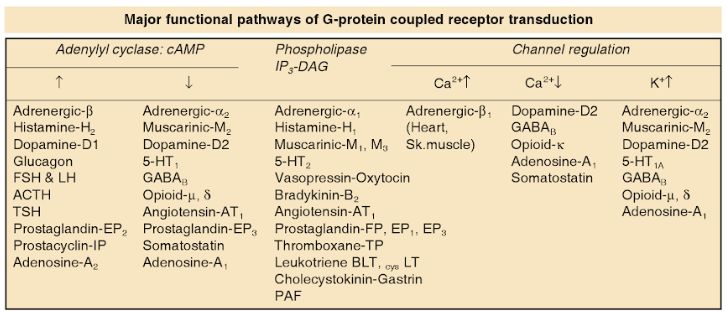
receptor mechanism

c-GMP Mechanism

Mnemonic: Starts with “N”

  1. Natriuretic peptides (ANP and BNP)
  2. Nitric oxide (NO)
  3. Night vision (photic response of retinal rods)

IP3/DAG Mechanism

Mnemonic:

  1. Hypothalamic hormones except CRH and V2 ADH
  2. All 1 except Beta 1, Dopamine 1 and 5-HT1 (c-AMP mechanism)
  3. BCGS
  4. 3 P (Matches with IP3)
  1. GnRH
  2. TRH
  3. GHRH
  4. Oxytocin (produced by hypothalamus and stored in posterior pituitary)
  5. V1 (ADH)
  6. Alpha 1 adrenergic
  7. H1
  8. AT1 (Angiotensin II)
  9. Endothelin-1
  10. M1/M3/M5
  11. Bradykinin (B1 and B2)
  12. Cholecystokinin
  13. Gastrin and Ghrelin
  14. Serotonin (5-HT2)
  15. substance P
  16. PDGF
  17. Prostaglandins and leukotrienes (PGE2 – EP1/EP3, PGF, Thromboxane, LTB4, cysLT )

Tyrosine kinase (MAP and JAK/STAT) Mechanism

Mnemonic:

  1. All that have “Growth“.
  2. PIGLET (Remember the mnemonic PiG for anterior pitutiary hormones secreted by acidophilic cells. Both prolactin and growth hormone use tyrosine kinase receptor mechanism)
  3. MAP kinase pathway – Think growth factors (insulin, IGF-1, FGF, PDGF, EGF)
  4. Non-receptor (JAK/STAT) pathway – Others
  1. Growth factors (EGF, FGF, PDGF, NGF, IGF-1 and 2) and Growth hormone
  2. PIGLET:
    • Prolactin
    • Insulin
    • G-CSF
    • Lymphokines (IL-2, IL-6, IFN, TNF, growth factors, GM-CSF) and Leptin
    • Erythropoietin
    • Thrombopoietin

Hormone response elements (HRE) on DNA

Mnemonic: All lipohilic hormones – Steroids and Thyroids

  1. Thyroid hormone
  2. Cortisol
  3. Aldosterone
  4. Testosterone
  5. Estrogen
  6. Progesterone
  7. Vitamin D
16 shares
  • Facebook
  • Twitter
PGMEE, MRCS, USMLE, MBBS, MD/MS Endocrine systemPharmacologyPhysiology

Post navigation

Previous post
Next post

Related Posts

PGMEE, MRCS, USMLE, MBBS, MD/MS

ALI and ARDS : Mnemonics

May 20, 2024May 20, 2024

Diagnosis (Berlin Criteria) Mnemonic A R D S Acute Lung Injury (ALI) Acute onset (<7 days) Ratio PaO2/FiO2 ≤300 mmHg or 40 kPa Diffuse bilateral pulmonary infiltrates on CXR Swan-Ganz pulmonary wedge pressure ≤18 mmHg or No evidence of Left atrial hypertension Acute Respiratory Distress Syndrome (ARDS) Acute onset (<7…

Read More
PGMEE, MRCS, USMLE, MBBS, MD/MS

Unhappy Triad of O’Donoghue : Mnemonic

Oct 19, 2024Oct 19, 2024

O’Donoghue unhappy triad is occurrence of 3 different soft tissue injuries of knee simultaneously. It includes: Mnemonic: MAM Mechanism: valgus stress with rotation of the knee Later on, more studies emerged showing that injuries in the lateral meniscus were more prevalent than injuries in the medial meniscus. The unhappy triad…

Read More
PGMEE, MRCS, USMLE, MBBS, MD/MS

Medial and Lateral Plantar Nerves

Sep 7, 2023Sep 7, 2023

Origin: Tibial nerve (both medial and lateral plantar nerve) Similar to: Course and innervation: Medial plantar nerve Lateral plantar nerve Origin Larger branch of tibial nerve Smaller branch of tibial nerve Course Deep to abductor hallucis muscleBetween 1st and 2nd plantar layers Deep to abductor hallucis muscleBetween 1st and 2nd…

Read More

Leave a Reply Cancel reply

Your email address will not be published. Required fields are marked *

This site uses Akismet to reduce spam. Learn how your comment data is processed.

Pre-clinical (Basic Sciences)

Anatomy

Biochemistry

Community medicine (PSM)

Embryology

Microbiology

Pathology

Pharmacology

Physiology

Clinical Sciences

Anesthesia

Dermatology

Emergency medicine

Forensic

Internal medicine

Gynecology & Obstetrics

Oncology

Ophthalmology

Orthopedics

Otorhinolaryngology (ENT)

Pediatrics

Psychiatry

Radiology

Surgery

RSS Ask Epomedicine

  • What to study for Clinical examination in Orthopedics?
  • What is the mechanism of AVNRT?

Epomedicine weekly

  • About Epomedicine
  • Contact Us
  • Author Guidelines
  • Submit Article
  • Editorial Board
  • USMLE
  • MRCS
  • Thesis
©2026 Epomedicine | WordPress Theme by SuperbThemes