Skip to content
Epomedicine

Mnemonics, Simplified Concepts & Thoughts

Epomedicine

Mnemonics, Simplified Concepts & Thoughts

Medical Ethics : Mnemonics

Epomedicine, Nov 21, 2020Nov 21, 2020
medical ethics

4 D’s of Medical Negligence

  1. Duty
  2. Deviation/Dereliction
  3. Damage
  4. Direct cause

4 Core Principles of Medical Ethics

Mnemonic: BAN Justice

  1. Beneficence
  2. Autonomy
  3. Non-maleficence
  4. Justice

Some even add “Veracity or Truthfulness” and “Confidentiality” to make 6 Ethical Principles.

BRAIN of Informed Consent

  1. Benefits
  2. Risks
  3. Alternatives
  4. Indications
  5. Nature

5 Cs of the Exceptions to the duty of Confidentiality

  1. Consent from patient or legally surrogate decision maker
  2. Court order
  3. Continued treatment
  4. Comply with the law
  5. Communicate a threat (also known as “Tarasoff exception”)

Privileged Communication

Doctor’s can disclose patient’s information in the interest of the community or public.

Mnemonic: IV NS Put Cannula Safely Sister

  1. Infectious diseases
  2. Veneral diseases
  3. Notifiable diseases
  4. Suspected crimes
  5. Patient’s own interest (if patient may harm himself)
  6. Self-interest of doctor (in suits by patient against doctor)
  7. Courts of law
  8. Staffs

6A – DISCO of Professional Misconduct or Infamous Conduct

  1. Adultery
  2. Advertisement (beyond set guidelines)
  3. Association (with unqualified person in professional matters)
  4. Addiction
  5. Alcoholism (during practice)
  6. Abortion (illegal)
  7. Dichotomy (fee-splitting or fee-sharing)
  8. Issuing a false certificate
  9. Sex determination test
  10. Confidentiality breach
  11. Others:
    • Refusal to treat on religious grounds
    • Breach of confidentiality
    • Use of red cross emblem by doctors
    • Not informing health authorities about notifiable diseases
    • Failure to obtain consent of both husband and wife in an operation which may result in sterility
    • Writing prescription in the form of a secret formula which is known to some particular pharmacy
    • Running an open shop for the sales of medicines
Patient Decision Making Capacities – CURVES mnemonic
4 Box Model for Clinical Decision Making
  • Facebook
  • Twitter
PGMEE, MRCS, USMLE, MBBS, MD/MS

Post navigation

Previous post
Next post

Related Posts

PGMEE, MRCS, USMLE, MBBS, MD/MS

Interpretation of NCCT head: Normal findings

Apr 17, 2024Apr 17, 2024

History: In 1972, Sir Godfrey Hounsfield developed CT scan for which he was awarded Nobel prize in 1979. Through these years CT has come from one rotation in 6 minutes to one in 0.33 seconds. Principle: X rays are produced by CT machine, which are absorbed by different tissues in…

Read More
PGMEE, MRCS, USMLE, MBBS, MD/MS

Surgical Site Infection Risk Factors : Mnemonic

Jul 25, 2024Jul 25, 2024

Various types of surgical site infection (SSI) have been defined by CDC. Patient related factors Mnemonic: WASHING 1. Weight: Obesity (>20% of ideal body weight) 2. Antibiotic resistant skin flora: MRSA colonization 3. Advancing age 4. Smoking 5. HIV and other immune deficiency conditions 6. Infection coexisting at other sites…

Read More
PGMEE, MRCS, USMLE, MBBS, MD/MS retroperitoneal-structures

Retroperitoneal Organs : Mnemonic

Jun 27, 2018May 13, 2024

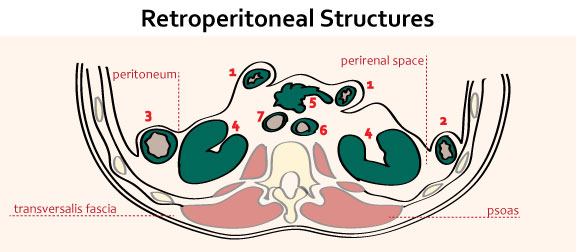
Retroperitoneal organs are partly covered on one side with parietal peritoneum. They are immobile or fixed. The classification of retroperitoneal organs divides primary and secondary retroperitoneal organs due to the embryonic development – Retroperitoneal structures Mnemonic: SAD PUCKER Primary retroperitoneal structures Mnemonic: SAUKER Secondary retroperitoneal structures Clinical significance Kocher maneuver…

Read More

Leave a Reply Cancel reply

Your email address will not be published. Required fields are marked *

This site uses Akismet to reduce spam. Learn how your comment data is processed.

Pre-clinical (Basic Sciences)

Anatomy

Biochemistry

Community medicine (PSM)

Embryology

Microbiology

Pathology

Pharmacology

Physiology

Clinical Sciences

Anesthesia

Dermatology

Emergency medicine

Forensic

Internal medicine

Gynecology & Obstetrics

Oncology

Ophthalmology

Orthopedics

Otorhinolaryngology (ENT)

Pediatrics

Psychiatry

Radiology

Surgery

RSS Ask Epomedicine

  • What to study for Clinical examination in Orthopedics?
  • What is the mechanism of AVNRT?

Epomedicine weekly

  • About Epomedicine
  • Contact Us
  • Author Guidelines
  • Submit Article
  • Editorial Board
  • USMLE
  • MRCS
  • Thesis
©2026 Epomedicine | WordPress Theme by SuperbThemes