Skip to content
Epomedicine

Mnemonics, Simplified Concepts & Thoughts

Epomedicine

Mnemonics, Simplified Concepts & Thoughts

Medial Approaches to Hip

Dr. Sulabh Kumar Shrestha, MS Orthopedics, Nov 2, 2026Nov 2, 2026

Indications:

  1. Open reduction of DDH (MAOR i.e. Medial Approach Open Reduction)
  2. Psoas tendon release in hip contractures
  3. Biopsy and treatment of tumors (inferior portion of femoral neck and medial portion of proximal shaft)
  4. Obturator neurectomy
medial approaches hip

Surgical planes:

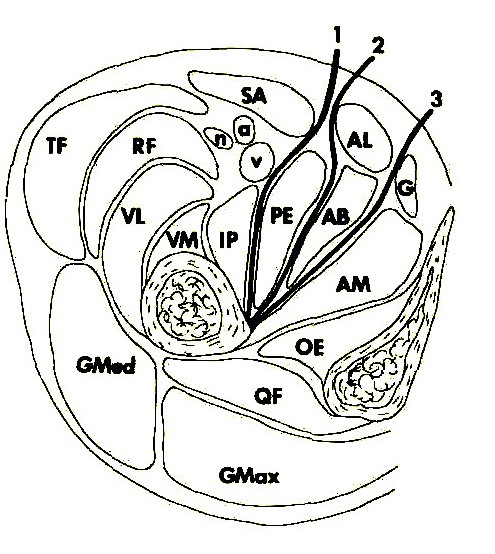
Lowa/Iowa/Weinstein-Ponseti (Anteromedial)Ludloff (Anteromedial)Ferguson (Posteromedial)
Developed in197919081973
Superficial intervalBetween sartorius (anterior) and adductor longus (posterior) Between sartorius (anterior) and adductor longus (posterior) Between adductor longus (anterior) and gracilis (posterior)
Deep intervalBetween femoral neurovascular bundle (anterior) and pectineus (posterior)Between pectineus (anterior) and adductor brevis (posterior)Between adductor brevis (anterior) and adductor magnus (posterior)
Benefits1. Safest neurovascular visualization
2. Lower reported long-term AVN rates in DDH
1. Most direct route
2. Minimal soft tissue dissection
1. Excellent access to inferior/posterior neck and lesser trochanter
2. Moves away from the anterior femoral neurovascular bundle
Risks and DisadvantagesDirect proximity to anterior femoral neurovascular bundleHigh risk of MFCA damageHigh risk of obturator nerve injury

References:

  1. Weinstein SL. Operative technique for anteromedial approach to reduction for developmental dysplasia of the hip. Operative techniques in orthopaedics. 1993;3(2):134-40.
  2. Ludloff K. Zur blutigen Einrenkung der angeborrenen Huftluxation. Zeischr Orthop Chir.. 1908;22:272-6.
  3. FERGUSON AB. Primary open reduction of congenital dislocation of the hip using a median adductor approach. Journal of Bone and Joint Surgery. 1973 Jun;55(4):671-89.

dr. sulabh kumar shrestha
Dr. Sulabh Kumar Shrestha, MS Orthopedics

He is the section editor of Orthopedics in Epomedicine. He searches for and share simpler ways to make complicated medical topics simple. He also loves writing poetry, listening and playing music. He is currently pursuing Fellowship in Hip, Pelvi-acetabulum and Arthroplasty at B&B Hospital.

  • Facebook
  • Twitter
PGMEE, MRCS, USMLE, MBBS, MD/MS OrthopedicsPediatric hip

Post navigation

Previous post
Next post

Related Posts

PGMEE, MRCS, USMLE, MBBS, MD/MS

Prolonged QT Interval : Mnemonics

Jul 25, 2023Jul 25, 2023

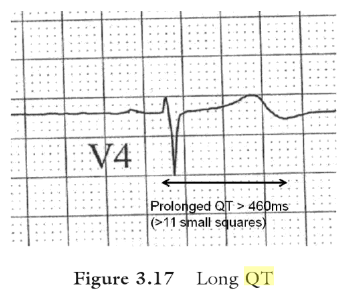
Normal QT Interval Duration: 0.3-0.44 s (0.46 s for women); tends to increase as the heart rate decreases Bazett’s formula for corrected QT interval (QTc): QTc = QT/ √RR Prolonged QT Interval Duration: >0.44 s (men) and >0.46 s (women) Can lead to: Polymorphic VT (Torsades de pointes) Causes: Mnemonic:…

Read More
PGMEE, MRCS, USMLE, MBBS, MD/MS

DSM-5 & ICD-11 Diagnostic Criteria for Mania : Mnemonic

Apr 7, 2026Apr 7, 2026

Mnemonic: ME DIG FAST Required symptoms: Other symptoms: Several symptoms (ICD-11) or Atleast 3 (DSM-5) of – Mania Hypomania Required duration 7 days 4 days Functional impairment Yes No Flight of ideas & Psychotic symptoms Can have No

Read More
PGMEE, MRCS, USMLE, MBBS, MD/MS cholangiocarcinoma tnm

Cholangiocarcinoma (Bile Duct Cancer) – Quick Review

Jan 30, 2017Oct 26, 2022

This article is in response to the request made by a reader in the comment section. Today, we will try to simplify the biliary tree cancers. Classification of Cholangiocarcinoma Second-order bile ducts act as the separation point between intrahepatic and extrahepatic cholangiocarcinoma. A. Inhtrahepatic – 10 to 20% B. Extrahepatic…

Read More

Leave a Reply Cancel reply

Your email address will not be published. Required fields are marked *

This site uses Akismet to reduce spam. Learn how your comment data is processed.

Shrestha SK. Medial Approaches to Hip [Internet]. Epomedicine; 2026 Nov 2 [cited 2026 Nov 20]. Available from: https://epomedicine.com/medical-students/medial-approaches-to-hip/.

Pre-clinical (Basic Sciences)

Anatomy

Biochemistry

Community medicine (PSM)

Embryology

Microbiology

Pathology

Pharmacology

Physiology

Clinical Sciences

Anesthesia

Dermatology

Emergency medicine

Forensic

Internal medicine

Gynecology & Obstetrics

Oncology

Ophthalmology

Orthopedics

Otorhinolaryngology (ENT)

Pediatrics

Psychiatry

Radiology

Surgery

RSS feed: Ask Epomedicine Ask Epomedicine

  • What to study for Clinical examination in Orthopedics?
  • What is the mechanism of AVNRT?

Epomedicine weekly

  • About Epomedicine
  • Contact Us
  • Author Guidelines
  • Submit Article
  • Editorial Board
  • USMLE
  • MRCS
  • Thesis
©2026 Epomedicine | WordPress Theme by SuperbThemes