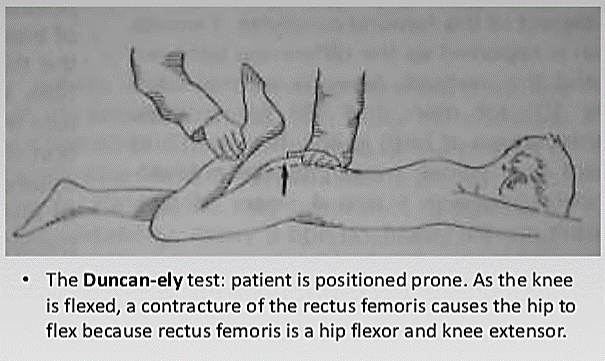
Rectus femoris is the only Quadriceps muscle that cross the hip joint and act as a hip flexor and knee extensor. When the rectus femoris is shortened/tightened, it tends to pull the pelvis forward into anterior pelvic tilt and also forces the knee into hyperextension. Ely’s test: Patient is positioned…
Tag: Musculoskeletal system
Clinical Skills and Approaches
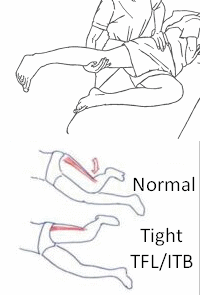
Ober’s Test
Tensor fascial latae (TFL) originates from the anterior superior iliac spine (ASIS) outer surface, outer lip of anterior iliac crest and deep surface of fascia latae, continues down in thigh as Iliotibial band (ITB) and inserts to the ipsilateral Gerdy’s tubercle. TFL plays role in flexion, medial rotation and abduction…
Clinical Skills and Approaches
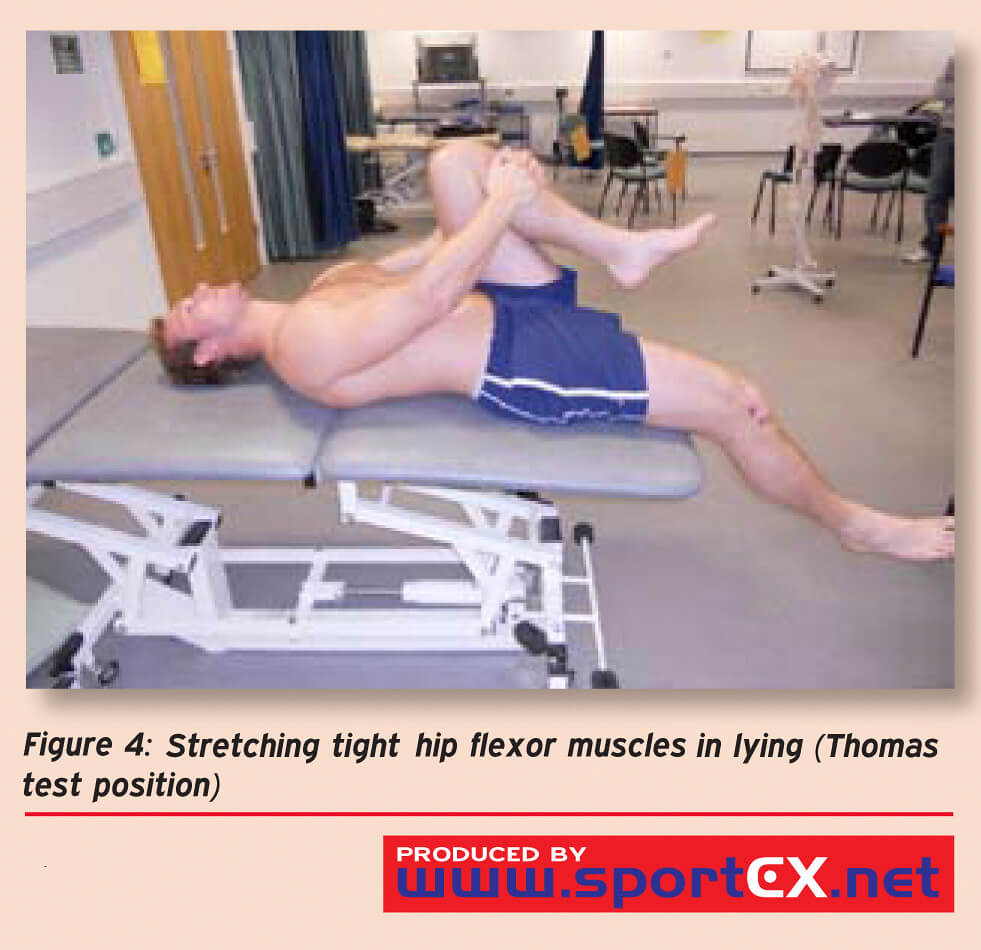
Thomas Test and Staheli Test
Thomas test Synonym: Hip flexion contracture test, Iliacus test, Iliopsoas test Fixed flexion deformity of the hip and anterior pelvic tilt leads to a compensatory hyperlordosis of the lumbar spine to restore the body’s center of gravity. Compensatory hyperlordosis can mask the fixed flexion deformity of hip. Thomas test: With…
PGMEE, MRCS, USMLE, MBBS, MD/MS
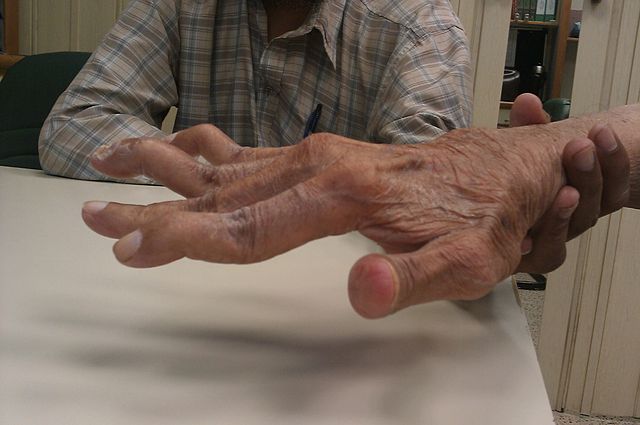
Boutonniere and Swan neck Deformity – Pathophysiology
Understanding of the Boutonniere and Swan neck deformity requires clear concept of the finger extensor apparatus, which has been discussed here. The extrinsic extensor tendons trifurcate giving a central slip which attaches to the middle phalanx base and two lateral slips which join with lateral band (formed by intrinsic muscles…
PGMEE, MRCS, USMLE, MBBS, MD/MS

Spaces and Compartments of Hand
Spaces of Hand Deep space infections occur in one of the three anatomically defined potential spaces within the hand. Thenar, mid-palmar and hypothenar spaces Interdigital subfascial web space Forearm space of parona Deep hand space Dorsal border Volar border Ulnar border Radial border Remarks Thenar Adductor pollicis Palmar aponeurosis Middle…
Clinical Skills and Approaches
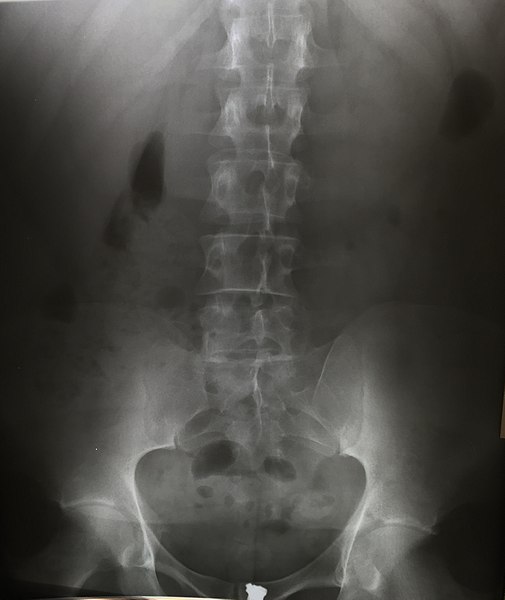
Approach to Thoracic and Lumbar Spine X-ray
Views Standard: Supine AP and Latero-lateral (LL) views – thoracic or lumbar Thoracic: Lateral (Fulcrum) bending views: to determine the flexibility of curves in scoliosis Lumbar: De Seze view (Lumbopelvic view): Standing AP and LL – shows T11 to head of femur Dynamic lateral (flexion-extension) views: for instability Oblique views…
Clinical Skills and Approaches

Thoracolumbar Metastases Management : Mnemonic Approach
The primary malignancies that commonly metastasize to the spine can be recalled using the mnemonic: PB KTL (or “Lead Kettle”. Prostate Breast Kidney Thyroid Lungs In women, 80% metastases are from lung and breast and in men, 80% are from lung and prostate. LMNOP approach A. Location/Level 80% involve well-vascularized…
PGMEE, MRCS, USMLE, MBBS, MD/MS
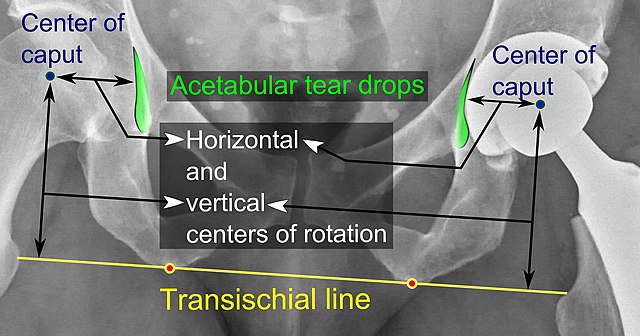
THA dislocation : WHAT mnemonic
The incidence of THA dislocation is: Primary THA: 1-2% Revision THA: 5-7% Mnemonic: WHAT caused the total hip arthroplasty dislocation? Wear Types: Volumetric wear: proportional to r2 (diameter of head) Linear wear (related to penetration of femoral head into liner): smaller heads have higher linear wear Adhesive wear (most important):…