Skip to content
Epomedicine

Mnemonics, Simplified Concepts & Thoughts

Epomedicine

Mnemonics, Simplified Concepts & Thoughts

Diagnosis of Spinal Instability (White & Panjabi) : Mnemonic

Epomedicine, Apr 3, 2021Apr 10, 2021

Mnemonic: Remember 4 D common to all + 3 D for C-spine and 1 D for L-spine

Diagnosis requires: Score >4

Denis column disruption:

  1. Anterior column destroyed or unable to function (2 points)
  2. Posterior column destroyed or unable to function (2 points)

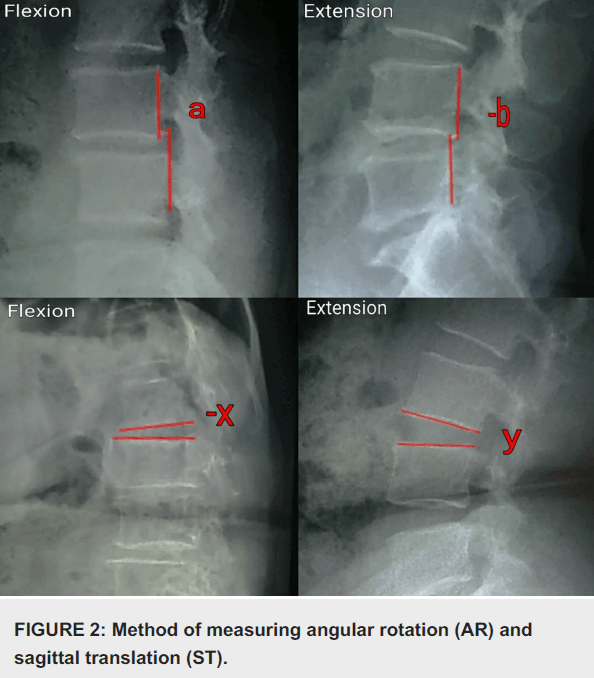
Deformity: Will have a maximum score of 4 points (2 points assigned for ART – angulation, rotation and translation each)

  1. Sagittal plane translation/displacement: 2 points
    • C-spine: >3.5 mm or 20% in flexion-extension or resting x-rays
    • T-spine: >2.5 mm
    • L-spine: >4.5 mm or 15% in flexion-extension or resting x-rays
    • Mnemonic: Remember C/T/L – 3.5/2.5/4.5
  2. Sagittal plane rotation in flexion-extension X-rays: 2 points
    • C-spine: >20 degrees
    • L-spine:
      • >15 degrees at L1-L2, L2-L3 and L3-L4
      • >20 degrees at L4-L5
      • >25 degrees at L5-S1
      • Mnemonic: Multiply by 5 (L3: 3X5 = 15; L4: 4X5 = 20; L5: 5X5 = 25)
  3. Sagittal plane angulation (relative) in resting X-rays: 2 points
    • C-spine: >11 degrees
    • T-spine: >5 degrees
    • L-spine: >22 degrees
angular rotation and sagittal translation method
Rathod A K, Dhake R P (April 04, 2018) Radiographic Incidence of Lumbar Spinal Instability in Patients with Non-spondylolisthetic Low Backache. Cureus 10(4): e2420. doi:10.7759/cureus.2420

Damage of spinal cord/nerve root:

  1. C-spine: Spinal cord damage (2 points) and Nerve root damage (1 point)
  2. T-spine: Spinal cord damage (2 points)
  3. L-spine: Cauda equina syndrome (3 points)

Dangerous loading anticipated: 1 point

Other elements specific to C-spine:

  1. Distraction test (Stretch test) positive: 2 points
    • Lateral view X-ray or C-arm with crutchfield tong traction or head-halter traction with 5 pounds of weight increment every 5 minutes (upto 1/3 of body weight) until test is positive (neurologic deficit or abnormal separation of anterior and posterior elements)
  2. Developmentally narrow spinal canal (Sagittal diameter <13 mm or Pavlov’s ratio <0.8): 1 points
  3. Disc narrowing (abnormal): 1 points

Other elements specific to T-spine:

  1. Disarticulation of costovertebral articulation: 1 point

Reference: Kim, C. W., Perry, A., & Garfin, S. R. (2005). Spinal Instability: The Orthopedic Approach. Seminars in Musculoskeletal Radiology, 09(01), 77–87. doi:10.1055/s-2005-867098 
22 shares
  • Facebook22
  • Twitter
PGMEE, MRCS, USMLE, MBBS, MD/MS Musculoskeletal systemNervous systemOrthopedics

Post navigation

Previous post
Next post

Related Posts

PGMEE, MRCS, USMLE, MBBS, MD/MS Acoustic dipping PTA

Pure Tone Audiogram and Interpretation

Aug 2, 2015

Relevant terms and definitions: 1. Pure tone: A single frequency sound 2. Audiometer: Equipment used to generate pure tones of varying frequency and loudness and control their presentation 3. Air conduction (AC) threshold: lowest level dB HL (hearing threshold) at which the subject perceives 50% of pure tones introduced via earphones or speakers…

Read More
PGMEE, MRCS, USMLE, MBBS, MD/MS

Rheumatoid Arthritis Criteria Mnemonics

Sep 1, 2020Feb 21, 2023

The 2 commonly used criteria for diagnosis of rheumatoid arthritis will be discussed here. 1987 ACR Criteria Mnemonic: DMARDs if MADRAS Mnemonic: EARS For diagnosis of RA: 4 out of 7 criteria must be present (except duration) and criteria listed above in number 1, 2, 7 and 8 must be…

Read More
PGMEE, MRCS, USMLE, MBBS, MD/MS

Dengue Classification : Mnemonic

Aug 22, 2019Oct 23, 2024

Probable Dengue Mnemonic: FEVeR TLC (Send Total Leukocyte Count in Fever) a. Feverb. Endemic area (living or travel)and 2 of –c. Vomiting and nausead. Rashe. Tourniquet test positivef. Leukopenia (EARLIEST sign)g. Cramps and cries (Aches and pains) Tourniquet test: Inflate the BP cuff between SBP and DBP and keep it…

Read More

Leave a Reply Cancel reply

Your email address will not be published. Required fields are marked *

This site uses Akismet to reduce spam. Learn how your comment data is processed.

Pre-clinical (Basic Sciences)

Anatomy

Biochemistry

Community medicine (PSM)

Embryology

Microbiology

Pathology

Pharmacology

Physiology

Clinical Sciences

Anesthesia

Dermatology

Emergency medicine

Forensic

Internal medicine

Gynecology & Obstetrics

Oncology

Ophthalmology

Orthopedics

Otorhinolaryngology (ENT)

Pediatrics

Psychiatry

Radiology

Surgery

RSS Ask Epomedicine

  • What to study for Clinical examination in Orthopedics?
  • What is the mechanism of AVNRT?

Epomedicine weekly

  • About Epomedicine
  • Contact Us
  • Author Guidelines
  • Submit Article
  • Editorial Board
  • USMLE
  • MRCS
  • Thesis
©2026 Epomedicine | WordPress Theme by SuperbThemes