Skip to content
Epomedicine

Mnemonics, Simplified Concepts & Thoughts

Epomedicine

Mnemonics, Simplified Concepts & Thoughts

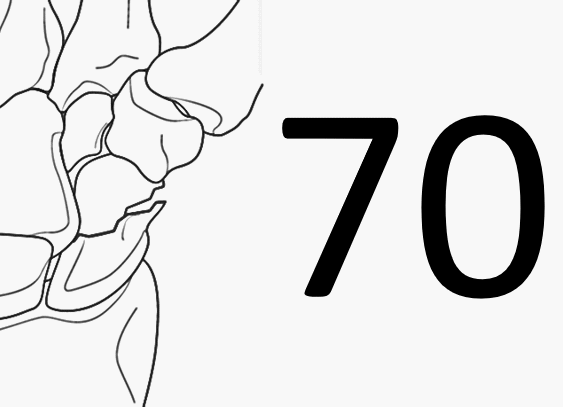
Scaphoid Fractures : Rule of 70s

Epomedicine, May 2, 2021Aug 12, 2021
Scaphoid mnemonic

70% of blood supply of scaphoid is by dorsal branch of radial artery

70% of scaphoid bones have arterial foramina through out their length

70% of carpal fractures are scaphoid fractures

70% of scaphoid fractures occur through the waist

70% of scaphoid fractures are detected on initial radiographs

70% proximal scaphoid fractures unite

70% unstable scaphoid fractures unite

  • Facebook
  • Twitter
PGMEE, MRCS, USMLE, MBBS, MD/MS Musculoskeletal systemOrthopedics

Post navigation

Previous post
Next post

Related Posts

PGMEE, MRCS, USMLE, MBBS, MD/MS

Elbow ligaments : Simplified Anatomy

Apr 7, 2020Apr 7, 2020

Lateral collateral ligament complex Restraint to varus and posterolateral rotatory instability. Anatomy is more variable. LCL arises from lateral humeral condyle at a point through which the axis of rotation passes – it maintains a uniform tension throughout the arc of motion. Annular ligament is a “U” shaped ligament that…

Read More
PGMEE, MRCS, USMLE, MBBS, MD/MS

Mediastinum : Simplified

Aug 7, 2023Sep 7, 2023

It is the region in thoracic cavity between the pulmonary cavities (covered by mediastinal pleura and excludes the lungs). Extent: Thoracic outlet (1st rib) to Diaphragm (T12) Superior mediastinum: Upper extent Thoracic outlet Contents (superficial to deep) 1. Glands (Thymus and Lymph nodes)2. 3 Veins (Brachiocephalic Lt. and Rt. and…

Read More
PGMEE, MRCS, USMLE, MBBS, MD/MS

Hypertrophic Scar vs Keloid

May 21, 2024May 21, 2024

Hypertrophic scars and keloids are both raised, firm scars formed from excess fibrinogen production and collagen during healing. Mnemonic: BAD SCARS Mnemonic Basis Hypertrophic scar Keloid B Behavior Natural regression No spontaneous regressio A Acuteness Appears in weeks Appears over months to years D Demographic All races affected More prevalent…

Read More

Leave a Reply Cancel reply

Your email address will not be published. Required fields are marked *

This site uses Akismet to reduce spam. Learn how your comment data is processed.

Pre-clinical (Basic Sciences)

Anatomy

Biochemistry

Community medicine (PSM)

Embryology

Microbiology

Pathology

Pharmacology

Physiology

Clinical Sciences

Anesthesia

Dermatology

Emergency medicine

Forensic

Internal medicine

Gynecology & Obstetrics

Oncology

Ophthalmology

Orthopedics

Otorhinolaryngology (ENT)

Pediatrics

Psychiatry

Radiology

Surgery

RSS Ask Epomedicine

  • What to study for Clinical examination in Orthopedics?
  • What is the mechanism of AVNRT?

Epomedicine weekly

  • About Epomedicine
  • Contact Us
  • Author Guidelines
  • Submit Article
  • Editorial Board
  • USMLE
  • MRCS
  • Thesis
©2026 Epomedicine | WordPress Theme by SuperbThemes