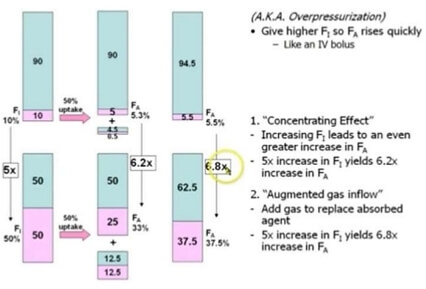
Concentration effect The higher the concentration of an inhaled anesthetic, the faster the alveolar concentration approaches the inhaled concentration. This is referred to as concentration effect and is clinically significant only in cases where gases are administered in high concentration: Nitrous oxide Xenon Ostwald’s blood gas solubility coefficient: ratio of…
PGMEE, MRCS, USMLE, MBBS, MD/MS
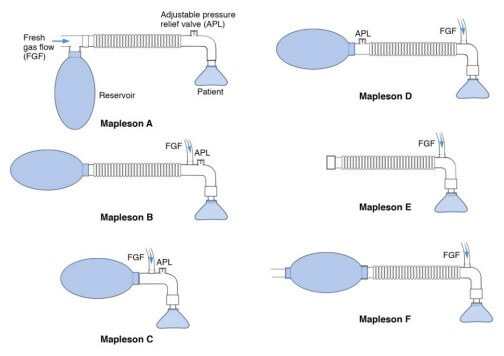
Mapleson Breathing Circuit Made Easy
Anatomy of Mapleson Breathing Circuit Basically, a mapleson breathing circuit consists of following parts: 1. Face mask (towards patient end) 2. Reservoir bag (towards operator end) Accommodates fresh gas flow during expiration acting as a reservoir available for the following inspiration. Acts as a monitor of patient’s ventilatory pattern during…
PGMEE, MRCS, USMLE, MBBS, MD/MS
Terminologies of Hypertension
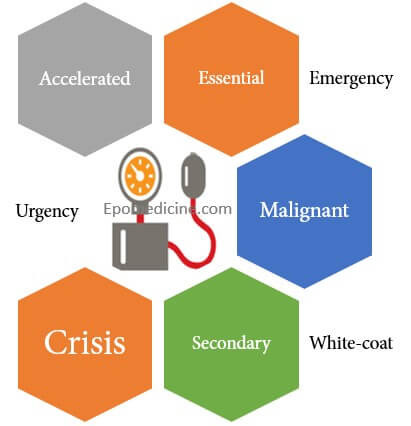
There are various terminologies used to describe hypertension which may overlap and are a source of confusion to the medical students and health professionals. Essential or Primary or Idiopathic hypertension Hypertension in which secondary causes have been excluded. Identifiable etiologic factors of essential hypertension: Obesity Insulin resistance High alcohol intake…
PGMEE, MRCS, USMLE, MBBS, MD/MS
Kawasaki Disease – Diagnostic Criteria Mnemonic
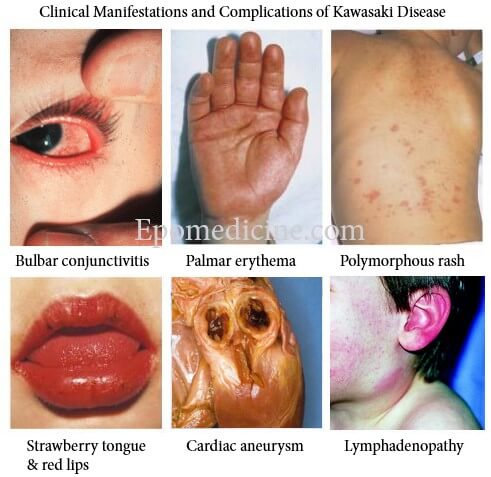
The diagnostic criteria of Kawasaki Disease can be remembered using a mnemonic – “FEBRILE“. Fever: >5 days plus ≥4 of the following Enathem: Lips: Erythema, fissuring or crusting Oropharynx: Diffuse injection Tongue: Strawberry tongue Bulbar conjunctivitis: Bilateral, painless and non-exudative Rash: Polymorphous rash Internal organ involvement (not the part of criteria)…
Clinical Skills and Approaches
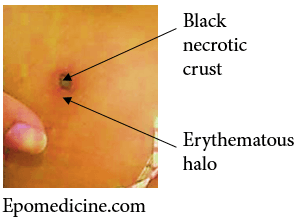
Eschar
Synonyms Tache noire Definition of Eschar An eschar is a local skin lesions coated by a thick coagulated crust or slough that usually results from burn or infection. Causes of Eschar Tick bite fever Scrub typhus Anthrax Tularaemia Spider bites Disseminated fungal infection Post-burn Diagnostic Clues Cigarette-burn Sign In scrub…
PGMEE, MRCS, USMLE, MBBS, MD/MS
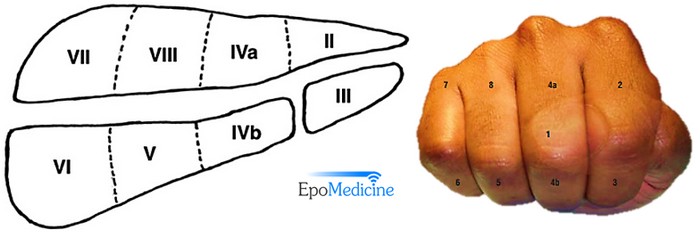
Liver Segments Explained with Mnemonic
Couniaud divided liver into 8 functional segments, each of which is supplied by it’s own portal triad (composed of a portal vein, hepatic artery and a bile duct). Hepatic veins divide the liver in saggital plane: 1. Middle hepatic vein: Divides the liver into right and left functional lobe. 2….
PGMEE, MRCS, USMLE, MBBS, MD/MS
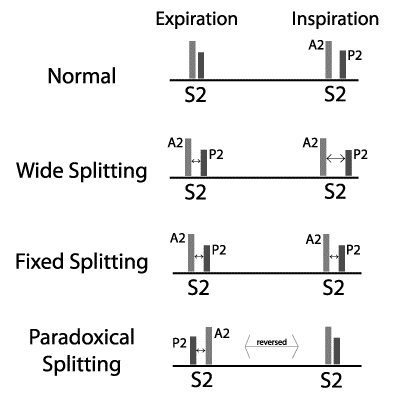
Abnormalities of First and Second Heart Sound
In the chapter of cardiac cycle, we have discussed the mechanism of production of heart sounds and their physiologic splitting. First Heart Sound (S1) Mechanism Closure of atrioventricular valves. It is best appreciated in mitral and tricuspid area of chest for respective components. Loud S1 Slamming a door from a…
PGMEE, MRCS, USMLE, MBBS, MD/MS
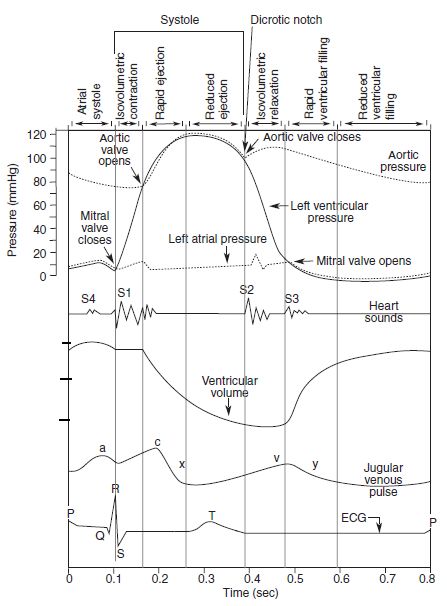
Cardiac Cycle – Summary and Wigger’s Diagram
Cardiac Cycle Opening and closing of valves When the valve opens, different compartments act as a single chamber (atrio-ventricle or aorto-ventricle). For a blood to flow, pressure in “giver” must be higher then that in “receiver”. Pressure difference opens or closes the valve: Role of atrial contraction in Ventricular filling…