Skip to content
Epomedicine

Mnemonics, Simplified Concepts & Thoughts

Epomedicine

Mnemonics, Simplified Concepts & Thoughts

narrowed airway

Respiratory Examination – Noisy Breathing

Epomedicine, Apr 2, 2015Apr 2, 2015

GRUNTING 

Definition: A short, explosive, moaning or crying sound heard on expiration (Child and neonates)

Cause: Any cause of respiratory distress

Mechanism: In attempt to increase FRC which helps to keep narrowed or collapsing airways open, creating a longer time for alveolar gas exchange
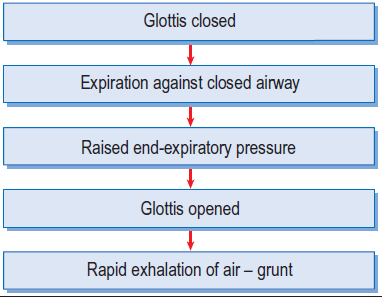
grunting mechanism

STERTOR

Definition: Non-musical, low pitched, snoring sound

Cause: Supra-laryngeal obstruction

STRIDOR

Definition: Loud, intense, monophasic sound with constant pitch

Cause: Upper airway obstruction at and below level of vocal cord

Types:

  1. Inspiratory (Supra-glottic)
  2. Biphasic (Sub-glottic/glottic to tracheal ring)
  3. Expiratory (Tracheo-bronchial)

WHEEZE

Definition: Continual, high-pitched musical sound heard at the end of inspiration or start of expiration

Cause: Asthma, RTI, COPD, Foreign Body aspiration, Cardiac asthma, Bronchiolitis

Mechanism: Vibration of airway wall due to increased velocity of air through narrowed airway
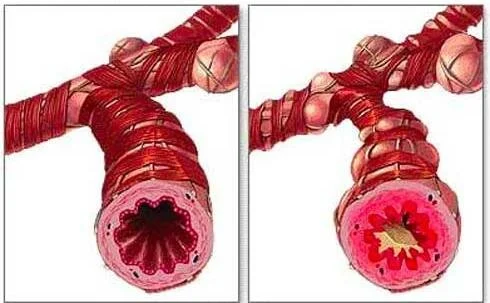
narrowed airway

Types:

  1. Monophonic: Fixed single pitch resulting from localized narrowing of a single airway (Bronchial tumor, Fixed Foreign Body)
  2. Polyphonic: Multiple simultaneous different pitched sound occurs during expiration and implies diffuse disease of different sized airways
48 shares
  • Facebook48
  • Twitter
PGMEE, MRCS, USMLE, MBBS, MD/MS Clinical examinationRespiratory system

Post navigation

Previous post
Next post

Related Posts

PGMEE, MRCS, USMLE, MBBS, MD/MS

Fasciae of the Neck

Apr 29, 2024Apr 29, 2024

Superficial cervical fascia Contents: Deep cervical fascia or Fascia colli 1. Investing layer 2. Pretracheal layer 3. Carotid sheath: Formed anteriorly by pretracheal fascia and posteriorly by prevertebral fascia Encloses: Relations: 4. Pharyngobasilar fascia (deep to pharynx): lines the inner surface of pharyngeal muscles 5. Prevertebral layer Spread of Infections…

Read More
PGMEE, MRCS, USMLE, MBBS, MD/MS

How Hyperchloremia Impairs Renal Function

Jul 7, 2025Jul 7, 2025

While historically, NS and RL have been thought to be generally equivalent for resuscitation, there has been an associated risk of hyperchloremic metabolic acidosis with large-volume resuscitation using normal saline. Hyperchoremic metabolic acidosis has been found to increase the risk of acute kidney injury. This is thought to be due to the…

Read More
PGMEE, MRCS, USMLE, MBBS, MD/MS

Hernia – The Others

May 20, 2020May 20, 2020

Hernia is classically defined as a protrusion of the contents of a cavity through its walls. It is a condition which occurs not only in the abdomen but also other regions of the body such as in the thorax and cranium. In this article one can find the description of…

Read More

Leave a Reply Cancel reply

Your email address will not be published. Required fields are marked *

This site uses Akismet to reduce spam. Learn how your comment data is processed.

Pre-clinical (Basic Sciences)

Anatomy

Biochemistry

Community medicine (PSM)

Embryology

Microbiology

Pathology

Pharmacology

Physiology

Clinical Sciences

Anesthesia

Dermatology

Emergency medicine

Forensic

Internal medicine

Gynecology & Obstetrics

Oncology

Ophthalmology

Orthopedics

Otorhinolaryngology (ENT)

Pediatrics

Psychiatry

Radiology

Surgery

RSS Ask Epomedicine

  • What to study for Clinical examination in Orthopedics?
  • What is the mechanism of AVNRT?

Epomedicine weekly

  • About Epomedicine
  • Contact Us
  • Author Guidelines
  • Submit Article
  • Editorial Board
  • USMLE
  • MRCS
  • Thesis
©2026 Epomedicine | WordPress Theme by SuperbThemes