Skip to content
Epomedicine

Mnemonics, Simplified Concepts & Thoughts

Epomedicine

Mnemonics, Simplified Concepts & Thoughts

narrowed airway

Respiratory Examination – Noisy Breathing

Epomedicine, Apr 2, 2015Apr 2, 2015

GRUNTING 

Definition: A short, explosive, moaning or crying sound heard on expiration (Child and neonates)

Cause: Any cause of respiratory distress

Mechanism: In attempt to increase FRC which helps to keep narrowed or collapsing airways open, creating a longer time for alveolar gas exchange
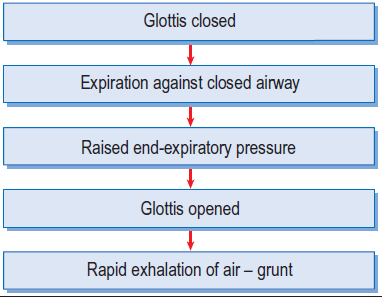
grunting mechanism

STERTOR

Definition: Non-musical, low pitched, snoring sound

Cause: Supra-laryngeal obstruction

STRIDOR

Definition: Loud, intense, monophasic sound with constant pitch

Cause: Upper airway obstruction at and below level of vocal cord

Types:

  1. Inspiratory (Supra-glottic)
  2. Biphasic (Sub-glottic/glottic to tracheal ring)
  3. Expiratory (Tracheo-bronchial)

WHEEZE

Definition: Continual, high-pitched musical sound heard at the end of inspiration or start of expiration

Cause: Asthma, RTI, COPD, Foreign Body aspiration, Cardiac asthma, Bronchiolitis

Mechanism: Vibration of airway wall due to increased velocity of air through narrowed airway
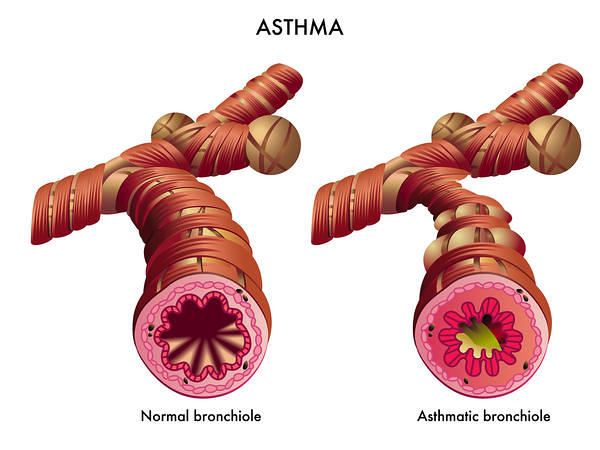
narrowed airway

Types:

  1. Monophonic: Fixed single pitch resulting from localized narrowing of a single airway (Bronchial tumor, Fixed Foreign Body)
  2. Polyphonic: Multiple simultaneous different pitched sound occurs during expiration and implies diffuse disease of different sized airways
48 shares
  • Facebook48
  • Twitter
PGMEE, MRCS, USMLE, MBBS, MD/MS Clinical examinationRespiratory system

Post navigation

Previous post
Next post

Related Posts

PGMEE, MRCS, USMLE, MBBS, MD/MS

Meckel’s Diverticulum : Rule of 2

Sep 7, 2023Sep 7, 2023

General description Rule of 2s 1. Occurs in 2% population 2. Symptomatic cases are 2 times more common in males 3. Located within 2 feet proximal to ileocecal valve 4. 2 inches long and 2 cm diameter 5. 2 types of ectopic mucosa: gastric and pancreatic 6. Symptomatic only in…

Read More
PGMEE, MRCS, USMLE, MBBS, MD/MS

Differentiating Necrotizing Fasciitis from other soft tissue infections

Sep 30, 2020Oct 2, 2020

Necrotizing fasciitis can be misdiagnosed in about 75% of the cases in the intial stage of the disease. The most consistent feature of early necrotizing fasciitis is the pain out of proportion to swelling or erythema. Other features helping to differentiate from other soft tissue infections are: Tenderness extending beyond…

Read More

Applied anatomy of Knee Joint

Jan 5, 2014

A. Osteology: 1. Femur: Largest bone in the body Distal femur possess 2 condyles of which the medial one is larger Medial epicondyle is more porminent and supports the adductor tubercle 2. Patella (Knee cap): Largest sesamoid bone Functions: fulcrum for quadriceps protects knee joint enhances lubrication and nutrition of…

Read More

Leave a Reply Cancel reply

Your email address will not be published. Required fields are marked *

This site uses Akismet to reduce spam. Learn how your comment data is processed.

Epomedicine. Respiratory Examination – Noisy Breathing [Internet]. Epomedicine; 2015 Apr 2 [cited 2026 Jan 14]. Available from: https://epomedicine.com/medical-students/respiratory-examination-noisy-breathing/.

Pre-clinical (Basic Sciences)

Anatomy

Biochemistry

Community medicine (PSM)

Embryology

Microbiology

Pathology

Pharmacology

Physiology

Clinical Sciences

Anesthesia

Dermatology

Emergency medicine

Forensic

Internal medicine

Gynecology & Obstetrics

Oncology

Ophthalmology

Orthopedics

Otorhinolaryngology (ENT)

Pediatrics

Psychiatry

Radiology

Surgery

RSS Ask Epomedicine

  • What to study for Clinical examination in Orthopedics?
  • What is the mechanism of AVNRT?

Epomedicine weekly

  • About Epomedicine
  • Contact Us
  • Author Guidelines
  • Submit Article
  • Editorial Board
  • USMLE
  • MRCS
  • Thesis
©2026 Epomedicine . All rights reserved.