Skip to content
Epomedicine

Mnemonics, Simplified Concepts & Thoughts

Epomedicine

Mnemonics, Simplified Concepts & Thoughts

Phases of Clinical Trial : Mnemonic

Epomedicine, Sep 7, 2023Sep 7, 2023

Clinical trials conduct ‘human experiments’. Three fundamental principles apply:

  • The trial must address a legitimate question
  • The patient must be informed and willing to participate
  • The patient may decline entry or withdraw at any stage

Blinding:

  1. Unblinded: All are aware of the treatment the participant receives
  2. Single blinding: Only the participant is unaware of the treatment they receive
  3. Double blinding: The participant and clinician (data collectors) are unaware of the treatment the participant receives
  4. Triple blinding: Participant, clinician and data analysts – all are unaware of the treatment the participant receives
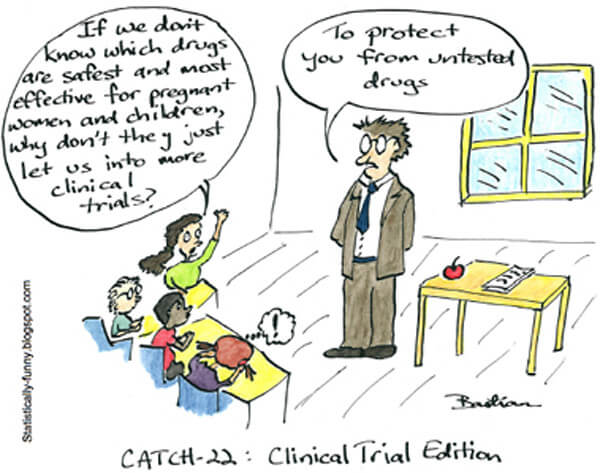
clinical trials
“Catch-22 Clinical Trial Edition” by DES Daughter is licensed under CC BY-NC-SA 2.0.

Phases:

Mnemonic: I SWIM

PhasePurposeNameSampleBlinding and control
0Initial (Pharmacokinetics and Pharmacodynamics)Microdosing studiesHealthy volunteers (smaller)No
ISafe? (Safe maximum dose and tolerability)Human pharmacology and safetyHealthy volunteers (larger)No
IIWorks? (Efficacy)Therapeutic exploratoryPatients (smaller)Single
IIIImprovement from current standard?Therapeutic safetyPatients (larger)Double
IVMarket suitability?Post-marketing surveillancePatients being treated by doctors
  • Facebook
  • Twitter
PGMEE, MRCS, USMLE, MBBS, MD/MS Community medicine

Post navigation

Previous post
Next post

Related Posts

PGMEE, MRCS, USMLE, MBBS, MD/MS

Clavicle Fractures : Last Minute Revision

Dec 17, 2022Dec 17, 2022

1. 80-85% are mid-shaft fractures (other 10-15% are lateral 3rd and 5% are medial 3rd fractures) because of: 2. Deforming forces: 3. X-ray views: 4. Allman classification: Dameron and Rockwood classification for lateral 1/3 pediatric fractures: Type I: Mild strains of ligaments or periosteal tears Type II: Complete disruption of…

Read More
PGMEE, MRCS, USMLE, MBBS, MD/MS

Hypertrophic Scar vs Keloid

May 21, 2024May 21, 2024

Hypertrophic scars and keloids are both raised, firm scars formed from excess fibrinogen production and collagen during healing. Mnemonic: BAD SCARS Mnemonic Basis Hypertrophic scar Keloid B Behavior Natural regression No spontaneous regressio A Acuteness Appears in weeks Appears over months to years D Demographic All races affected More prevalent…

Read More
PGMEE, MRCS, USMLE, MBBS, MD/MS s2 split

Abnormalities of First and Second Heart Sound

Aug 30, 2016

In the chapter of cardiac cycle, we have discussed the mechanism of production of heart sounds and their physiologic splitting. First Heart Sound (S1) Mechanism Closure of atrioventricular valves. It is best appreciated in mitral and tricuspid area of chest for respective components. Loud S1 Slamming a door from a…

Read More

Comment

  1. Kelvin says:
    Sep 10, 2023 at 6:45 pm

    This is awesome. Thank you 🙏🏾

    Reply

Leave a Reply Cancel reply

Your email address will not be published. Required fields are marked *

This site uses Akismet to reduce spam. Learn how your comment data is processed.

Pre-clinical (Basic Sciences)

Anatomy

Biochemistry

Community medicine (PSM)

Embryology

Microbiology

Pathology

Pharmacology

Physiology

Clinical Sciences

Anesthesia

Dermatology

Emergency medicine

Forensic

Internal medicine

Gynecology & Obstetrics

Oncology

Ophthalmology

Orthopedics

Otorhinolaryngology (ENT)

Pediatrics

Psychiatry

Radiology

Surgery

RSS Ask Epomedicine

  • What to study for Clinical examination in Orthopedics?
  • What is the mechanism of AVNRT?

Epomedicine weekly

  • About Epomedicine
  • Contact Us
  • Author Guidelines
  • Submit Article
  • Editorial Board
  • USMLE
  • MRCS
  • Thesis
©2026 Epomedicine | WordPress Theme by SuperbThemes