Skip to content
Epomedicine

Mnemonics, Simplified Concepts & Thoughts

Epomedicine

Mnemonics, Simplified Concepts & Thoughts

Phases of Clinical Trial : Mnemonic

Epomedicine, Sep 7, 2023Sep 7, 2023

Clinical trials conduct ‘human experiments’. Three fundamental principles apply:

  • The trial must address a legitimate question
  • The patient must be informed and willing to participate
  • The patient may decline entry or withdraw at any stage

Blinding:

  1. Unblinded: All are aware of the treatment the participant receives
  2. Single blinding: Only the participant is unaware of the treatment they receive
  3. Double blinding: The participant and clinician (data collectors) are unaware of the treatment the participant receives
  4. Triple blinding: Participant, clinician and data analysts – all are unaware of the treatment the participant receives
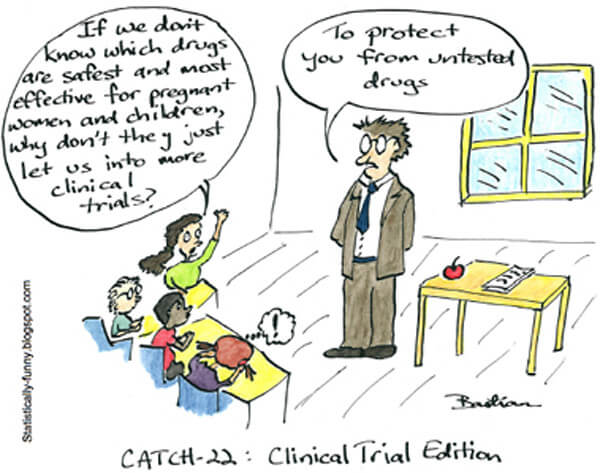
clinical trials
“Catch-22 Clinical Trial Edition” by DES Daughter is licensed under CC BY-NC-SA 2.0.

Phases:

Mnemonic: I SWIM

PhasePurposeNameSampleBlinding and control
0Initial (Pharmacokinetics and Pharmacodynamics)Microdosing studiesHealthy volunteers (smaller)No
ISafe? (Safe maximum dose and tolerability)Human pharmacology and safetyHealthy volunteers (larger)No
IIWorks? (Efficacy)Therapeutic exploratoryPatients (smaller)Single
IIIImprovement from current standard?Therapeutic safetyPatients (larger)Double
IVMarket suitability?Post-marketing surveillancePatients being treated by doctors
  • Facebook
  • Twitter
PGMEE, MRCS, USMLE, MBBS, MD/MS Community medicine

Post navigation

Previous post
Next post

Related Posts

PGMEE, MRCS, USMLE, MBBS, MD/MS breast cancer genes

Breast Cancer Risk Factors with Mnemonics

Jul 16, 2016Aug 18, 2023

EPIDEMIOLOGY OF BREAST CANCER Incidence: In general, less industrialized nations tend to have lower rates of breast cancer, with Japan being an exception to this rule. The highest rates are seen in Europe and North America. Age at onset: Race: incidence is higher among white women than African- American woman, but the mortality is higher…

Read More
PGMEE, MRCS, USMLE, MBBS, MD/MS

Joint Lubrication Made Easy

Jan 20, 2024Jan 20, 2024

Boundary lubrication A monolayer of lubricant molecule (lubricin) adsorbed on each surface (boundary) of the joint prevents direct cartilage to cartilage (articular) contact Fluid-film lubrication Cartilage surfaces are separated by a fluid film 1. Hydrodynamic lubrication: 2. Squeeze film lubrication: 2. Elastohydrodynamic lubrication: Combination of hydrodynamic and squeeze film Mixed…

Read More
PGMEE, MRCS, USMLE, MBBS, MD/MS biostatistics

Statistics – High Yield (Cheat Sheet)

Sep 8, 2023Jul 13, 2024

Normal distribution Non-normal distribution a. Positive skew: Longer or fatter tail on right b. Negative skew: Longer or fatter tail on left 2X2 tables Disease present Disease absent Test positive TP FP Test negative FN TN Event Non-event Exposed or Treatment a b Non-exposed or Placebo c d Formulae Incidence…

Read More

Comment

  1. Kelvin says:
    Sep 10, 2023 at 6:45 pm

    This is awesome. Thank you 🙏🏾

    Reply

Leave a Reply Cancel reply

Your email address will not be published. Required fields are marked *

This site uses Akismet to reduce spam. Learn how your comment data is processed.

Pre-clinical (Basic Sciences)

Anatomy

Biochemistry

Community medicine (PSM)

Embryology

Microbiology

Pathology

Pharmacology

Physiology

Clinical Sciences

Anesthesia

Dermatology

Emergency medicine

Forensic

Internal medicine

Gynecology & Obstetrics

Oncology

Ophthalmology

Orthopedics

Otorhinolaryngology (ENT)

Pediatrics

Psychiatry

Radiology

Surgery

RSS Ask Epomedicine

  • What to study for Clinical examination in Orthopedics?
  • What is the mechanism of AVNRT?

Epomedicine weekly

  • About Epomedicine
  • Contact Us
  • Author Guidelines
  • Submit Article
  • Editorial Board
  • USMLE
  • MRCS
  • Thesis
©2026 Epomedicine | WordPress Theme by SuperbThemes