Skip to content
Epomedicine

Mnemonics, Simplified Concepts & Thoughts

Epomedicine

Mnemonics, Simplified Concepts & Thoughts

esr

Maximum Normal ESR and CRP for age and gender

Epomedicine, Jan 23, 2021Jan 23, 2021

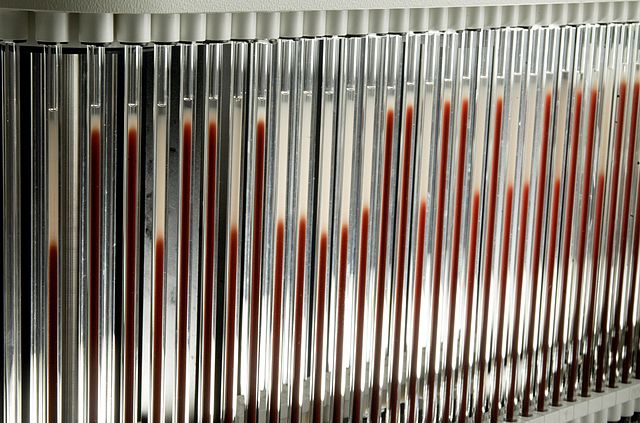
Age and gender plays should be taken into account when interpreting the values of ESR and CRP. The maximum ESR value is limited by the length of the Westergren tube (usually 120 mm), but the CRP has no upper limit.
esr

Miller formulae for calculating maximum normal ESR in Adults

ESR is higher in women than men and correlates significantly with advancing age. For patients who are the same age, the ESR, by the Miller formula, should be 5 mm/h higher in women than men.

  1. Men: Age/2
  2. Women: (Age + 10)/2

Miller formulae for calculating maximum normal CRP in Adults

Some studies have shown that serum CRP levels are neither affected by the gender of the patient or by their age and do not require adjustment for gender or age.

  1. Men: Age/50
  2. Women: Age/50 + 0.6 OR (Age + 30)/50
ESR and CRP in Musculoskeletal infection

Reference:

  1. Miller A, Green M, Robinson D. Simple rule for calculating normal erythrocyte sedimentation rate. Br Med J (Clin Res Ed). 1983 Jan 22;286(6361):266. doi: 10.1136/bmj.286.6361.266. PMID: 6402065; PMCID: PMC1546487.
  2. Wener MH, Daum PR, McQuillan GM. The influence of age, sex, and race on the upper reference limit of serum C-reactive protein concentration. J Rheumatol. 2000 Oct;27(10):2351-9. PMID: 11036829.
  • Facebook
  • Twitter
PGMEE, MRCS, USMLE, MBBS, MD/MS General conceptsMicrobiology

Post navigation

Previous post
Next post

Related Posts

PGMEE, MRCS, USMLE, MBBS, MD/MS

Rosacea: Etiopathogenesis, Diagnosis and Management

Nov 11, 2013Sep 26, 2021

Synonyms: Rosacea acne, Adult acne, Rhinophyma Defintion: A chronic and recurrent inflammatory disorder of the pilosebaceous units and vasculature of the face characterized by erythema and telangiectases and punctuated by acute episodes of papules, pustules and swelling. Rosacea is a disorder of sebaceous gland. Learn the anatomy and physiology of sebaceous gland. Classification:…

Read More
PGMEE, MRCS, USMLE, MBBS, MD/MS

Osteogenesis Imperfecta : Mnemonic

Oct 28, 2022Aug 13, 2023

Synonym: Brittle Bone Disease Incidence: 1 in 20,000 Gene defect: Col1A1 (17q) and Col1A2 (7q) Mnemonic: Remember “one” for “bone”. Collagen one is the main composition of bone. OI is a disorder of bone. Hence, the defect is is in Col1. Features Mnemonic: BLOOD Sillence Type Inheritance Features Mnemonic Collagen…

Read More
PGMEE, MRCS, USMLE, MBBS, MD/MS pediatric fractures

General Principles – Pediatric Fracture Management

Apr 4, 2020Apr 4, 2020

Children are not just mini-adults • Higher head to torso ratio: Head injury & Upper C-spine fractures • Light weight – projectile when struck • BSA to Wt. ratio – higher (rapid hypothermia) • Large cardiopulmonary reserves – normal SBP in significant hypovolemia Growth contribution by Proximal & Distal Physes…

Read More

Leave a Reply Cancel reply

Your email address will not be published. Required fields are marked *

This site uses Akismet to reduce spam. Learn how your comment data is processed.

Pre-clinical (Basic Sciences)

Anatomy

Biochemistry

Community medicine (PSM)

Embryology

Microbiology

Pathology

Pharmacology

Physiology

Clinical Sciences

Anesthesia

Dermatology

Emergency medicine

Forensic

Internal medicine

Gynecology & Obstetrics

Oncology

Ophthalmology

Orthopedics

Otorhinolaryngology (ENT)

Pediatrics

Psychiatry

Radiology

Surgery

RSS Ask Epomedicine

  • What to study for Clinical examination in Orthopedics?
  • What is the mechanism of AVNRT?

Epomedicine weekly

  • About Epomedicine
  • Contact Us
  • Author Guidelines
  • Submit Article
  • Editorial Board
  • USMLE
  • MRCS
  • Thesis
©2026 Epomedicine | WordPress Theme by SuperbThemes