Skip to content
Epomedicine

Mnemonics, Simplified Concepts & Thoughts

Epomedicine

Mnemonics, Simplified Concepts & Thoughts

esr

ESR and CRP in Musculoskeletal infection

Epomedicine, Aug 5, 2020Jan 27, 2022

ESR (Erythrocyte Sedimentation Rate)

  1. Usually elevated within 48-72 hours of the infection onset (less reliable in the first 48 hours of infection)
  2. Continues to rise for 3-5 days after institution of successful therapy and continuing rise beyond 4th-5th day of treatment can be an indication of treatment failure (not good means of monitoring treatment during first week)
  3. Returns to normal over 2-4 weeks after elimination of infection.
  4. Elevated in 85%-95% cases of septic arthritis and in 90%-95% of osteomyelitis cases (significantly higher levels in septic arthritis than osteomyelitis)
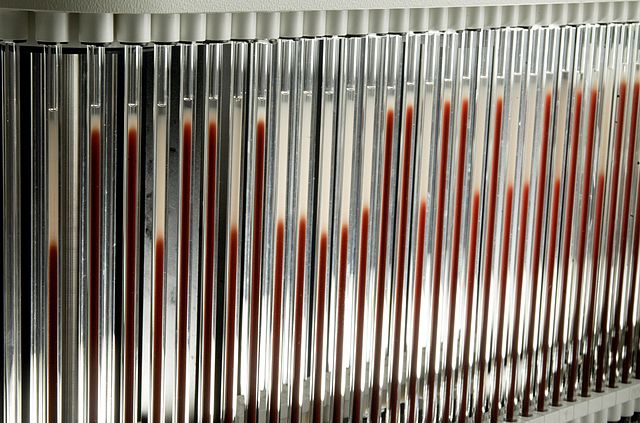
ESR
MechESR / CC0

CRP (C-Reactive Protein)

  1. Begin to rise within 6 hours of the triggering stimulus (trauma or infection) and then increases several hundredfold
  2. Reaches a peak within 36-50 hours
  3. Falls to normal quickly with successful treatment because of short half-life (returns to normal within 1 week of successful treatment)
  4. Elevated in 98% of patients with osteomyelitis
  5. If CRP is <1.0 mg/dL, the probability that a patient does not have septic arthritis is 87%
  6. In the surgery group, it takes twice as long for the CRP and ESR to reach peak values and then twice as long to normalize after initiation of treatment.
Maximum Normal ESR and CRP for age and gender
  • Facebook
  • Twitter
PGMEE, MRCS, USMLE, MBBS, MD/MS Infectious diseaseOrthopedicsPediatrics

Post navigation

Previous post
Next post

Related Posts

PGMEE, MRCS, USMLE, MBBS, MD/MS antigenic shift and drift

Antigenic Shift and Drift

Apr 5, 2017

Antigenic Drift Nature of antigenic variation: Minor Mechanism: Gradual accumulation of amino acid substitutions due to point mutation in the hemagglutinin (H) and neuraminidase (N) genes. As mutations accumulate, antibodies generated by exposure to previous strains do not neutralize current strains to the same extent, resulting in only limited or…

Read More
PGMEE, MRCS, USMLE, MBBS, MD/MS

Sarcomere Structure : Mnemonic

Feb 2, 2019Feb 27, 2026

Remember the sequence: Zahir Is A Hungry Man Z is the final alphabet: Z lines represents the end of sarcomere M for middle: M line represents the midline of sarcomere I is a thin letter: I band has only thin filaments H is a thick letter: H zone has only…

Read More
PGMEE, MRCS, USMLE, MBBS, MD/MS pth magnesium

Why mild hypomagnesemia causes hyperparathyroidism and severe hypomagnesemia causes hypoparathyroidism?

Feb 16, 2017Jul 29, 2023

You must have seen the statement in First Aid that says – low serum magnesium causes increase in Parathyroid hormone secretion and very low serum magnesium causes decrease in Parathyroid hormone secretion. Doesn’t this make you curious? Let’s explore the underlying mechanism in depth. How Calcium and Magnesium Mediated PTH…

Read More

Leave a Reply Cancel reply

Your email address will not be published. Required fields are marked *

This site uses Akismet to reduce spam. Learn how your comment data is processed.

Pre-clinical (Basic Sciences)

Anatomy

Biochemistry

Community medicine (PSM)

Embryology

Microbiology

Pathology

Pharmacology

Physiology

Clinical Sciences

Anesthesia

Dermatology

Emergency medicine

Forensic

Internal medicine

Gynecology & Obstetrics

Oncology

Ophthalmology

Orthopedics

Otorhinolaryngology (ENT)

Pediatrics

Psychiatry

Radiology

Surgery

RSS Ask Epomedicine

  • What to study for Clinical examination in Orthopedics?
  • What is the mechanism of AVNRT?

Epomedicine weekly

  • About Epomedicine
  • Contact Us
  • Author Guidelines
  • Submit Article
  • Editorial Board
  • USMLE
  • MRCS
  • Thesis
©2026 Epomedicine | WordPress Theme by SuperbThemes