Skip to content
Epomedicine

Mnemonics, Simplified Concepts & Thoughts

Epomedicine

Mnemonics, Simplified Concepts & Thoughts

hematopoiesis

Hematopoietic growth factors list with mnemonics

Dr. Sulabh Kumar Shrestha, MS Orthopedics, May 23, 2019May 23, 2019
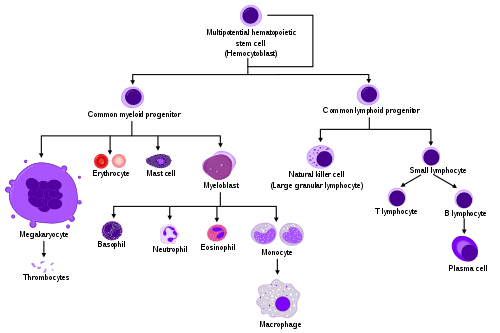
hematopoiesis schematic
Mikael Häggström and A. Rad [CC BY-SA 3.0], via Wikimedia Commons

a. SCF (Steel factor): Multipontent stem cells

b. IL-3: Myeloid stem cells (“3” turned down looks like “m“)

c. IL-7: Lymphoid stem cell (“L” turned up looks like “7“)

d. GM-CSF (Granulocyte macrophage Colony stimulating factor): Myeloid lineage (Erythrocytes, Thrombocytes, Granulocytes and Monocytes)

Pharmaceutical: Sargramostim

e. G-CSF: Granulocytes (Neutrophil, Eosinophil, Basophil)

Pharmaceutical: Filgrastim, peg-filgrastim

f. M-CSF: Monocytes

g. EPO (Erythropoietin): Erythrocytes

Pharmaceutical: Epoietin-alpha, Darbepoietin

h. TPO (Thrombopoietin): Thrombocytes

i. IL-11: Thrombocytes (11 letters in THROMBOCYTE)

Pharmaceutical: Oprelvekin

j. IL-5: Eosinophil (E is the 5th letter)

k. IL-2: T-cells (“T” for “Two” and “T-lymphocytes”)

l. IL-4: B-cells (B4 – Basophill secrete IL-4 → B cell growth)

m. IL-6: Plasma cells (6 letters in PLASMA)

n. IL-15: NK cells (15 letters in GRANULAR KILLERS)

Some other roles of cytokins:

1. IL-8: Neutrophil chemotactic factor
2. IL-12: TH1 differentiation and NK cell activation
3. IFN-gamma: Inhibits TH2 differentiation
4. IL-4: TH2 differentiation and class switching to IgE and IgG
5. IL-5: Class switching to IgA
6. IL-10: Cytokine synthesis inhibition in NK and TH1 cells
7. IL-1: Lymphocyte activating factor

dr. sulabh kumar shrestha
Dr. Sulabh Kumar Shrestha, MS Orthopedics

He is the section editor of Orthopedics in Epomedicine. He searches for and share simpler ways to make complicated medical topics simple. He also loves writing poetry, listening and playing music. He is currently pursuing Fellowship in Hip, Pelvi-acetabulum and Arthroplasty at B&B Hospital.
21 shares
  • Facebook21
  • Twitter
PGMEE, MRCS, USMLE, MBBS, MD/MS HematologyPathologyPhysiology

Post navigation

Previous post
Next post

Related Posts

PGMEE, MRCS, USMLE, MBBS, MD/MS

Personality Disorders – Mnemonic

May 17, 2019May 17, 2019

If you are having a hard time remembering the clusters and which disorder falls into which cluster, this mnemonic will be helpful. Three clusters: A, B and C; remember as WWW – Weird, Wild and Worried, respectively. Cluster A – Weird (Genetic association with Schizophrenia) Accusatory: Paranoid (Suspicious) Aloof: Schizoid…

Read More

Leprosy: Etiopathogenesis, Classification and Complications

Nov 19, 2013

Synonyms: Hansen’s disease, Kushta roga, Mezels Definition: Leprosy is a chronic granulomatous disease, caused by Mycobacterium leprae which affects prinicpally the skin and  peripheral nerves. Other commonly affected sites are the cooler parts of the body like mucosa of upper respiratory tract, anterior chamber of eyes and testes. The cooler…

Read More
PGMEE, MRCS, USMLE, MBBS, MD/MS cholangiocarcinoma tnm

Cholangiocarcinoma (Bile Duct Cancer) – Quick Review

Jan 30, 2017Oct 26, 2022

This article is in response to the request made by a reader in the comment section. Today, we will try to simplify the biliary tree cancers. Classification of Cholangiocarcinoma Second-order bile ducts act as the separation point between intrahepatic and extrahepatic cholangiocarcinoma. A. Inhtrahepatic – 10 to 20% B. Extrahepatic…

Read More

Leave a Reply Cancel reply

Your email address will not be published. Required fields are marked *

This site uses Akismet to reduce spam. Learn how your comment data is processed.

Pre-clinical (Basic Sciences)

Anatomy

Biochemistry

Community medicine (PSM)

Embryology

Microbiology

Pathology

Pharmacology

Physiology

Clinical Sciences

Anesthesia

Dermatology

Emergency medicine

Forensic

Internal medicine

Gynecology & Obstetrics

Oncology

Ophthalmology

Orthopedics

Otorhinolaryngology (ENT)

Pediatrics

Psychiatry

Radiology

Surgery

RSS Ask Epomedicine

  • What to study for Clinical examination in Orthopedics?
  • What is the mechanism of AVNRT?

Epomedicine weekly

  • About Epomedicine
  • Contact Us
  • Author Guidelines
  • Submit Article
  • Editorial Board
  • USMLE
  • MRCS
  • Thesis
©2026 Epomedicine | WordPress Theme by SuperbThemes