Skip to content
Epomedicine

Mnemonics, Simplified Concepts & Thoughts

Epomedicine

Mnemonics, Simplified Concepts & Thoughts

Bohr and Haldane Effect : Mnemonics

Epomedicine, May 23, 2023May 23, 2023

Haldane effect

Mnemonic: HALD

  1. Haldane effect
  2. when blood reaches Alveoli
  3. Left shift of oxygen hemoglobin dissociation curve due to –
  4. Decarboxylation of hemoglobin (oxygen displaces carbon dioxide which is expired)
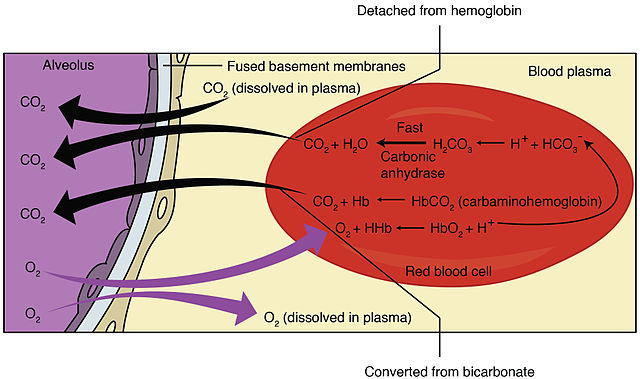
haldane effect
OpenStax College, CC BY 3.0, via Wikimedia Commons

Bohr Effect

Mnemonic: BOHR

  1. Bohr effect
  2. when blood reaches Organs (tissues)
  3. Hydrogen ion (released from carbon dioxide) causes –
  4. Right shift of oxygen hemoglobin dissociation curve (oxygen is released from hemoglobin into tissues)
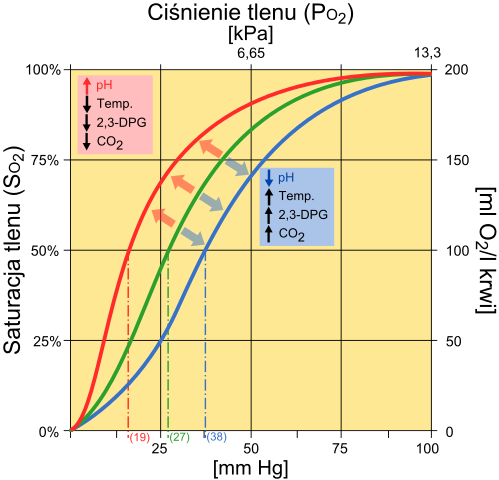
bohr effect
Michal Komorniczak ([email protected]), CC BY 3.0, via Wikimedia Commons
  • Facebook
  • Twitter
PGMEE, MRCS, USMLE, MBBS, MD/MS AnesthesiaPhysiology

Post navigation

Previous post
Next post

Related Posts

PGMEE, MRCS, USMLE, MBBS, MD/MS

Kocher Criteria for Septic Arthritis : Mnemonic

Apr 25, 2020Apr 25, 2020

Kocher criteria can help to differentiate between spetic arthritis and transient synovitis in a case of non-traumatic painful hip in a child. A restrospective study in 104 pediatric patients has depicted that meeting 3 out of 4 crtieria would miss 52% cases and is of limited usefulness in detecting septic…

Read More
PGMEE, MRCS, USMLE, MBBS, MD/MS

Timing of Wound Closure (Primary, Secondary, Tertiary)

Aug 26, 2020Aug 26, 2020

Before moving to the concept of wound closure, it is necessary to understand the pathophysiology behind different types of healing. We have covered stages of wound healing in general previously. There are three types of wound healing: Primary intention Secondary intention Tertiary intention Healing by primary intention occurs when the…

Read More
PGMEE, MRCS, USMLE, MBBS, MD/MS

Wrist Ligaments

Jan 7, 2021Jan 7, 2021

a. Interosseous: Extend deeply, directly between two bones Radioscapholunate (RSL) aka Ligament of Testut (neurovascular conduit to SL ligament) Scapholunate (SL) and Lunotriquetral (UL) – volar, dorsal and proximal fibrocartilaginous membrane components Capitohamate (CH) b. Palmar-proximal V: Converge as an “upside-down V” from the radius/ulna to lunate Radio-luno-triquetral (RLT) –…

Read More

Leave a Reply Cancel reply

Your email address will not be published. Required fields are marked *

This site uses Akismet to reduce spam. Learn how your comment data is processed.

Pre-clinical (Basic Sciences)

Anatomy

Biochemistry

Community medicine (PSM)

Embryology

Microbiology

Pathology

Pharmacology

Physiology

Clinical Sciences

Anesthesia

Dermatology

Emergency medicine

Forensic

Internal medicine

Gynecology & Obstetrics

Oncology

Ophthalmology

Orthopedics

Otorhinolaryngology (ENT)

Pediatrics

Psychiatry

Radiology

Surgery

RSS Ask Epomedicine

  • What to study for Clinical examination in Orthopedics?
  • What is the mechanism of AVNRT?

Epomedicine weekly

  • About Epomedicine
  • Contact Us
  • Author Guidelines
  • Submit Article
  • Editorial Board
  • USMLE
  • MRCS
  • Thesis
©2026 Epomedicine | WordPress Theme by SuperbThemes