Skip to content
Epomedicine

Mnemonics, Simplified Concepts & Thoughts

Epomedicine

Mnemonics, Simplified Concepts & Thoughts

Modified Ashworth Scale for Spasticity : Mnemonic

Dr. Sulabh Kumar Shrestha, MS Orthopedics, May 1, 2022May 1, 2022

Ashworth scale tests resistance to passive motion about a joint with varying degrees of velocity. Modified Ashworth Scale (Bohannon and Smith, 1987) has 1+ grading between grades 1 and 2. Modified Ashworth Scale (Ansari et.al., 2006) has been described here.

Mnemonic: Ashworth is a juggling clown
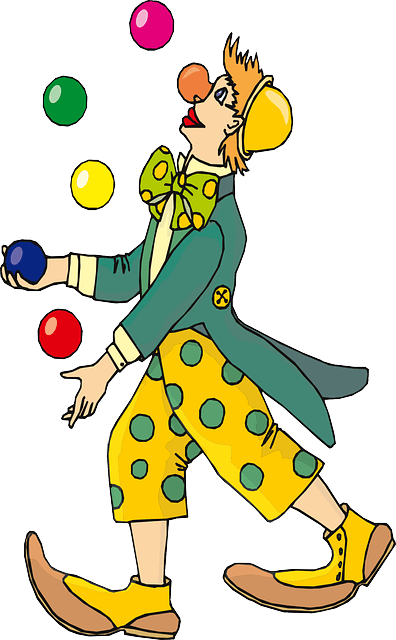
ashworth scale mnemonic

0 : 0 is nothing (normal muscle tone)

1 : 1stly he needs to CATCH the balls to juggle (slightly increased tone, CATCHES near end of ROM)

2 : Juggling 2 balls is EASY (markedly increased tone, CATCH in middle ROM, but affected part EASILY moved)

3 : Juggling 3 balls is DIFFICULT (considerable increased tone, DIFFICULT Passive ROM)

4 : Juggling 4 balls is IMPOSSIBLE (rigid in flexion and extension)

Modified from: https://www.coursehero.com/u/file/88213141/Ashworthpdf/

dr. sulabh kumar shrestha
Dr. Sulabh Kumar Shrestha, MS Orthopedics

He is the section editor of Orthopedics in Epomedicine. He searches for and share simpler ways to make complicated medical topics simple. He also loves writing poetry, listening and playing music. He is currently pursuing Fellowship in Hip, Pelvi-acetabulum and Arthroplasty at B&B Hospital.
  • Facebook
  • Twitter
Clinical Skills and Approaches Clinical examinationNervous system

Post navigation

Previous post
Next post

Related Posts

Clinical Skills and Approaches lhermittes sign

Lhermitte’s Sign

Jul 11, 2016Jul 11, 2016

Synonym: Lhermitte’s phenomenon, Barber chair phenomenon Definition of Lhermitte’s Sign Lhermitte’s sign (pronounced Ler-meets) is an electric shock-like sensations, spreading along the spine in a cervico-caudal direction and into the arms and legs felt upon active or passive flexion of the neck. Reverse Lhermitte’s Sign is defined when symptoms are…

Read More
Clinical Skills and Approaches hand examination

Examination of Hands

Mar 18, 2015

History: Hand dominance and occupation? Injury? Pain? Paresthesia? Impaired function? Swelling? Position: Place the patient’s hands on pillow Look: SEATS a. Shape or Deformity: – Wrist: Radial deviation: RA Ulnar deviation and flexion deformity: Spastic hemiplegia (CP) Wrist drop (also finger drop): Radial nerve injury Prominent dorsal ulnar and radial…

Read More
Clinical Skills and Approaches knee ligament examination

Tests for Knee Ligaments

Oct 29, 2017Sep 3, 2020

Anterior Cruciate Ligament (ACL) Lacchman’s test It is performed with the patient supine and the knee flexed 20–30°. The examiner grasps the distal femur (from lateral side) with one hand and the proximal tibia with the other hand (from medial side). The lower leg is given a brisk forward tug…

Read More

Leave a Reply Cancel reply

Your email address will not be published. Required fields are marked *

This site uses Akismet to reduce spam. Learn how your comment data is processed.

Pre-clinical (Basic Sciences)

Anatomy

Biochemistry

Community medicine (PSM)

Embryology

Microbiology

Pathology

Pharmacology

Physiology

Clinical Sciences

Anesthesia

Dermatology

Emergency medicine

Forensic

Internal medicine

Gynecology & Obstetrics

Oncology

Ophthalmology

Orthopedics

Otorhinolaryngology (ENT)

Pediatrics

Psychiatry

Radiology

Surgery

RSS Ask Epomedicine

  • What to study for Clinical examination in Orthopedics?
  • What is the mechanism of AVNRT?

Epomedicine weekly

  • About Epomedicine
  • Contact Us
  • Author Guidelines
  • Submit Article
  • Editorial Board
  • USMLE
  • MRCS
  • Thesis
©2026 Epomedicine | WordPress Theme by SuperbThemes