Skip to content
Epomedicine

Mnemonics, Simplified Concepts & Thoughts

Epomedicine

Mnemonics, Simplified Concepts & Thoughts

Modified Ashworth Scale for Spasticity : Mnemonic

Dr. Sulabh Kumar Shrestha, MS Orthopedics, May 1, 2022May 1, 2022

Ashworth scale tests resistance to passive motion about a joint with varying degrees of velocity. Modified Ashworth Scale (Bohannon and Smith, 1987) has 1+ grading between grades 1 and 2. Modified Ashworth Scale (Ansari et.al., 2006) has been described here.

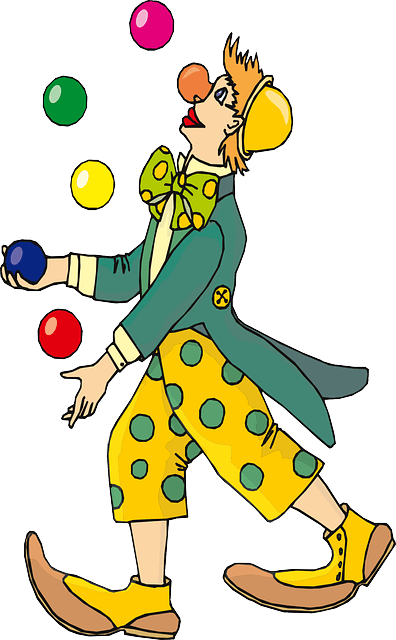
Mnemonic: Ashworth is a juggling clown
ashworth scale mnemonic

0 : 0 is nothing (normal muscle tone)

1 : 1stly he needs to CATCH the balls to juggle (slightly increased tone, CATCHES near end of ROM)

2 : Juggling 2 balls is EASY (markedly increased tone, CATCH in middle ROM, but affected part EASILY moved)

3 : Juggling 3 balls is DIFFICULT (considerable increased tone, DIFFICULT Passive ROM)

4 : Juggling 4 balls is IMPOSSIBLE (rigid in flexion and extension)

Modified from: https://www.coursehero.com/u/file/88213141/Ashworthpdf/

dr. sulabh kumar shrestha
Dr. Sulabh Kumar Shrestha, MS Orthopedics

He is the section editor of Orthopedics in Epomedicine. He searches for and share simpler ways to make complicated medical topics simple. He also loves writing poetry, listening and playing music. He is currently pursuing Fellowship in Hip, Pelvi-acetabulum and Arthroplasty at B&B Hospital.
  • Facebook
  • Twitter
Clinical Skills and Approaches Clinical examinationNervous system

Post navigation

Previous post
Next post

Related Posts

Clinical Skills and Approaches

Ten Diagnostic Dilemmas in Neonatal Meningitis

Jun 28, 2020Jun 28, 2020

Incidence the global incidence of neonatal sepsis at 5–6 per 1000 live births and that of meningitis at 0.7–1 (2.4–16 in South and South-East Asia, 6–21 in sub-Saharan Africa, and 1.8–12 in the Middle East and North Africa) Causative Agents : Group B streptococci  Escherichia coli  Klebsiella pneumoniae  Streptococcus pneumoniae …

Read More
Clinical Skills and Approaches ocular examination

History and Examination in Ophthalmology

Aug 9, 2015

A) HISTORY Besides chief complaints, other portion of history is similar to the one you prepare in internal medicine. 1. Description of symptom (SOCRATES): S – Site (Unilateral or Bilateral) O- Onset C – Character R – Radiation (if applicable) A – Aggravating and relieving factors T – Timing and…

Read More
Clinical Skills and Approaches sodium

Hyponatremia Correction: Rules and Mnemonics

Aug 4, 2019Jun 16, 2023

Corrected sodium level When hyperglycemia is present, the underlying sodium concentration (corrected sodium concentration) can be estimated by adding 1.6-2.4 mEq/L (average of 2 mEq/L) to the reported sodium concentration for every 100 mg/dl increase in plasma glucose above 100 mg/dl. E.g. In a patient with Na+ level, 145 and…

Read More

Leave a Reply Cancel reply

Your email address will not be published. Required fields are marked *

This site uses Akismet to reduce spam. Learn how your comment data is processed.

Pre-clinical (Basic Sciences)

Anatomy

Biochemistry

Community medicine (PSM)

Embryology

Microbiology

Pathology

Pharmacology

Physiology

Clinical Sciences

Anesthesia

Dermatology

Emergency medicine

Forensic

Internal medicine

Gynecology & Obstetrics

Oncology

Ophthalmology

Orthopedics

Otorhinolaryngology (ENT)

Pediatrics

Psychiatry

Radiology

Surgery

RSS Ask Epomedicine

  • What to study for Clinical examination in Orthopedics?
  • What is the mechanism of AVNRT?

Epomedicine weekly

  • About Epomedicine
  • Contact Us
  • Author Guidelines
  • Submit Article
  • Editorial Board
  • USMLE
  • MRCS
  • Thesis
©2026 Epomedicine | WordPress Theme by SuperbThemes