Skip to content
Epomedicine

Mnemonics, Simplified Concepts & Thoughts

Epomedicine

Mnemonics, Simplified Concepts & Thoughts

Eliciting Primitive Neonatal Reflexes

Dr. Pedchrome, Mar 8, 2023Mar 8, 2023

Neonatal reflexes are the reflexes which are present at birth and have a predictable course of appearance and disappearance. A normally developing newborn should respond to certain stimuli with these reflexes, which eventually become inhibited as the child matures.

The list of reflexes that can be elicited in normal newborn are:

  1. Moros Reflex
  2. Rooting reflex
  3. Sucking reflex
  4. Grasp reflex
  5. Babinski reflex
  6. Asymmetric tonic neck reflex (ATNR)
  7. Gallant reflex
  8. Stepping reflex
  9. Landau’s reflex
  10. Tonic Labyrinthine Reflex
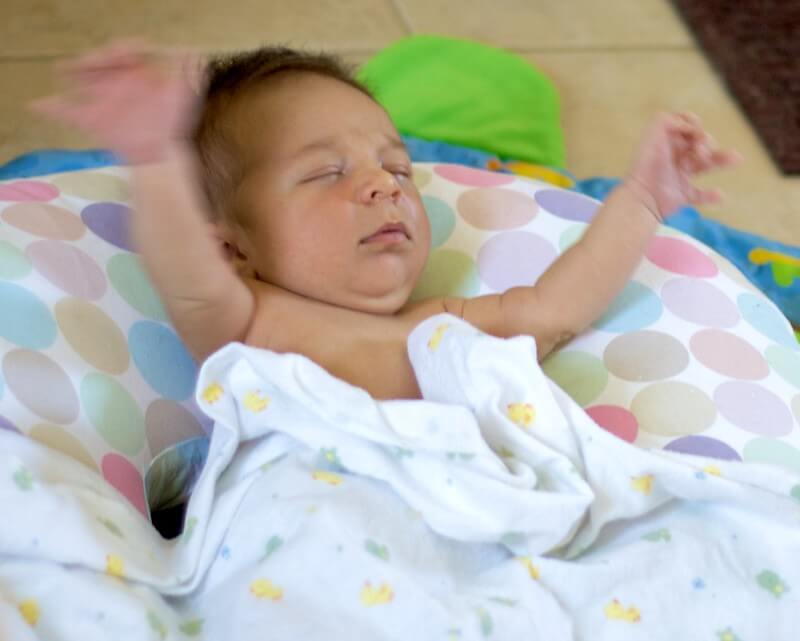
moro's reflex
“Moro!” by found_drama is licensed under CC BY-NC-SA 2.0. To view a copy of this license, visit https://creativecommons.org/licenses/by-nc-sa/2.0/?ref=openverse.
ReflexStimulationResponseDuration
BabinskiSole of foot strokedFans out toes and twists foot inDisappears at 9 months – 1 year
BlinkingFlash of light or puff of airCloses eyesPermanent
GraspingPalms touchedGrasps tightlyWeakens at 3 months; disappears at 1 year
MoroSudden move; loud noiseStartles; throws out arms and legs and then pulls them toward bodyDisappears at 3-4 months
RootingCheek stroked or side of mouth touchedTurns toward source, opens mouth and sucksDisappears at 3-4 months
SteppingInfant held upright with feet touching groundMoves feet as if to walkDisappears at 3-4 months
SuckingMouth touched by objectSucks on objectDisappears at 3-4 months
SwimmingPlaced face down in waterMakes coordinated swimming movementsDisappears at 6-7 months
Tonic neckPlaced on backMakes fists and turns head to the rightDisappears at 2 months

After going through the table, you can now watch this video showing the commonly elicited neonatal reflexes and their significance.

Here is a helpful library on Pediatric neurology.

Pediatric doctor
Dr. Pedchrome

MD Pediatrics and Fellowship Neonatology, he chooses to stay anonymous. He often writes his views online as well as share few important topics for medical students, doctors and specially parents. He does research in pediatrics.

  • Facebook
  • Twitter
Clinical Skills and Approaches Clinical examinationNeonatesNervous systemPediatrics

Post navigation

Previous post
Next post

Related Posts

Clinical Skills and Approaches

Hoffmann’s Sign

Dec 7, 2022Dec 7, 2022

History Method of Eliciting Hoffmann’s Reflex Mechanism of Positive Hoffmann’s Reflex Sudden stretch of the finger flexors causes involuntary finger flexor contraction due to activation of a monosynaptic stretch reflex. Exaggeration of the reflex is caused by hyperreflexia in the setting of upper motor neuron dysfunction. Upper motor neuron lesions…

Read More
Clinical Skills and Approaches Pulsus paradoxus measurement clinical

Pulsus Paradoxus – Clinical Examination

Aug 15, 2014Jun 18, 2016

Synonyms: Paradoxical pulse, Paradoxic pulse, Reversed Bernheim sign Definition of Pulsus Paradoxus There is normal physiological fall in Blood pressure upto 10 mmHg during inspiration. Pulsus paradoxus is the exaggeration of this normal decline in blood pressure more than 10 mmHg during inspiration. The “paradox” refers to the fact that…

Read More
Clinical Skills and Approaches sectoral sign

Sectoral Sign : AVN hip

Jun 11, 2020Jun 11, 2020

The rotation of the hip must be assessed both with the hip in flexion and extension as well. In general, the range of motion for rotations are 5 to 10 degrees more in flexion compared to that in extension of hip. If the range of motion for rotation varies between…

Read More

Leave a Reply Cancel reply

Your email address will not be published. Required fields are marked *

This site uses Akismet to reduce spam. Learn how your comment data is processed.

Pre-clinical (Basic Sciences)

Anatomy

Biochemistry

Community medicine (PSM)

Embryology

Microbiology

Pathology

Pharmacology

Physiology

Clinical Sciences

Anesthesia

Dermatology

Emergency medicine

Forensic

Internal medicine

Gynecology & Obstetrics

Oncology

Ophthalmology

Orthopedics

Otorhinolaryngology (ENT)

Pediatrics

Psychiatry

Radiology

Surgery

RSS Ask Epomedicine

  • What to study for Clinical examination in Orthopedics?
  • What is the mechanism of AVNRT?

Epomedicine weekly

  • About Epomedicine
  • Contact Us
  • Author Guidelines
  • Submit Article
  • Editorial Board
  • USMLE
  • MRCS
  • Thesis
©2026 Epomedicine | WordPress Theme by SuperbThemes