MNEMONIC: FUNWISE
During the last 1 month, how often/many times you had to –
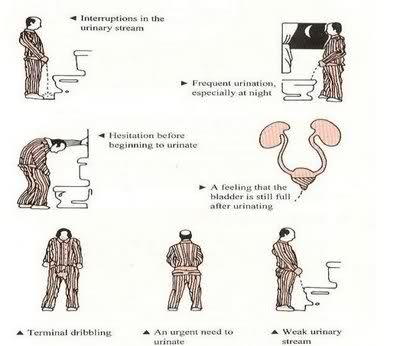
1. Frequency: Urinate again <2 hours after you finished urinating ?
2. Urgency: Difficulty in postponing the urine ?
3. Nocturia: Get up to urinate from bedtime to wakeup ?
4. Weak stream: Weak urinary stream ?
5. Intermittency: Stopped and started again several times when urinated ?
6. Straining: Push or strain to begin urination ?
7. Emptying incomplete: Sensation of incomplete emptying of bladder after finishing urination ?
Irritative symptoms – FUN (Frequency, Urgency, Nocturia)
Obstructive symptoms – WISE (Weak stream, Intermittency, Straining, Emptying incomplete)
Each of the 7 questions are graded out of 5 (0-5) for a total score of 35.
- 0 – Not at all
- 1 – <1/5 time
- 2 – <1/2 time
- 3- 1/2 time
- 4 – >1/2 time
- 5 – Almost always
Grading:
0-7: Mild
- Candidates for watchful waiting – reducing fluid intake after evening meal and avoiding decongestants
8-19: Moderate and 20-35: Severe
- Indications for surgery: Urinary retention, Recurrent UTI, Gross hematuria, Bladder stones, Renal insufficiency, Severe prostatism, Maximum flow rate (PFR) <10 ml/s and Increased postvoidal residual urine (PVRU)
- Indications for open prostatectomy: Prostate size >100 cc, Requiring bladder surgery (stone removal, tumor, diverticulectomy), Failed medical management
- Transvesical (Freyer’s) approach – Bladder opened
- Retropubic (Millin’s) approach – Bladder pushed to one side
- Other modalities: TURP (Transurethral resection of prostate), TUIP (Transurethral Incision of Prostate), Minimally invasive (Prostatic stents, Thermotherapy, Transurethral Needle Ablation or TUNA, High Focused Ultrasonography or HIFU, Laser treatment)
- Indications for open prostatectomy: Prostate size >100 cc, Requiring bladder surgery (stone removal, tumor, diverticulectomy), Failed medical management
- Medical therapy if no indications of surgery:
- If prostate size <40 cc – Alpha blockers (decrease tone of smooth muscle in prostate and bladder neck) e.g. Tamsulosin (usually prescribed as 0.4 mg PO HS for few months), Doxazosin, Prazosin, Terazosin (1 mg HS)
- If prostate size >40 cc – 5 alpha reductase inhibitor (decreases Dihydrotestosterone) eg. Finasteride (usually prescribed as 5 mg/day as a single oral dose for few weeks to months), Dutasteride (0.5 mg/day as a single oral dose)
The International Prostate Symptom Score (IPSS) uses the same 7 questions as the AUA Symptom Index, but adds a “Disease Specific Quality of Life Question” (sometimes referred to as the “bother score”) and scored on a scale from 0 to 6 points (“delighted” to “terrible”).
- If you were to spend the rest of your life with your urinary condition just the way it is now, how would you feel about that?
- Delighted – 0
- Pleased- 1
- Mostly satisfied – 2
- Mixed – 3
- Mostly disappointed – 4
- Unhappy – 5
- Terrible – 6
————————————————————————————————–
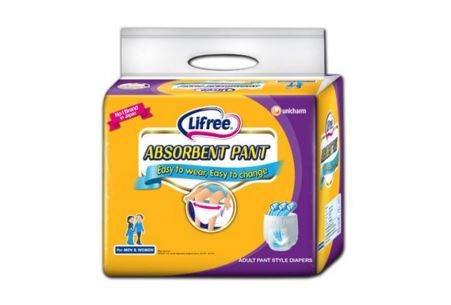
One Solution for Patients with urinary incontinence and dribbling issues including the patients of BPH is adult adsorbent pants/diapers that can keep you dry and productive .
UNICHARM’s Lifree adult adsorbent, Japan’s Number 1 Brand*, diapers have
-Excellent soaking power
- Leakproof
- Light and comfortable
- Easy to use for elderly as well
- Specialized in the field.
- Cost effective
Shop : Buy this product: http://www.lifree.co.in/index.html
Disclaimer: *Data source: INTAGE SRI, ADULT DIAPERS SALES, APR’10- JAN’16. The views about the product described here are solely in experience of the writer and does not represent view of the Lifree company or this website.
Written by Mr Shrestha

He is the section editor of Orthopedics in Epomedicine. He searches for and share simpler ways to make complicated medical topics simple. He also loves writing poetry, listening and playing music. He is currently pursuing Fellowship in Hip, Pelvi-acetabulum and Arthroplasty at B&B Hospital.

how to join in the chapter