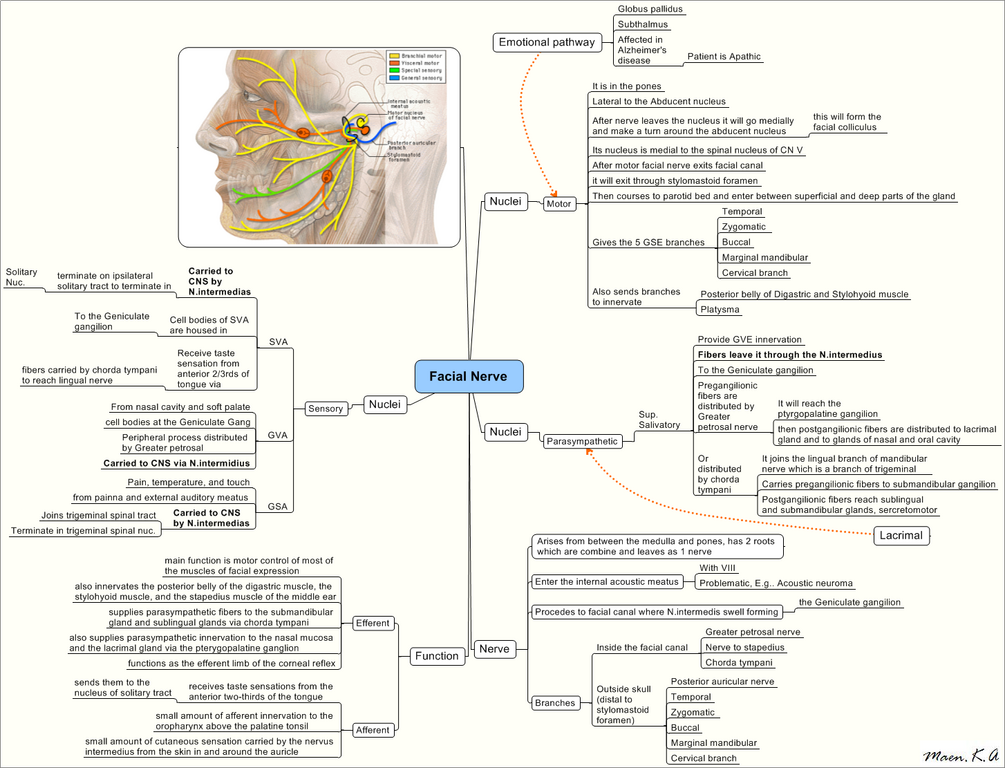
Course Origin: Ponto-medullary junction (Nucleus solitarius, Facial nucleus and Superior salivatory nucleus) Internal acoustic meatus: 7 up, Coke down Facial canal: After exiting skull from stylomastoid foramen: Further reading: Facial nerve lesions 1. Supranuclear lesion: Contralateral lower 1/2 face paralyzed; forehead wrinkling spared (Bilateral cortical innervation) 2. Infranuclear lesion: Entire…
Category: PGMEE, MRCS, USMLE, MBBS, MD/MS
Medical knowledge in bullet points with understandable language, simplified images and graspable mnemonics.
PGMEE, MRCS, USMLE, MBBS, MD/MS

Anatomy of Tongue : Mnemonics
Muscles Intrinsic Extrinsic Alter the shape of tongue Attaches tongue to the bone Mnemonic: VIST Mnemonic: Paris St. German Hour 1. Vertical 1. Palatoglossus (Palate) – anatomically a pharyngeal muscle 2. Inferior longitudinal 2. Styloglossus (Styloid) 3. Superior longitudinal 3. Genioglossus (Genial tubercle of mandible) 4. Transverse 4. Hyoglossus (Hyoid)…
PGMEE, MRCS, USMLE, MBBS, MD/MS
Laryngeal Muscles : Mnemonics
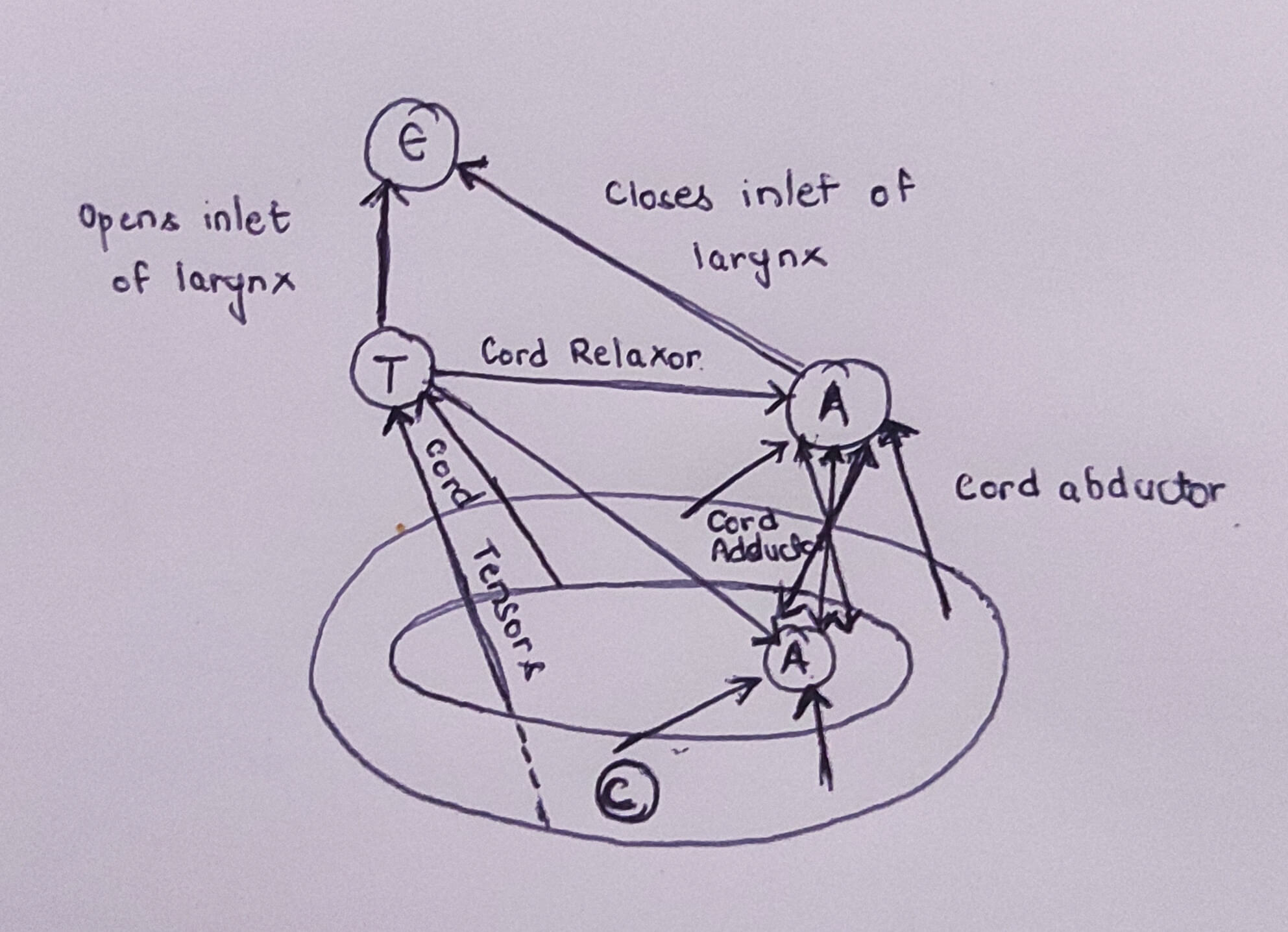
Extrinsic muscles Nerve supply: Ansa cervicalis (CN XII + C1, C2, C3) Infrahyoid muscles (Depressors of larynx): Mnemonic: TOSS Suprahyoid muscles (Elevators of larynx): Mnemonic: MDGS Intrinsic muscles Muscles Origin Insertion Function Thyroepiglotticus Thyroaryetenoid muscle Epiglottis (lateral surface) Opens laryngeal inlet Aryepiglotticus Oblique arytenoid muscle Epiglottis Closes laryngeal inlet Posterior…
PGMEE, MRCS, USMLE, MBBS, MD/MS
Thyroid Gland Blood Supply : Mnemonics
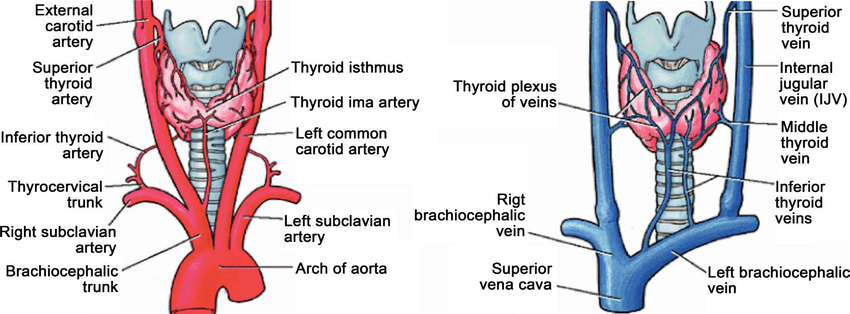
Arterial supply Arterial anastomosis Venous drainage The venous plexus lies beneath the true capsule (peripheral condensation of fibrous stroma of gland). Hence, during thyroidectomy, thyroid gland is removed along with the true capsule to avert the hemorrhage. False capsule (pre-tracheal fascia) is left intact. Thyroid Arteries and Laryngeal Nerves Mnemonic:…
PGMEE, MRCS, USMLE, MBBS, MD/MS
Fasciae of the Neck
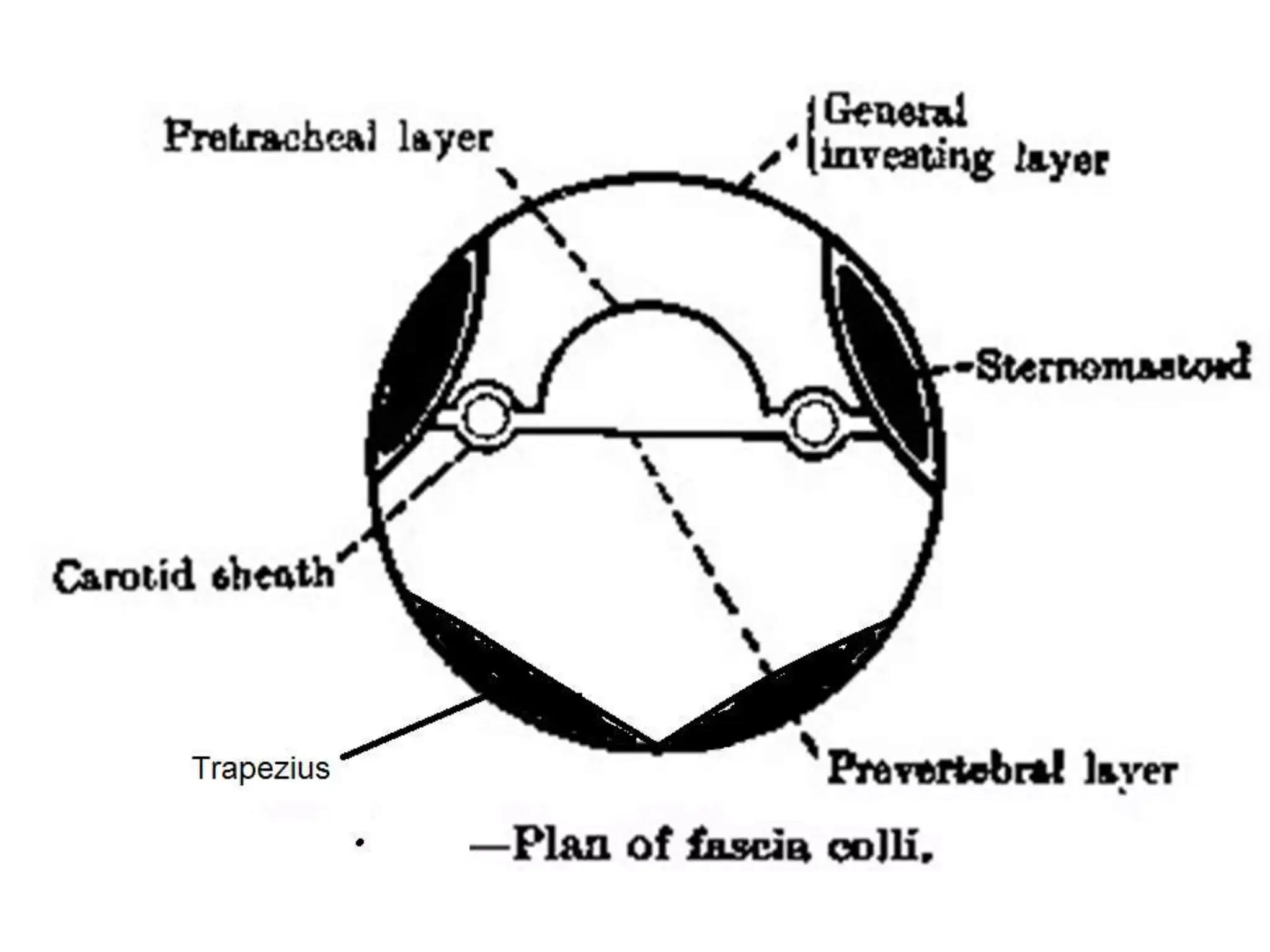
Superficial cervical fascia Contents: Deep cervical fascia or Fascia colli 1. Investing layer 2. Pretracheal layer 3. Carotid sheath: Formed anteriorly by pretracheal fascia and posteriorly by prevertebral fascia Encloses: Relations: 4. Pharyngobasilar fascia (deep to pharynx): lines the inner surface of pharyngeal muscles 5. Prevertebral layer Spread of Infections…
PGMEE, MRCS, USMLE, MBBS, MD/MS
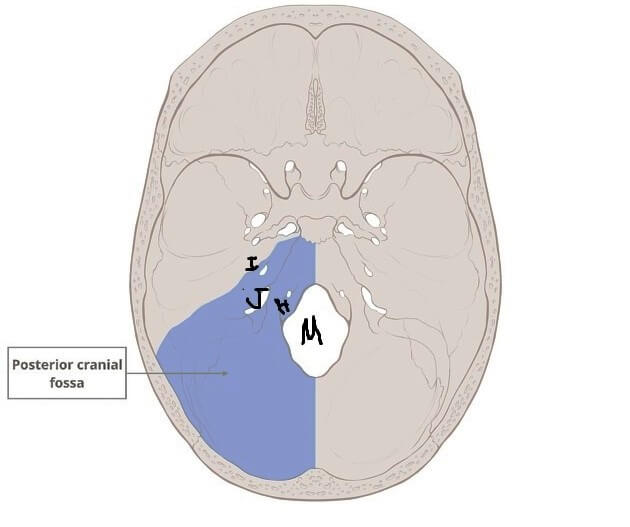
Posterior Cranial Fossa : Mnemonic
Boundaries Foramina Mnemonic: IJHM (International Journal of Hospitality Management) from lateral to medial 1. Internal acoustic meatus (IAM) 2. Jugular foramen Mnemonic: IPS 9, 10, 11IPS + SS = IJV 3. Hypoglossal canal 4. foramen Magnum Contents Clinical consideration Pediatric posterior fossa tumors: Cerebellar tonsil herniation: Herniation of pons and…
PGMEE, MRCS, USMLE, MBBS, MD/MS

Anterior Cranial Fossa : Mnemonic
Boundaries Contents Mnemonic: Remember 6 ‘C’ 1. Frontal Crest: Site of attachment of falx cerebri 2. Foramen Cecum (Between frontal crest and crista galli): Site of communication between the draining veins of nasal cavity and the superior sagittal sinus 3. Crista galli: Site of attachment for falx cerebri 4. Cribiform…
PGMEE, MRCS, USMLE, MBBS, MD/MS
Interpretation of NCCT head: Normal findings
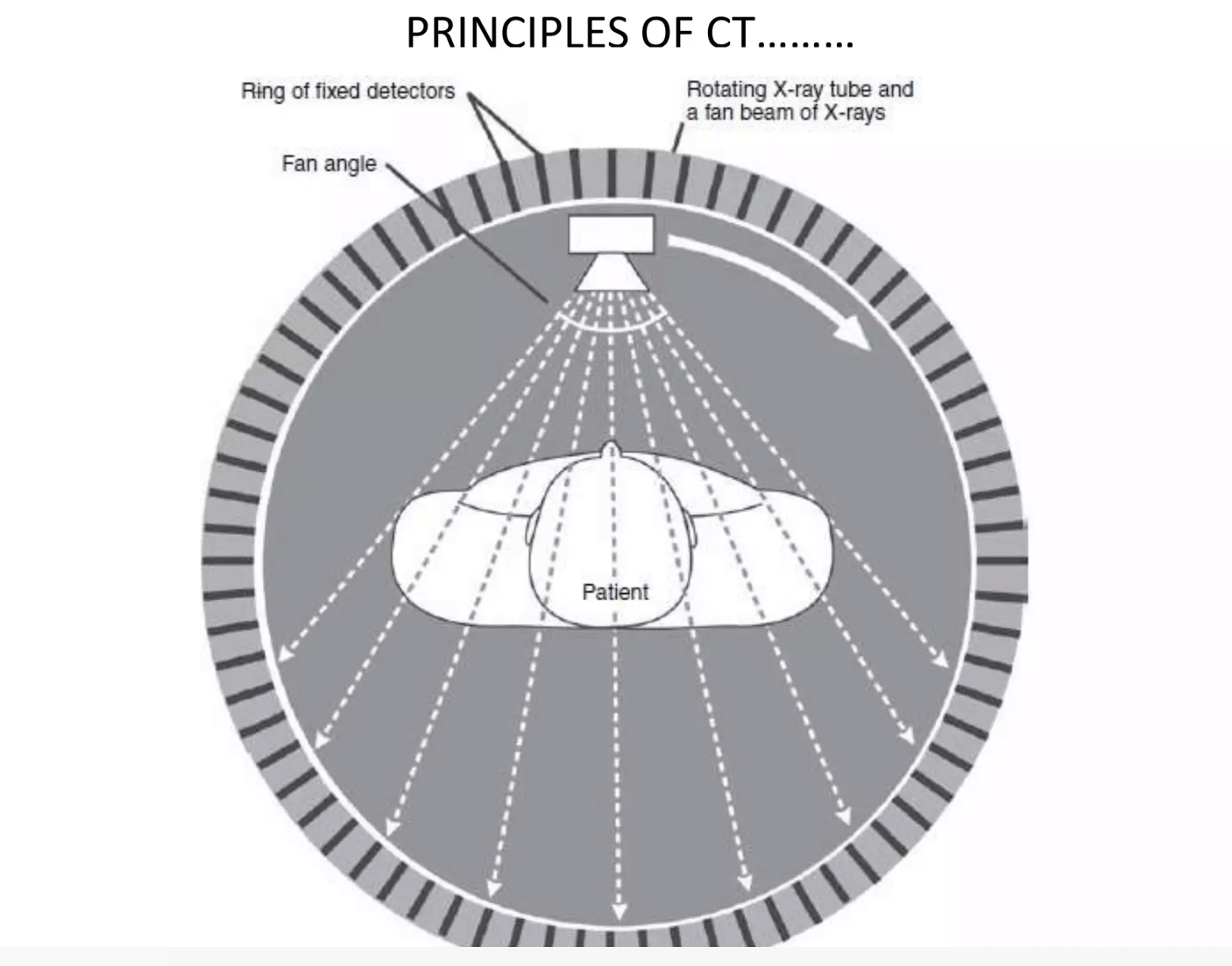
History: In 1972, Sir Godfrey Hounsfield developed CT scan for which he was awarded Nobel prize in 1979. Through these years CT has come from one rotation in 6 minutes to one in 0.33 seconds. Principle: X rays are produced by CT machine, which are absorbed by different tissues in…