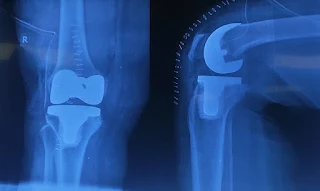
Recently, we operated on a 58-year-old female patient with advanced bilateral knee osteoarthritis (OA). She underwent simultaneous bilateral total knee arthroplasty (TKA) using a medial parapatellar approach. Both femoral components were size 3, tibial components size 3, and a 10mm polyethylene insert was used on each side. Some practical considerations…
Category: Fellowship Blog
Fellowship Blog
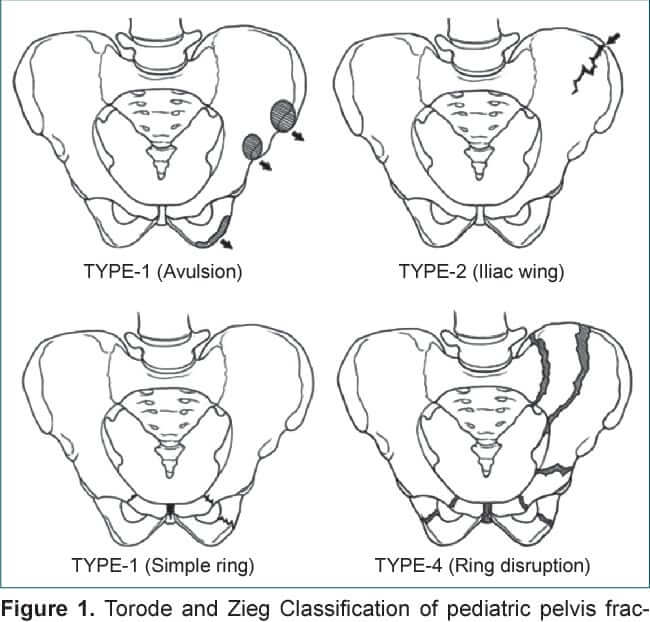
Pediatric Pelvic Fracture Classifications
Before closure of triradiate cartilage (14 in boys and 12 in girls), pelvic bones are weaker than pelvic ligaments leading to more pubic rami and iliac wing fractures. After closure, they are more likely to sustain fractures of acetabulum, diastasis of pubic symphysis and SI joint separation. Hence, a pediatric…
Fellowship Blog
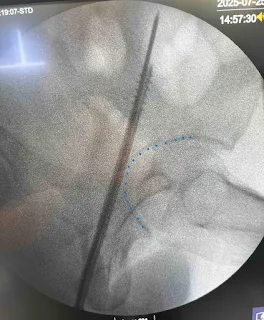
Retrograde Percutaneous Screw Fixation of Posterior Column Acetabulum Fracture : C-Arm Views & Technique
Today in the OR, I observed a retrograde percutaneous screw fixation of a left posterior column acetabular fracture in a 63-year-old male. While I wasn’t scrubbed in, it offered a fantastic opportunity to understand the precision and fluoroscopic guidance required for this minimally invasive approach. It is often said that, “Percutaneous fixation is a surgery performed…
Fellowship Blog
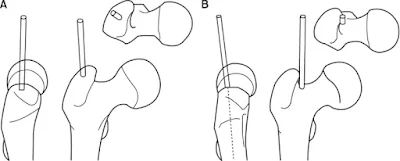
Drill Bit Breakage During Proximal Interlocking Screw Insertion in IMIL Nailing – A Practical Lesson from the OR
In orthopedic trauma surgery, complications often come unexpectedly which must be dealt critically. even routine procedures can throw a surprise. We came across one such unexpected complication while operating on a case of 23-year-old male with bilateral closed shaft of femur fracture with antegrade intramedullary interlocking (IMIL) nail on left…
Fellowship Blog
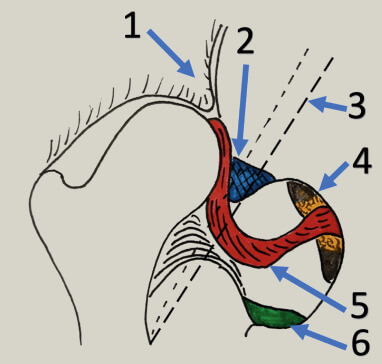
Revision Surgery After Failed Open Reduction in Developmental Dysplasia of the Hip
Re-dislocation rate after primary open reduction: 0-14% [1] Causes and timing of failure of primary surgery: Postoperative period Causes Immediate Approach related, Technical errors Delayed (After 4-6 weeks) Inadequate capsulorrhaphy, Inadequate immobilization Late Abnormal remodeling of acetabulum and femur Across multiple studies, inadequate soft tissue release – specifically the psoas…
Fellowship Blog
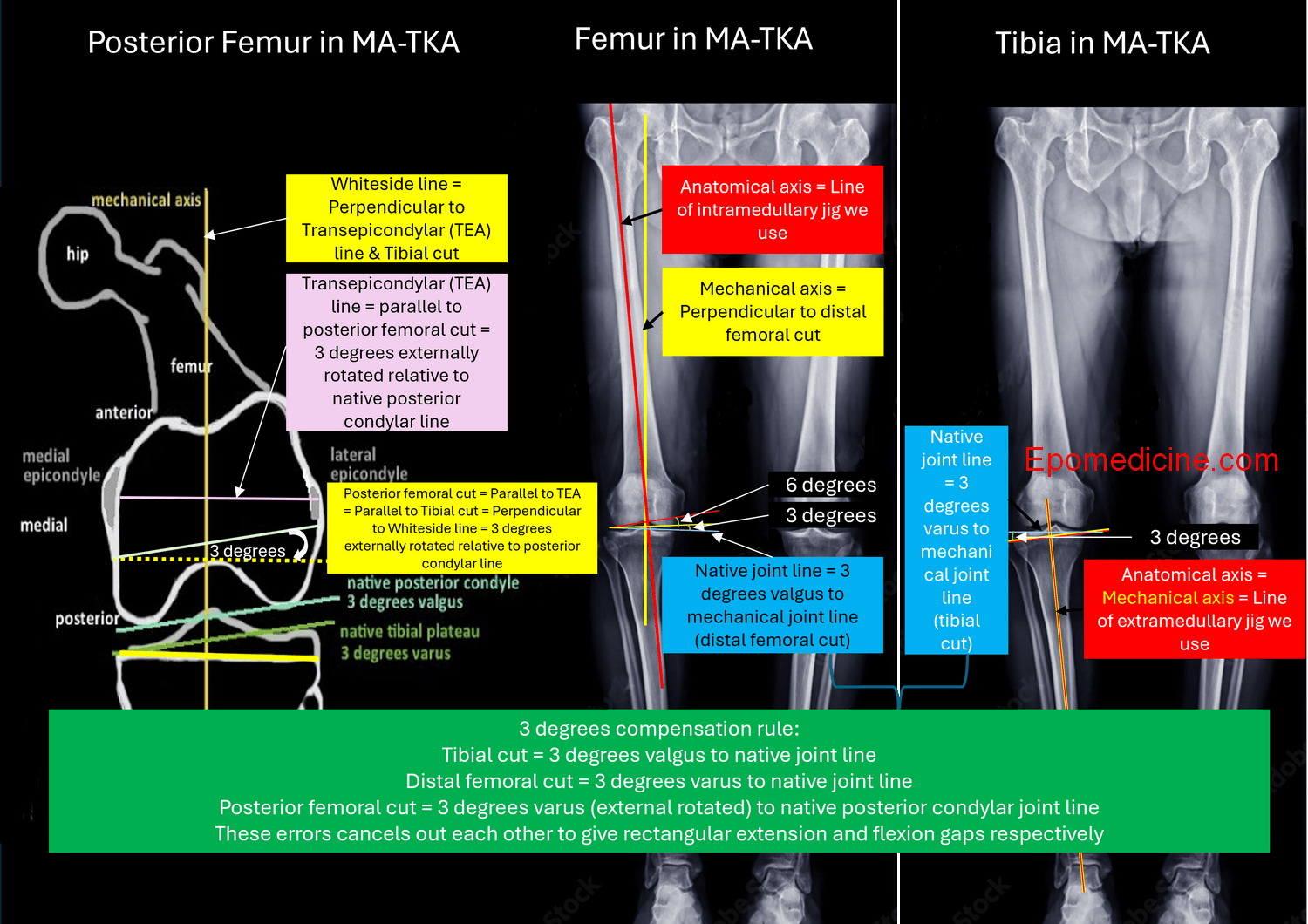
Mathematical Principles in Mechanically Aligned Total Knee Arthroplasty
Mechanical Axis Concept Natural Knee Target alignment in MA-TKA Tibial cut Distal femoral cut Posterior femoral cut The 3° Compensation Rule Distal femoral and Tibial resection thickness = Implant thickness 2 mm rule in TKA References:
Fellowship Blog
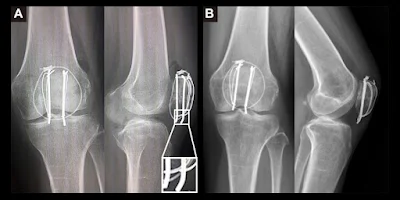
Refracture of the Patella – Early TBW Failure and Re-fixation
One month following an index TBW procedure (using 4 K‑wires + cerclage), our patient sustained a refracture of the patella after a fall. There was no high-energy direct trauma. This case typifies early failure of a classic TBW construct. Failure Factors Identified in Literature Revision Fixation Alternate Techniques Key Takeaways…
Fellowship Blog
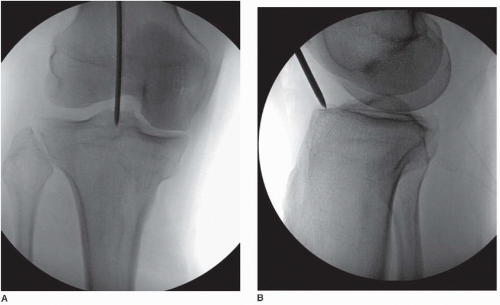
Tibial Shaft Fracture Fixation in Osteogenesis Imperfecta – Lessons from a Challenging ORIF
A 15-year-old male with osteogenesis imperfecta sustained a left tibial shaft fracture. We performed open reduction and intramedullary interlocking nailing (IMIL nail 8 mm). Intraoperatively, we encountered multiple iatrogenic fractures and longitudinal splits due to the brittle nature of OI bone. On postoperative review, the entry point appeared slightly lateral…