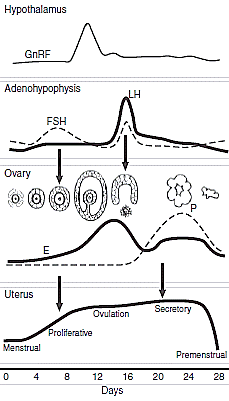
Gametogenesis – formation of gametes from primitive germ cells Spermatogenesis, begins at puberty and occurs in seminiferous tubules (spermiogenesis occurs in sertoli cells). One spermatogenesis takes an average of 74 days to complete. Oogenesis Stages Spermatogenesis Migrate at 6th week of development 1. Primordial Germ Cells / PGCs (46, 2n) – epiblast…
PGMEE, MRCS, USMLE, MBBS, MD/MS
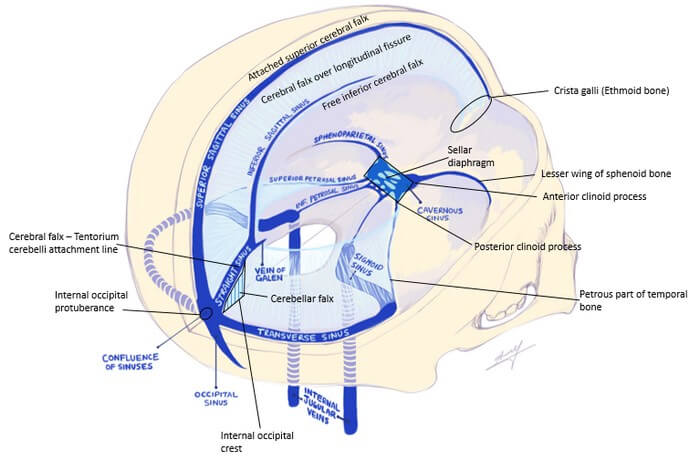
Dural Reflections and Venous Sinuses
Dura mater (pachymenix) is the outer meningeal layer consisting of: Dural Reflections These are the infoldings formed by the inner meningeal layer reflecting away from the fixed periosteral dural layer. Two vertical reflections – Separate the right and left hemisphere Two horizontal reflections Dural Venous Sinuses 1. Superior sagittal sinus:…
PGMEE, MRCS, USMLE, MBBS, MD/MS
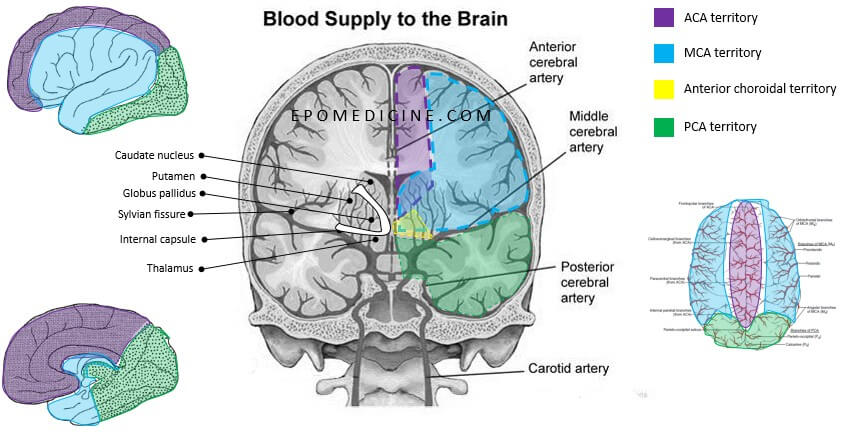
Circle of Willis and Forebrain Blood Supply
We have already discussed earlier on the intracranial course of Internal Carotid Artery (ICA) and Circle of Willis formation with the help of a simple mnemonic. General Concepts of Blood Supply of Brain and Spinal Cord 1. Spinal cord, Hind-brain and Mid-brain: Veterbro-basilar system 2. Forebrain: Circle of willis which…
PGMEE, MRCS, USMLE, MBBS, MD/MS
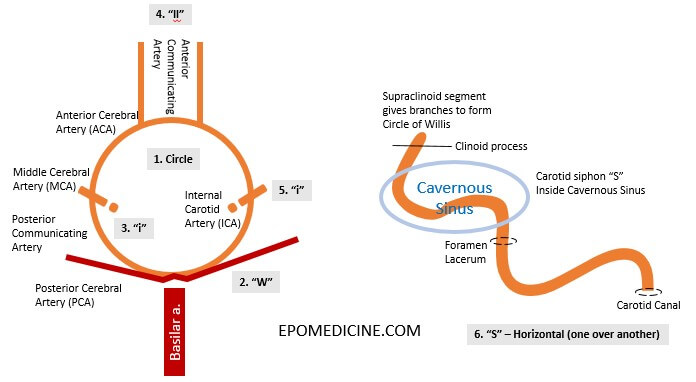
Circle of Willis – Mnemonic and Drawing
Circle of Willis is an important arterial communication that supplies the forebrain (telencephalon, diencephalon and optic vesicle) and often frequently tested in the exams. Circle of Willis receives blood from: Here, we will learn a mnemonic to draw the circle of willis and intracranial course of Internal Carotid Artery (ICA)….
PGMEE, MRCS, USMLE, MBBS, MD/MS
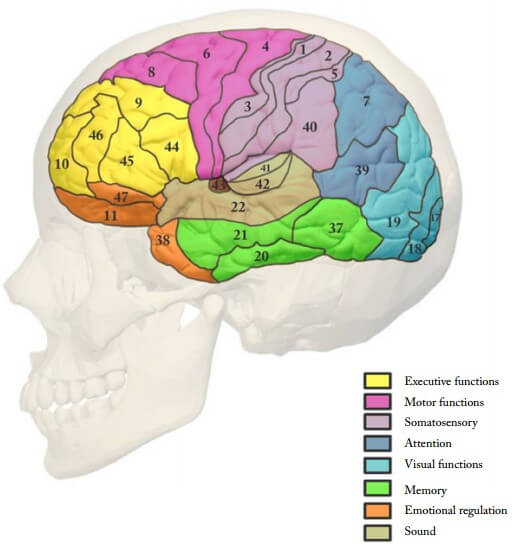
Brodmann Areas and Lesions
Frontal Lobe Area 4 (Precentral gyrus): Primary motor cortex (gigantopyramidal – only area that contains giant pyramidal cells of Betz) Lesion: Contralateral spastic paralysis (UMNL) Area 6 (Superior frontal gyrus; agranular frontal): Premotor cortex and Supplementary motor cortex (Motor planning) Lesion: Apraxia (Unable to perform movements in correct sequence) Area…
PGMEE, MRCS, USMLE, MBBS, MD/MS
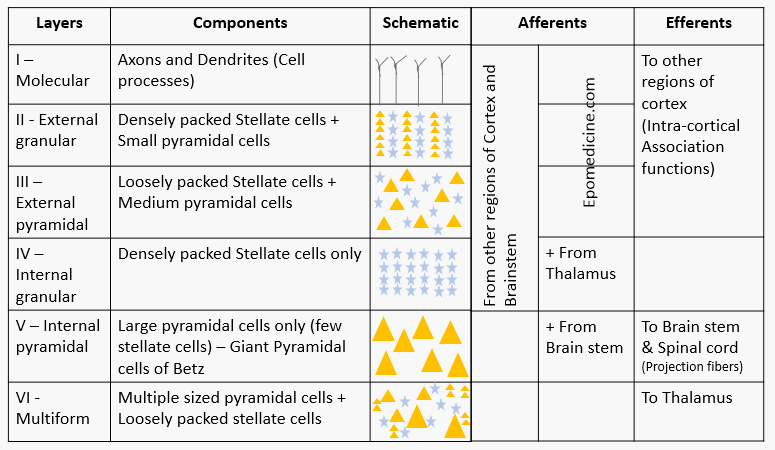
Cerebral Cortex Layers (Microanatomy) Simplified
The neocortex have 6 layers and allocortex have only 3 layers. The 6 layers of Neocortex: Orientation of layers: Outer: Towards meaninges Inner: Towards white matter Idea about the layers: Molecular or plexiform: Only cell processes Granular layer: Densely packed stellate cells Pyramidal layer: Medium and Large pyramidal cells Multiform…
PGMEE, MRCS, USMLE, MBBS, MD/MS
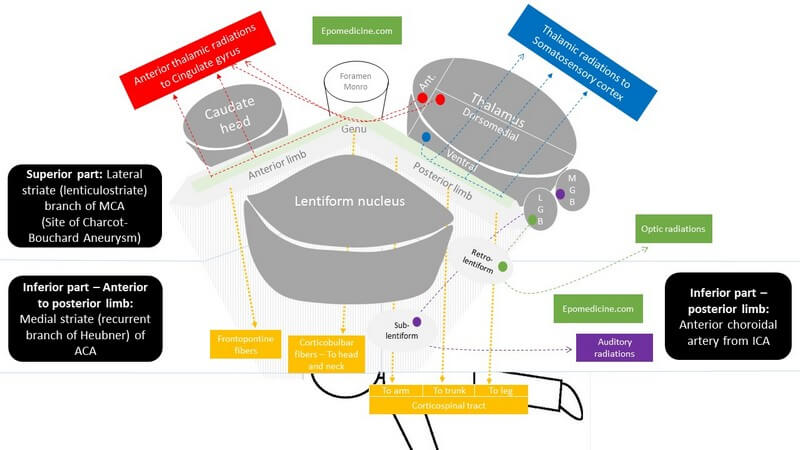
Internal Capsule Simplified
Internal Capsule is a “boomerang” shaped (on horizontal section) and “funnel” shaped, i.e. tapering from superior to inferior (on sagittal section) white matter structure sandwiched between: Medially: Head of Caudate nucleus and Thalamus Laterally: Lenticular nucleus (Globus pallidus and Putamen) Parts of Internal Capsule 1. Anterior limb: Carries fibers to…
PGMEE, MRCS, USMLE, MBBS, MD/MS
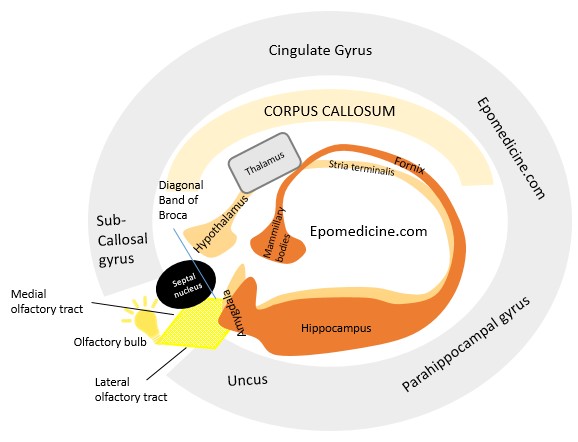
Limbic System Simplified
Limbic system is complex both structurally and functionally. It is located on either side of the thalamus, immediately below the cerebrum and consists of both the grey mater and white mater. Let us simplify the structure of limbic system: Hypothalamus is central to the limbic system Limbic cortex: 2 “C”…