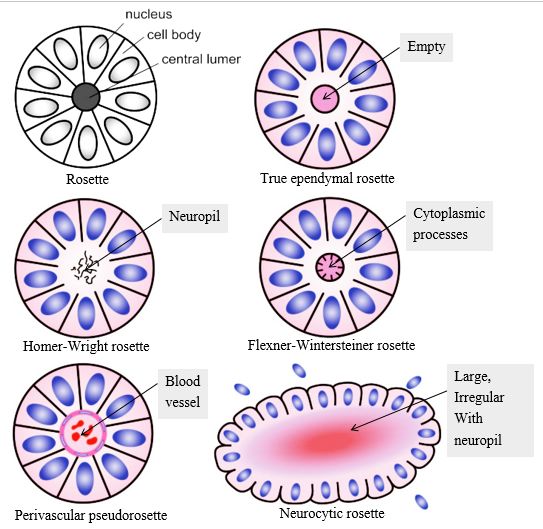
Rosette refers to a decoration or pattern resembling a rose. In pathology, rosette refers to aa halo or “spoke-wheel” arrangement of cells around a central structure especially in neoplasms of neuroblastic or neuroectoderma origin. The central structure can be: a. Empty lumen: True ependymal rosette Well differentiated ependymomas (minority of cases)…
PGMEE, MRCS, USMLE, MBBS, MD/MS
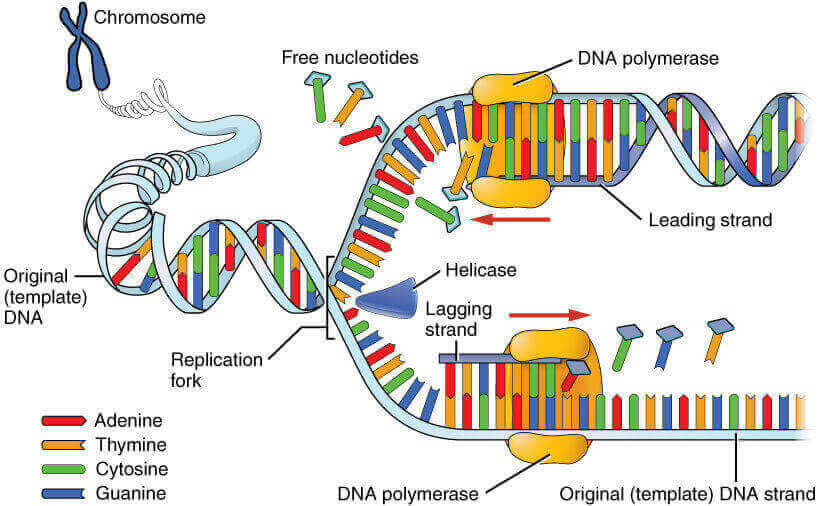
DNA Replication Explained With Zipper Model
Imagine DNA as a zipper Prokaryotic DNA as a zipper with single slider (single origin of replication) and Eukaryotic DNA as a zipper with two sliders (multiple origin of replication). Zipper teeth: Purines and pyrimidine bases Complementary teeth pair: Complementary base pairs attached by hydrogen bonds Top stops: Origin of…
PGMEE, MRCS, USMLE, MBBS, MD/MS
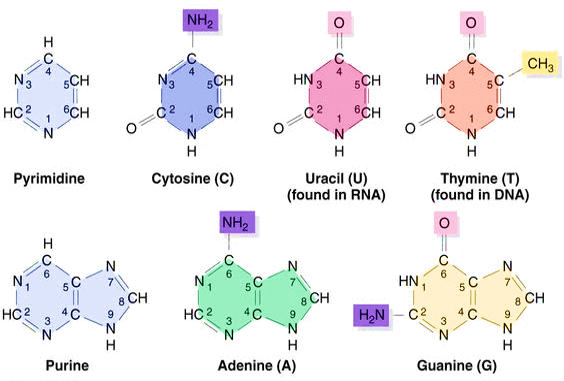
Purine and Pyrimidines : Structure, Synthesis and Metabolism
Purines and Pyrimidines Bases Purines = 2 rings Adenine Guanine Hypoxanthine (Deaminated Adenine) Adenine to Hypoxanthine deamination is mediated by Adenosine deaminase which is decreased in Autosomal recessive SCID. Accumulated dATP inhibit ribonucleotide reductase leading to deficient synthesis of other deoxyribonulceotide precursors for DNA synthesis. Xanthine (Deaminated Guanine) Mnemonics: Pure…
PGMEE, MRCS, USMLE, MBBS, MD/MS
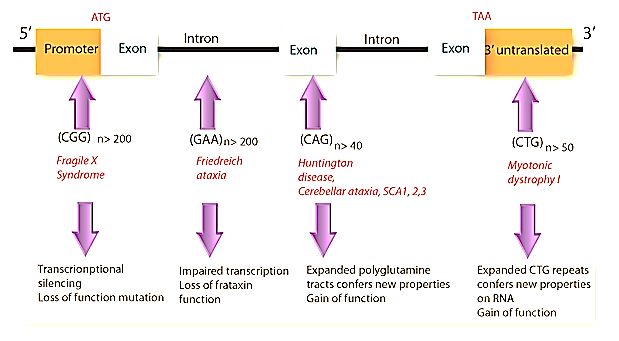
Trinucleotide Repeat Disorders and Anticipation Mnemonics
Anticipation in genetics refers to an increase in severity and decrease in age of onset in successive generations, most likely due to increased size of trinucleotide repeats. Paternal anticipation: Huntington’s disease, Friedreich’s Ataxia Maternal anticipation: Myotonic dystrophy, Fragile X syndrome Diseases Trinucleotide Repeat Affected gene Chromosome Fragile X syndrome CGG…
PGMEE, MRCS, USMLE, MBBS, MD/MS
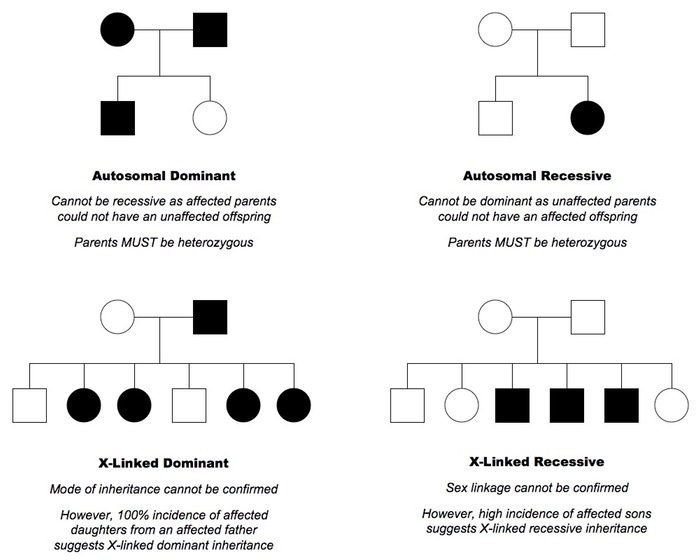
Solving Pedigree Analysis in 3 steps
First: Look for Mitochondrial Inheritance Female transmits disease to all the offsprings (both males and females). Male doesn’t transmit the disease and only the females transmit the disease. If Mitochondrial inheritance is absent, go to second step. Second: Look if the gene is Dominant, Recessive Dominant: Atleast one member in…
PGMEE, MRCS, USMLE, MBBS, MD/MS
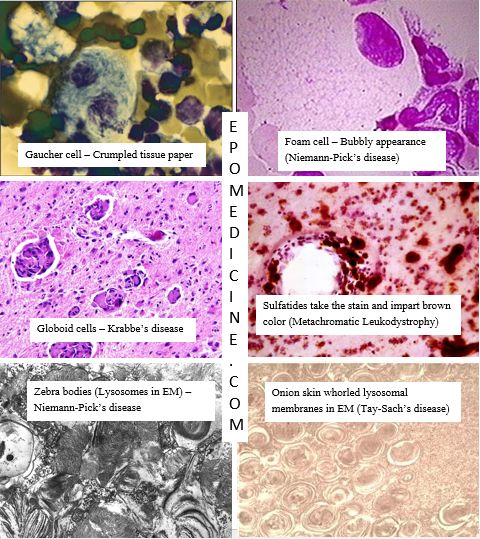
Lysosomal Storage Disorders Made Easy
Among the common lysosomal storage disorders: Two of them are Mucopolysaccharidoses (Hunter and Hurler syndrome) Pompe’s disease is Glycogen Storage Disease. Others are Sphingolipidoses. Inheritance of Lysosomal Storage Diseases All are inherited as Autosomal Recessive (AR) condition except: Hunter syndrome (X-linked recessive) Fabry’s disease (X-linked recessive) Higher risk in Ashkenazi…
PGMEE, MRCS, USMLE, MBBS, MD/MS
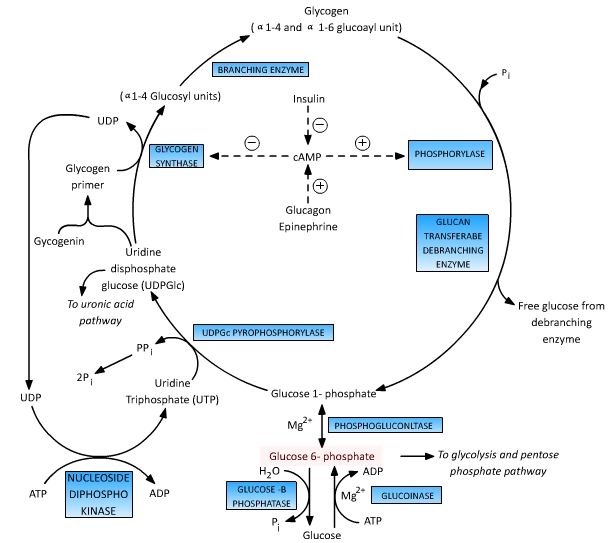
Glucose 6 Phosphate : Central to Glucose Metabolism
Glucose-6-Phosphate central to the 4 major metabolic pathways of glucose, i.e. glycolysis, gluconeogenesis, glycogenesis, glycogenolysis and HMP shunt (Pentose phosphate pathway). Glucose is immediately phosphorylated inside the cells to Glucose-6-Phsophate to trap them inside cell and prevent diffusion out of the cell. Glucose-6-Phosphate is the key intermediate to understand the…
PGMEE, MRCS, USMLE, MBBS, MD/MS
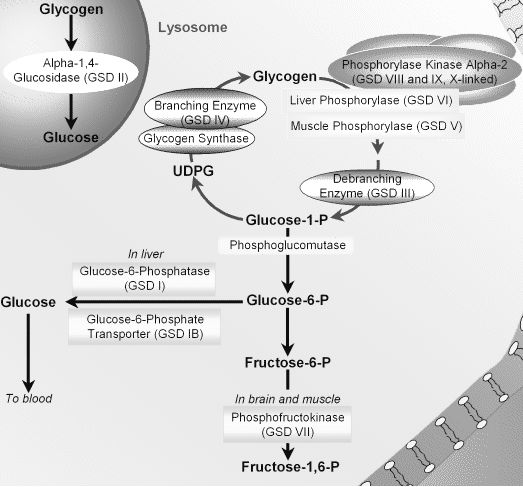
Glycogen Storage Diseases with Mnemonics
Once again, I’m back with a biochemistry topic that everyone hates. Let’s try to break the topic, simplify it and cover all the important aspects of Glycogen Storage Diseases (GSD). 7 types of Glycogen Storage Diseases Mnemonic:VP CAM HT. This is a pretty lame mnemonic for the order of the…