Skip to content
Epomedicine

Mnemonics, Simplified Concepts & Thoughts

Epomedicine

Mnemonics, Simplified Concepts & Thoughts

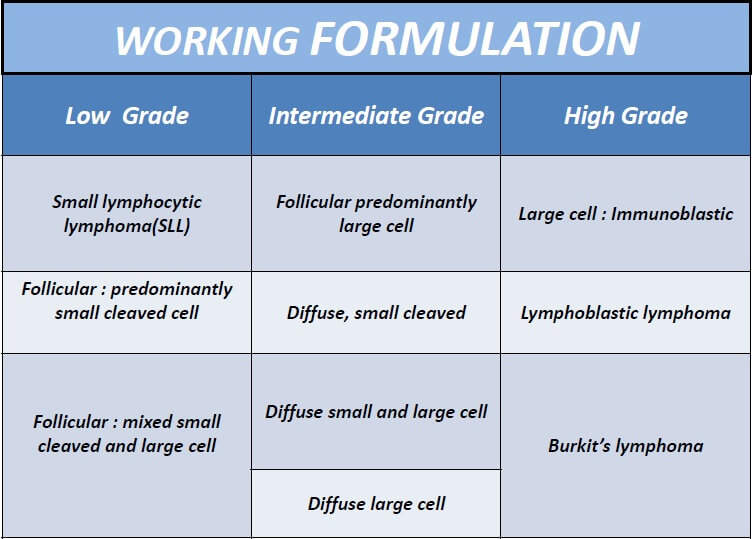
Working formulation of NHL (Mnemonic)

Epomedicine, Jan 16, 2019Feb 26, 2019

All follicular except large cell: Low grade

All diffuse: Intermediate grade

Blastic and non-cleaved: High grade
  • Facebook
  • Twitter
PGMEE, MRCS, USMLE, MBBS, MD/MS HematologyOncologyPathology

Post navigation

Previous post
Next post

Related Posts

PGMEE, MRCS, USMLE, MBBS, MD/MS

Hawkin’s Classification for Talus Fractures : Mnemonic

Jun 28, 2022

Mnemonic: NISA 10-50-90-100 Type I – Non-displaced Neck fracture (upto 10% risk of AVN) 1 blood vessel damaged (entering talar neck) Management: 8 weeks in cast and 4 weeks in CAM cast Type II – Type I + Inferior (subtalar) subluxation/dislocation (upto 50% risk of AVN) 2 blood vessels damaged…

Read More
PGMEE, MRCS, USMLE, MBBS, MD/MS

Mnemonic based Clinical Diagnosis of Covid-19

Apr 24, 2021Apr 24, 2021

Mnemonic: Covid-MATCH65 Covid-19 patient exposure or international travel: 2.5 points Myalgia/Malaise: 1 point Anosmia or Aguesia: 2.5 points Temperature (any reported fever): 0.5 point Coryza/sore throat: -1 point Hypoxia – oxygen saturation <97%: 1 point 65 years or older: 1 point Scoring assessment: <1 = Low risk (0.5%) 1-1.5 =…

Read More
PGMEE, MRCS, USMLE, MBBS, MD/MS

Hypertrophic Scar vs Keloid

May 21, 2024May 21, 2024

Hypertrophic scars and keloids are both raised, firm scars formed from excess fibrinogen production and collagen during healing. Mnemonic: BAD SCARS Mnemonic Basis Hypertrophic scar Keloid B Behavior Natural regression No spontaneous regressio A Acuteness Appears in weeks Appears over months to years D Demographic All races affected More prevalent…

Read More

Leave a Reply Cancel reply

Your email address will not be published. Required fields are marked *

This site uses Akismet to reduce spam. Learn how your comment data is processed.

Pre-clinical (Basic Sciences)

Anatomy

Biochemistry

Community medicine (PSM)

Embryology

Microbiology

Pathology

Pharmacology

Physiology

Clinical Sciences

Anesthesia

Dermatology

Emergency medicine

Forensic

Internal medicine

Gynecology & Obstetrics

Oncology

Ophthalmology

Orthopedics

Otorhinolaryngology (ENT)

Pediatrics

Psychiatry

Radiology

Surgery

RSS Ask Epomedicine

  • What to study for Clinical examination in Orthopedics?
  • What is the mechanism of AVNRT?

Epomedicine weekly

  • About Epomedicine
  • Contact Us
  • Author Guidelines
  • Submit Article
  • Editorial Board
  • USMLE
  • MRCS
  • Thesis
©2026 Epomedicine | WordPress Theme by SuperbThemes