Skip to content
Epomedicine

Mnemonics, Simplified Concepts & Thoughts

Epomedicine

Mnemonics, Simplified Concepts & Thoughts

tyrosinemia

Tyrosinemia Enzymes : Mnemonic

Epomedicine, Aug 12, 2018Aug 12, 2018

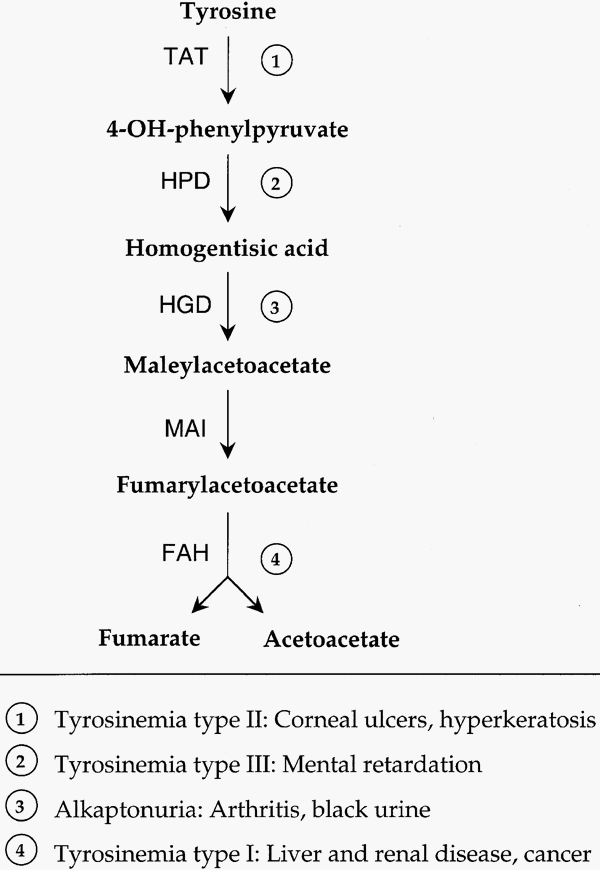
Mnemonic: FAHeem TATtooes because of Histrionic Personality Disorder (HPD)

Tyrosine is necessary for biosynthesis of catecholamines, thyroid hormones and melanin pigment.
tyrosinemia

1. Tyrosinemia type I (Tyrosinosis/Hepatorenal tyrosinemia):

  • Enzyme defect: FAH (Fumaryl-acetoacetate hydroxylase)
  • Last enzyme in the cycle
  • Cabbage like odor
  • Hepatocellular carcinoma
  • Renal tubular acidosis
  • Peripheral neuropathy

2. Tyrosinemia type II (Oculo-cutaneous/Richner-Hanhart):

  • Enzyme defect: TAT (Tyrosine Amido-Transferase)
  • 1st enzyme in the cycle (hepatic enzyme)
  • Corneal erosions
  • Palmoplantar keratosis
  • Mental retardation

3. Tyrosinemia type III (Neonatal):

  • Enzyme defect: HPD (Hydroxy-Phenylpyruvate-Dioxygenase)
  • Second enzyme in the cycle
  • Neurologic dysfunction

BONUS

Alkaptonuria: Mnemonic – HAO

  • Enzyme defect: HAO (Homogentisic Acid Oxidase)
  • Clinical features:
    • Homogentisic aciduria (urine turns black on standing; Benedict’s/FeCl3 test positive)
    • Arthritis (large joints; narrowing of joint space and calcification of IV disc)
    • Ochronosis (darkening of sclera, ear and nose cartilage, tympanic membrane, palmoplantar skin, large joints and IV disc due to deposition of benzoquinone acetate, i.e. oxidized homogentisic acid)
  • Facebook
  • Twitter
PGMEE, MRCS, USMLE, MBBS, MD/MS BiochemistryPediatrics

Post navigation

Previous post
Next post

Related Posts

PGMEE, MRCS, USMLE, MBBS, MD/MS tourniquet

Tourniquet Paralysis Syndrome

Feb 27, 2021Feb 27, 2021

Synonym: Pressure paralysis Mechanism: Direct extrinsic pressure (displacement of ranvier node) or axonal hypoxia on the nerves beneath the tourniquet and are related to the cuff pressure and duration of application.\ It is different from post tourniquet syndrome which caused due to combined effect of muscle ischemia, edema and microvascular…

Read More
PGMEE, MRCS, USMLE, MBBS, MD/MS

Post-snake bite compartment syndrome : Predictors

Aug 29, 2020Aug 29, 2020

The indentification of snake species is often difficult at the time of presentation of snake bite and as the interaction between the victim and snake venom is variable. Hsu et.al. conducted a single center retrospective study to find out the possible predictors of the post-snake bite compartment syndrome (PSCS). They…

Read More
PGMEE, MRCS, USMLE, MBBS, MD/MS Caserean Section Picture

Cesarean Section

May 20, 2019May 23, 2020

Labour/Delivery– A Normal Physiological process which takes place in the body of a woman at the end of Pregnancy where the fetus is expelled out of the uterus through the Vaginal Canal. Cesarean Section/Delivery– A procedure conducted in a pregnant woman leading to Birth of a fetus through incisions given…

Read More

Leave a Reply Cancel reply

Your email address will not be published. Required fields are marked *

This site uses Akismet to reduce spam. Learn how your comment data is processed.

Pre-clinical (Basic Sciences)

Anatomy

Biochemistry

Community medicine (PSM)

Embryology

Microbiology

Pathology

Pharmacology

Physiology

Clinical Sciences

Anesthesia

Dermatology

Emergency medicine

Forensic

Internal medicine

Gynecology & Obstetrics

Oncology

Ophthalmology

Orthopedics

Otorhinolaryngology (ENT)

Pediatrics

Psychiatry

Radiology

Surgery

RSS Ask Epomedicine

  • What to study for Clinical examination in Orthopedics?
  • What is the mechanism of AVNRT?

Epomedicine weekly

  • About Epomedicine
  • Contact Us
  • Author Guidelines
  • Submit Article
  • Editorial Board
  • USMLE
  • MRCS
  • Thesis
©2026 Epomedicine | WordPress Theme by SuperbThemes