Skip to content
Epomedicine

Mnemonics, Simplified Concepts & Thoughts

Epomedicine

Mnemonics, Simplified Concepts & Thoughts

Short external rotator muscles : Hip

Epomedicine, May 24, 2023May 24, 2023

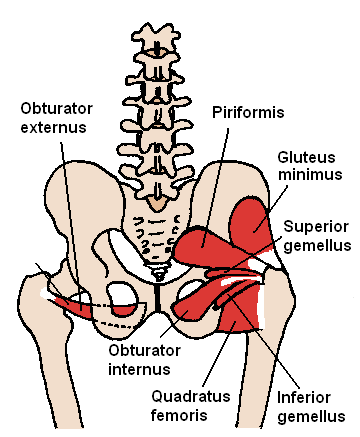
Short external rotators of hip in general originate from sacrum and ischium and insert on and around greater trochanter of femur.

Mnemonic: P GO GO Q

From proximal, the short external rotators of hip are:

  1. Piriformis
  2. Gemellus superior
  3. Obturator internus
  4. Gemellus inferior
  5. Obturator externus
  6. Quadratus femoris
short external rotators hip
Beth ohara~commonswiki, CC BY-SA 3.0, via Wikimedia Commons
MuscleProximal attachmentDistal attachmentInnervation
PiriformisSacrum – anterior aspect
Sacrotuberous ligament
Greater trochanter – superior aspectVentral rami S1, S2
Gemellus superiorIschial spineGreater trochanter – medial aspectNerve to obturator internus (L5-S2)
Obturator internusInternal surface of obturator membraneGreater trochanter – medial aspectSame as above
Gemellus inferiorIschial tuberosityGreater trochanter – medial aspectNerve to quadratus femoris (L4-S1)
Obturator externusExternal surface of obturator membraneGreater trochanter – medial aspect (trochanteric fossa)Posterior branch of obturator nerve (L3, L4), i.e., lumbar plexus
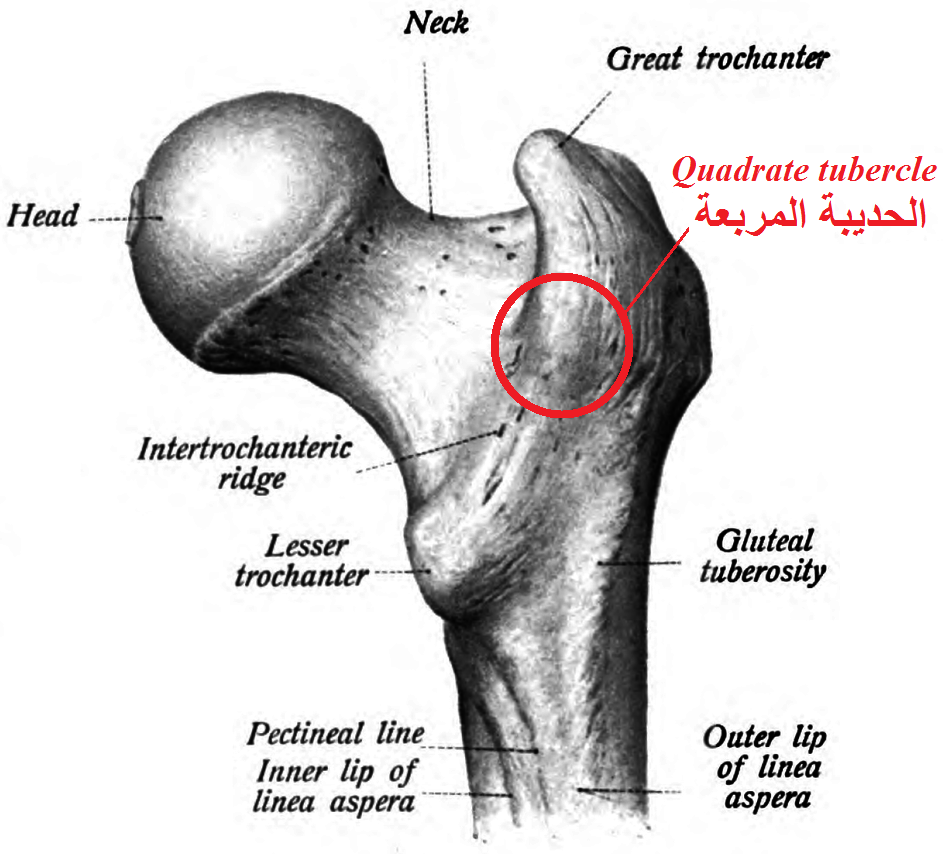
Quadratus femorisIschial tuberosity – lateral borderIntertrochanteric crest – Quadrate tubercleNerve to quadratus femoris (L4-S1)
2 Gemelli along with Obturator internus forms triceps coxae or conjoint tendon.
quadrate tubercle

Mnemonic: GSOI 512, IQ 451

Gemellus Superior – nerve to Obturator Internus (L5, S1, S2)

Gemellus Inferior – nerve to Quadratus femoris (L4, L5, S1)

Points of Surgical significance

1. Sciatic nerve emerges below piriformis and courses superficial to other short external rotators.

2. Branches of MFCA (Medial Femoral Circumflex Artery) emerge above and below Quadratus femoris.
  • Facebook
  • Twitter
PGMEE, MRCS, USMLE, MBBS, MD/MS AnatomyMusculoskeletal system

Post navigation

Previous post
Next post

Related Posts

PGMEE, MRCS, USMLE, MBBS, MD/MS cervical os puerperium

Normal Puerperium Made Simple

Apr 3, 2016Jun 12, 2016

Definition of Puerperium: Period following childbirth during which the body tissues, specially the pelvic organs involute i.e. revert back approximately to the pre-pregnant state both anatomically and physiologically – and lasts 6 weeks or 42 days. Immediate: Within 24 hours of childbirth Early: Within 7 days of childbirth Remote: Within…

Read More
PGMEE, MRCS, USMLE, MBBS, MD/MS hla

HLA association mnemonics

Jun 1, 2019Jan 20, 2022

The genes that encode HLA (Human Leukocyte Antigen) are on chromosome 6. MHC class Type Location Function I HLA-A, -B, -C All cells Recognized by CD8+ lymphocytes II HLA-DP, -DQ, -DR Antigen presenting cells Recognized by CD4+ lymphocytes III Complement components Plasma Chemotaxis, opsonization, lysis of bacteria and cells The…

Read More
PGMEE, MRCS, USMLE, MBBS, MD/MS

Acute Stroke Management : Mnemonic Approach

Aug 28, 2019Aug 28, 2019

Mnemonic: BRAIN ATTACK a. Blood pressure: Antihypertensives are recommended only in following conditions: SBP >220 mmHg, DBP >120 mmHg or MAP >130 mmHg (Target SBP reduction by 15% in 1st 24 hours) End organ damage: Acute MI, Aortic dissection, Hypertensive encephalopathy, Severe left ventricular failure Candidates for thrombolysis: SBP >185…

Read More

Leave a Reply Cancel reply

Your email address will not be published. Required fields are marked *

This site uses Akismet to reduce spam. Learn how your comment data is processed.

Epomedicine. Short external rotator muscles : Hip [Internet]. Epomedicine; 2023 May 24 [cited 2026 Jan 8]. Available from: https://epomedicine.com/medical-students/short-external-rotator-muscles-hip/.

Pre-clinical (Basic Sciences)

Anatomy

Biochemistry

Community medicine (PSM)

Embryology

Microbiology

Pathology

Pharmacology

Physiology

Clinical Sciences

Anesthesia

Dermatology

Emergency medicine

Forensic

Internal medicine

Gynecology & Obstetrics

Oncology

Ophthalmology

Orthopedics

Otorhinolaryngology (ENT)

Pediatrics

Psychiatry

Radiology

Surgery

RSS Ask Epomedicine

  • What to study for Clinical examination in Orthopedics?
  • What is the mechanism of AVNRT?

Epomedicine weekly

  • About Epomedicine
  • Contact Us
  • Author Guidelines
  • Submit Article
  • Editorial Board
  • USMLE
  • MRCS
  • Thesis
©2026 Epomedicine . All rights reserved.