Skip to content
Epomedicine

Mnemonics, Simplified Concepts & Thoughts

Epomedicine

Mnemonics, Simplified Concepts & Thoughts

Rheumatoid Arthritis Criteria Mnemonics

Epomedicine, Sep 1, 2020Feb 21, 2023

The 2 commonly used criteria for diagnosis of rheumatoid arthritis will be discussed here.

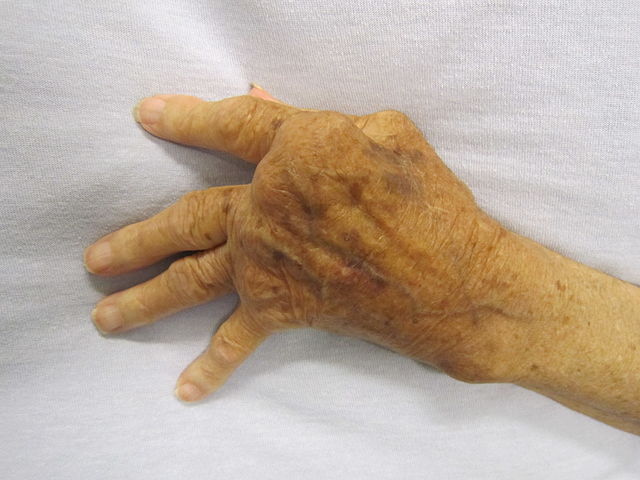
Rheumatoid arthritis
James Heilman, MD / CC BY-SA

1987 ACR Criteria

Mnemonic: DMARDs if MADRAS

  1. Morning stiffness (>1 hour)
  2. Arthritis in >/= 3 joint areas
  3. Duration >6 weeks (of morning stiffness and other 3 features involving arthritis)
  4. Rheumatoid nodules
  5. Rheumatoid factor
  6. Radiographic changes (erosions)
  7. Arthritis of hand joints (>/= 1 swollen joint)
  8. Symmetrical arthritis

Mnemonic: EARS

  1. Early morning stiffness
  2. Arthritis >/= 3 joints, hands involved
  3. Rheumatoid factor, Rheumatoid nodules, Radiographic changes
  4. Symmetrical arthritis, Six weeks

For diagnosis of RA: 4 out of 7 criteria must be present (except duration) and criteria listed above in number 1, 2, 7 and 8 must be present for >6 weeks to be established as criteria for RA.

Established RA: Sensitivity 79-80% and Specificity 90-93%

Early RA: Sensitivity 77-80% and Specificity 33-77%


2010 ACR/EULAR Criteria

Mnemonic: Three “A” and Two “6”

a. Arthritis (Joint involvement)

Large joints have smaller points and odd numbers of joint involvement get even numbered points.

  1. 1 Large joint: 0
  2. 2-10 Large joints: 1
  3. 1-3 Small joints: 2
  4. 4-10 Small joints: 3
  5. >10 Joints (atleast 1 small joint): 5

b. Autoantibodies (RF and ACPA)

  1. Both negative: 0
  2. Any one is low positive: 2
  3. Any one is high positive: 3

A weakly positive RF is defined as up to 3-fold higher and a strongly positive RF 3-fold higher than the upper normal range.

c. Acute phase reactants (CRP and ESR)

  1. Both normal: 0
  2. Any one is abnormal: 1

d. 6 weeks duation

  1. <6 weeks duration: 0
  2. >6 weeks duration: 1

e. >6/10 points = Definite RA

2010 Criteria increased the sensitivity for finding patients with early-stage disease who were destined eventually to develop full-blown RA over the next 6 years to 86% sensitivity, compared with 78% sensitivity for the 1987 criteria.
  • Facebook
  • Twitter
PGMEE, MRCS, USMLE, MBBS, MD/MS Musculoskeletal systemRheumatology

Post navigation

Previous post
Next post

Related Posts

PGMEE, MRCS, USMLE, MBBS, MD/MS Febrile seizure anticonvulsants

Febrile Seizure : Clinical approach

Sep 11, 2015Sep 11, 2015

A) General consideration: Febrile seizures are seizures during fever occuring between 6 months and 5 years of age in absence of: CNS infections Abnormal neurologic findings Types of febrile seizure: Simple febrile seizure: Solitary Brief (< 15 minutes) Within 24 hours of onset of fever Generalized Tonic Clonic Seizure (GTCS)…

Read More
PGMEE, MRCS, USMLE, MBBS, MD/MS tyrosinemia

Tyrosinemia Enzymes : Mnemonic

Aug 12, 2018Aug 12, 2018

Mnemonic: FAHeem TATtooes because of Histrionic Personality Disorder (HPD) Tyrosine is necessary for biosynthesis of catecholamines, thyroid hormones and melanin pigment. 1. Tyrosinemia type I (Tyrosinosis/Hepatorenal tyrosinemia): Enzyme defect: FAH (Fumaryl-acetoacetate hydroxylase) Last enzyme in the cycle Cabbage like odor Hepatocellular carcinoma Renal tubular acidosis Peripheral neuropathy 2. Tyrosinemia type II…

Read More
PGMEE, MRCS, USMLE, MBBS, MD/MS

Pelvic Lymphatic Drainage

Jun 26, 2024Jun 26, 2024

1. Para-aortic (lumbar) nodes: Gonads (derive blood supply from kidneys) 2. Inferior mesenteric nodes: As of blood supply – to the structures derived from hindgut 3. Common iliac nodes: Receives external and internal iliac nodes; Drains into para-aortic nodes 4. Superficial inguinal nodes: Everything that can be touched with fingers…

Read More

Leave a Reply Cancel reply

Your email address will not be published. Required fields are marked *

This site uses Akismet to reduce spam. Learn how your comment data is processed.

Pre-clinical (Basic Sciences)

Anatomy

Biochemistry

Community medicine (PSM)

Embryology

Microbiology

Pathology

Pharmacology

Physiology

Clinical Sciences

Anesthesia

Dermatology

Emergency medicine

Forensic

Internal medicine

Gynecology & Obstetrics

Oncology

Ophthalmology

Orthopedics

Otorhinolaryngology (ENT)

Pediatrics

Psychiatry

Radiology

Surgery

RSS Ask Epomedicine

  • What to study for Clinical examination in Orthopedics?
  • What is the mechanism of AVNRT?

Epomedicine weekly

  • About Epomedicine
  • Contact Us
  • Author Guidelines
  • Submit Article
  • Editorial Board
  • USMLE
  • MRCS
  • Thesis
©2026 Epomedicine | WordPress Theme by SuperbThemes