Skip to content
Epomedicine

Mnemonics, Simplified Concepts & Thoughts

Epomedicine

Mnemonics, Simplified Concepts & Thoughts

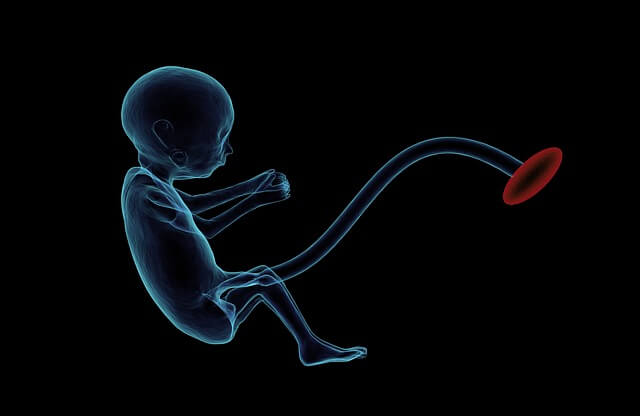
fetus

Non-invasive Prenatal Screening

Epomedicine, Jun 8, 2019Mar 11, 2021

Quick review/Mnemonic:

PAPP-A is decreased in all trisomies.
Nuchal translucency is increased in all trisomies.

Inhibin A is only increased in Down’s syndrome.
Beta-HCG is increased in Down’s syndrome.

All triple test results decreased in Edward syndrome.

Only AFP is increased in NTDs and abdominal wall defects.

Acetylcholinesterase level increased in Amniotic fluid is most specific marker for NTDs.

In Turner’s syndrome: All decreased in Quad test (if no hydrops) and like Down’s, i.e. increased HCG and Inhibin A (if hydrops)
fetus
Test Timing (Gestational weeks) Components Conditions
1st trimester combined screening 11–13 Nuchal translucency (NT) 

β-HCG

PAPP-A(pregnancy-associated protein A)
Down syndrome/Trisomy 21: ↑ HCG, ↓ PAPP-A, thickened NT

Edward syndrome/Trisomy 18: ↓ HCG, ↓↓ PAPP-A, ↑ NT

Patau syndrome/Trisomy 13: ↓↓ PAPP-A, ↑ NT

Neural tube defects: ↑ HCG
Quad screen test  15–20HCG
AFP
Estriol (uE3)
Inhibin A (DIA)
Trisomy 21: ↑ β-HCG, ↓ AFP, and ↓ uE3, ↑ DIA

Trisomy 18: ↓↓ β-HCG, ↓ AFP, and ↓↓ uE3, ↓ DIA

Trisomy 13: = HCG, = AFP , = uE3, = DIA

Neural tube defects and Abdominal wall defects: = HCG, ↑ AFP, = uE3, = DIA
Triple screen test 15–20Quad test – Inhibin A
Sequential integrated test 10-13 then 15–20 1st trimester combined + Quad
Cell-free fetal DNA testing(cffDNA) >10Fetal DNA is isolated from a maternal blood specimen for genetic testing  Chromosomal aberrations (high specificity and sensitivity for trisomy 21 > trisomy 18 >trisomy 13)

Gender determination
22 shares
  • Facebook22
  • Twitter
PGMEE, MRCS, USMLE, MBBS, MD/MS ObGynPathology

Post navigation

Previous post
Next post

Related Posts

PGMEE, MRCS, USMLE, MBBS, MD/MS opioid receptors

Opioid Adverse Effects – Mnemonic

Apr 14, 2021Apr 14, 2021

Mnemonic: MORPHINES 1. Miosis Mechanism: Stimulation of Edinger-Westphal nucleus of Cranial nerve III 2. Orthostatic hypotension Mechanism: Vasodilation due to – Direct action decreasing tone of blood vessels Histamine release Depression of vasomotor center 3. Respiratory depression Mechanism: Inhibits respiratory center in a dose-dependent manner (neurogenic, hypercapneic and hypoxic drives…

Read More
PGMEE, MRCS, USMLE, MBBS, MD/MS rib notching

Rib Notching

Feb 13, 2017

Normal Rib Notching A small notch near the costo-vertebral joint is normal, so pathologic rib notching is more likely if the notching is more lateral. Types of Pathological Rib Notching 1. Superior rib notching 2. Inferior rib notching (more common) Inferior Rib Notching (Roesler’s sign) Mechanism: Enlargement of one or…

Read More
PGMEE, MRCS, USMLE, MBBS, MD/MS ERCP in pancreatitis

Mnemonic based management of Acute Pancreatitis

Jul 27, 2021Jul 27, 2021

Acute pancreatitis along with case based discussion has been already covered earlier here: To remember the initial management of acute pancreatitis, one can remember the mnemonics given below: iPA-NCREAS (Ye et.al.) Investigations: Imaging (CT, MRI or Ultrasonography) Prognostic screen to identify severe pancreatitis Amylase and lipase levels Initial treatment: Nutritional…

Read More

Comments (2)

  1. Rasha says:
    Mar 9, 2021 at 3:52 am

    I believe AFP is normal for Patau syndrome

    Reply
    1. Epomedicine says:
      Mar 9, 2021 at 12:21 pm

      Hello Rasha, Thank you for the correction. AFP actually seems to be an unreliable marker for diagnosis of Patau syndrome (trisomy 13). Different resources quote that AFP to be decreased, normal or increased. Some fewer than 50% of affected babies may have open neural tube defects or ventral wall defects, where AFP may be increased. So, we will go with normal AFP for Patau syndrome.

      Reply

Leave a Reply to Rasha Cancel reply

Your email address will not be published. Required fields are marked *

This site uses Akismet to reduce spam. Learn how your comment data is processed.

Pre-clinical (Basic Sciences)

Anatomy

Biochemistry

Community medicine (PSM)

Embryology

Microbiology

Pathology

Pharmacology

Physiology

Clinical Sciences

Anesthesia

Dermatology

Emergency medicine

Forensic

Internal medicine

Gynecology & Obstetrics

Oncology

Ophthalmology

Orthopedics

Otorhinolaryngology (ENT)

Pediatrics

Psychiatry

Radiology

Surgery

RSS Ask Epomedicine

  • What to study for Clinical examination in Orthopedics?
  • What is the mechanism of AVNRT?

Epomedicine weekly

  • About Epomedicine
  • Contact Us
  • Author Guidelines
  • Submit Article
  • Editorial Board
  • USMLE
  • MRCS
  • Thesis
©2026 Epomedicine | WordPress Theme by SuperbThemes