Skip to content
Epomedicine

Mnemonics, Simplified Concepts & Thoughts

Epomedicine

Mnemonics, Simplified Concepts & Thoughts

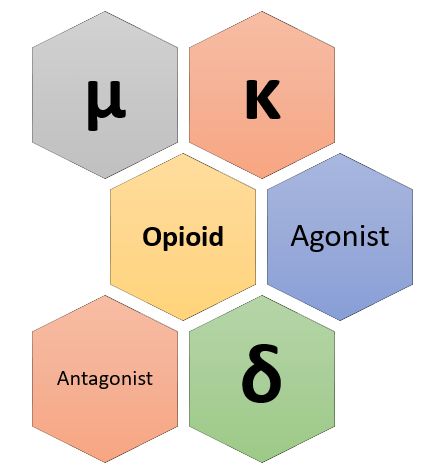
opioid receptors

Opioid Adverse Effects – Mnemonic

Epomedicine, Apr 14, 2021Apr 14, 2021

Mnemonic: MORPHINES

opioid receptors

1. Miosis

  • Mechanism: Stimulation of Edinger-Westphal nucleus of Cranial nerve III

2. Orthostatic hypotension

  • Mechanism: Vasodilation due to –
    • Direct action decreasing tone of blood vessels
    • Histamine release
    • Depression of vasomotor center

3. Respiratory depression

  • Mechanism: Inhibits respiratory center in a dose-dependent manner (neurogenic, hypercapneic and hypoxic drives in succession)

4. Physical/Psychological dependence and tolerance

  • Mechanisms of tolerance:
    • Pharmacodynamic (cellular tolerance) > Pharmacokinetic (enhanced rate of metabolism)
    • Constipating and Miotic actions do not exhibit tolerance
  • Mechanism of dependence: Mu receptor mediated

5. Histamine release

  • Mechanism: Displacement (not degranulation) of histamine from mast cell granules

6. Increased ICP

  • Mechanism: Increase in arterial carbon-dioxide tension

7. Nausea

  • Mechanism: Sensitizes CTZ center to vestibular and other impulses

8. Euphoria

  • Mechanism: DA release in nucleus accumbance

9. Sedation

  • Mechanism: Stimulates mu receptors

10. Smooth muscle contraction

  • Constipation: Increased tone of intestine; Spasm of sphincters and Decrease in GI secretions
  • Biliary colic: Spasm of sphincter of Oddi
  • Urinary urgency and difficulty in micturition: Increased tone of both detrusor and sphincter
  • Bronchoconstriction: Histamine release

11. Serotonin syndrome (Tramadol)

  • Mechanism: Inhibits reuptake of NA and 5-HT (also the mechanism for activation of monoaminergic spinal inhibition of pain)
3 shares
  • Facebook
  • Twitter
PGMEE, MRCS, USMLE, MBBS, MD/MS AnesthesiaGeneral conceptsPharmacology

Post navigation

Previous post
Next post

Related Posts

PGMEE, MRCS, USMLE, MBBS, MD/MS

Pedicle Screw Insertion Simplified

Oct 30, 2021Oct 30, 2021

Anatomy of Vertebral Pedicle Width (narrowest transverse diameter): Narrowest at T4-T5 (4-5 mm) Above and below this level, the width gradually increases to almost double at T1 and T11 (8 mm) Narrowest for lumbar at L2 (two for tiny; 2 X 3 = 6 mm) Increases gradually to L5 (5…

Read More
PGMEE, MRCS, USMLE, MBBS, MD/MS

Maddrey Score (Discriminant Function) and Lillie Model : Alcohoic Hepatitis

Aug 7, 2019

The severity of alcoholic hepatitis can be assessed using a number of simple quantitative indices (Maddrey score, Meld score, Combined clinical and laboratory index). Of these, the Maddrey Discriminant Function (MDF) is the simplest. Maddrey score = 4.6 X (prolongation of prothrombin time above control in seconds) + Total bilirubin…

Read More
PGMEE, MRCS, USMLE, MBBS, MD/MS

Flow-Volume Loop : Mnemonics

Jun 19, 2024

The flow-volume loop is a plot of inspiratory and expiratory flow (on the Y-axis) against volume (on the X-axis) during the performance of maximally forced inspiratory and expiratory maneuvers. Condition Mnemonic Flow-volume loop Features Obstructive lung disease (small airways) Shift to leftConcave/Scooped out expiratory flow (↓FEV 25-75%) ↑TLC and RV↓FEV1…

Read More

Leave a Reply Cancel reply

Your email address will not be published. Required fields are marked *

This site uses Akismet to reduce spam. Learn how your comment data is processed.

Pre-clinical (Basic Sciences)

Anatomy

Biochemistry

Community medicine (PSM)

Embryology

Microbiology

Pathology

Pharmacology

Physiology

Clinical Sciences

Anesthesia

Dermatology

Emergency medicine

Forensic

Internal medicine

Gynecology & Obstetrics

Oncology

Ophthalmology

Orthopedics

Otorhinolaryngology (ENT)

Pediatrics

Psychiatry

Radiology

Surgery

RSS Ask Epomedicine

  • What to study for Clinical examination in Orthopedics?
  • What is the mechanism of AVNRT?

Epomedicine weekly

  • About Epomedicine
  • Contact Us
  • Author Guidelines
  • Submit Article
  • Editorial Board
  • USMLE
  • MRCS
  • Thesis
©2026 Epomedicine | WordPress Theme by SuperbThemes