Skip to content
Epomedicine

Mnemonics, Simplified Concepts & Thoughts

Epomedicine

Mnemonics, Simplified Concepts & Thoughts

carotid sheath

Neurovascular Relations in Anatomy

Epomedicine, Mar 3, 2018

Porta hepatis

Mnemonic: DAVE

From anterior to posterior:

  1. Ducts (right and left hepatic duct branches)
  2. Arteries (right and left hepatic artery branches)
  3. Vein (portal vein)
  4. Epiploic foramen (foramen of Winslow)

Femoral triangle or Scarpa’s triangle

Mnemonic: NAVEL

From lateral to medial

  1. Nerve (femoral nerve and femoral branch of genitofemoral nerve)
  2. Artery (femoral artery)
  3. Vein (femoral vein and it’s tributary – great saphenous vein)
  4. Empty space (femoral canal)
  5. Lymph node of Cloquet/Rosenmuller and Lymphatics (within femoral canal)

All are contents of the femoral sheath except the femoral nerve.

Tarsal Tunnel (Within Flexor Retinaculum, Posterior to Medial malleolus)

Mnemonic: Tom, Dick And Very Nervous Harry

From anterior to posterior

  1. Tibialis (tibialis posterior)
  2. Digitorum (flexor digitorum longus)
  3. Artery (posterior tibial artery)
  4. Vein (posterior tibial vein)
  5. Nerve (tibial nerve)
  6. Hallucis (flexor hallucis longus)

Carotid Sheath
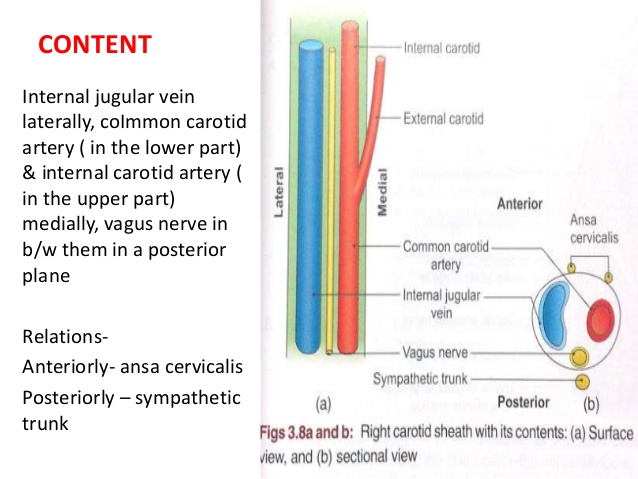
carotid sheath

Mnemonic: VNA – AS

From lateral to medial

  1. Vein (internal jugular vein)
  2. Nerve (vagus nerve)
  3. Artery (internal carotid artery in upper part and common carotid artery in lower part)

Outside carotid sheath:

  1. Anterior: Ansa cervicalis
  2. Posterior: Sympathetic chain

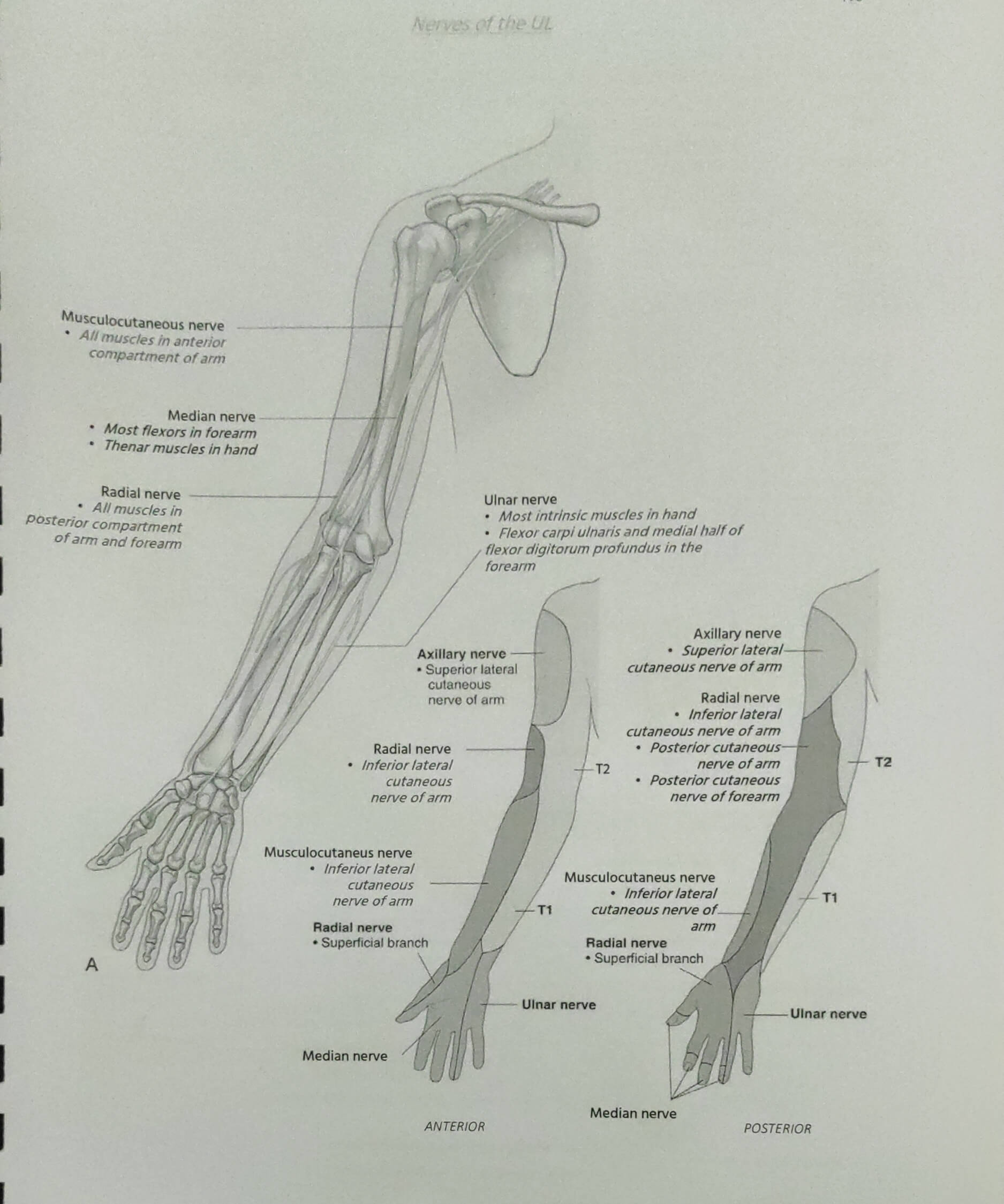
Cubital Fossa

Contents from lateral to medial

Mnemonic: R-TAN

  1. Radial nerve (not always strictly considered as part of cubital fossa)
  2. Tendon (Biceps tendon)
  3. Artery (Brachial artery)
  4. Nerve (Median nerve)

Cubital tunnel is a space through which ulnar nerve passes posterior to the medial epicondyle of humerus, under the cubital tunnel retinaculum (ligament or band of Osborne)

Subcutanoeus structures from lateral to medial

Mnemonic: CMB

  1. Cephalic vein
  2. Median cubital vein (preferred site of venipuncture
  3. Basilic vein

Popliteal fossa

Mnemonic: PeN TiN VAN

From lateral to medial

  1. Peroneal Nerve
  2. Tibial Nerve
  3. Vein (Popliteal vein)
  4. Artery (Popliteal artery)
  5. Nerve (Genicular branch of obturator nerve – descends upon popliteal artery)

Intercostal space

Superior to inferior along the inferior border of the rib

Mnemonic: VAN

  1. Vein (intercostal vein)
  2. Artery (intercostal artery)
  3. Nerve (intercostal nerve)

Collateral neurovascular bundle runs along the superior border of the rib in the lower part of intercostal space in reverse order, i.e. NAV

  1. Nerve
  2. Artery
  3. Vein
9 shares
  • Facebook9
  • Twitter
PGMEE, MRCS, USMLE, MBBS, MD/MS Anatomy

Post navigation

Previous post
Next post

Related Posts

PGMEE, MRCS, USMLE, MBBS, MD/MS chronic PPI use

Long term PPI use : Associated risks

Mar 1, 2018

Proton pump inhibitors (PPI) are often self-prescribed by the patients and since PPIs are available over-the-counter, patients can have free access to them and for long periods of time, without seeking medical attention. Although guidelines for OTC use suggest a short course (2 week treatment) of PPIs in patients with typical…

Read More
PGMEE, MRCS, USMLE, MBBS, MD/MS ERCP in pancreatitis

Mnemonic based management of Acute Pancreatitis

Jul 27, 2021Jul 27, 2021

Acute pancreatitis along with case based discussion has been already covered earlier here: To remember the initial management of acute pancreatitis, one can remember the mnemonics given below: iPA-NCREAS (Ye et.al.) Investigations: Imaging (CT, MRI or Ultrasonography) Prognostic screen to identify severe pancreatitis Amylase and lipase levels Initial treatment: Nutritional…

Read More
PGMEE, MRCS, USMLE, MBBS, MD/MS central vestibular system

Vestibular Pathway Simplified

Jul 27, 2016

Vestibule and Sensory receptors Location: Medial to tympanic membrane and Posterior to Cochlea Sensory receptors 1. Macula: Present in otolith (calcium carbonate crystals) organs – saccule (anteriorly) and utricle (posteriorly) Both are connected by corresponding ducts, which together will form endolymphatic duct, this passes through a bony canal (the vestibular…

Read More

Leave a Reply Cancel reply

Your email address will not be published. Required fields are marked *

This site uses Akismet to reduce spam. Learn how your comment data is processed.

Pre-clinical (Basic Sciences)

Anatomy

Biochemistry

Community medicine (PSM)

Embryology

Microbiology

Pathology

Pharmacology

Physiology

Clinical Sciences

Anesthesia

Dermatology

Emergency medicine

Forensic

Internal medicine

Gynecology & Obstetrics

Oncology

Ophthalmology

Orthopedics

Otorhinolaryngology (ENT)

Pediatrics

Psychiatry

Radiology

Surgery

RSS Ask Epomedicine

  • What to study for Clinical examination in Orthopedics?
  • What is the mechanism of AVNRT?

Epomedicine weekly

  • About Epomedicine
  • Contact Us
  • Author Guidelines
  • Submit Article
  • Editorial Board
  • USMLE
  • MRCS
  • Thesis
©2026 Epomedicine | WordPress Theme by SuperbThemes