Skip to content
Epomedicine

Mnemonics, Simplified Concepts & Thoughts

Epomedicine

Mnemonics, Simplified Concepts & Thoughts

Liver Anatomy : Mnemonics

Epomedicine, May 13, 2024May 13, 2024

Ligaments

Mnemonic: TV TFCL

1. True ligaments:

  • ligamentum Teres hepatis/round ligament (obliterated umbilical vein remnant)
  • ligamentum Venosum (ductus venosus remnant)

2. False ligaments (Peritoneal folds):

  • Triangular ligaments (right and left): connects respective liver lobes to diaphragm
  • Falciform ligament: connects anterior surface of liver to anterior abdominal wall
    • it’s free edge contains ligamentum teres
  • Coronary ligament: encloses bare area of liver
    • anterior and posterior folds on each side unites to form triangular ligament
  • Lesser omentum:
    • Hepatogastric ligament
    • Hepatoduodenal ligament (surrounds portal triad)

Posteroinferior (Visceral) Surface of Liver
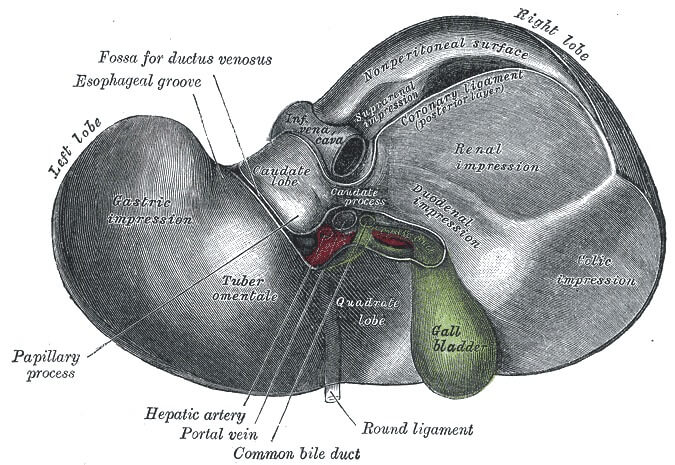
posteroinferior surface liver
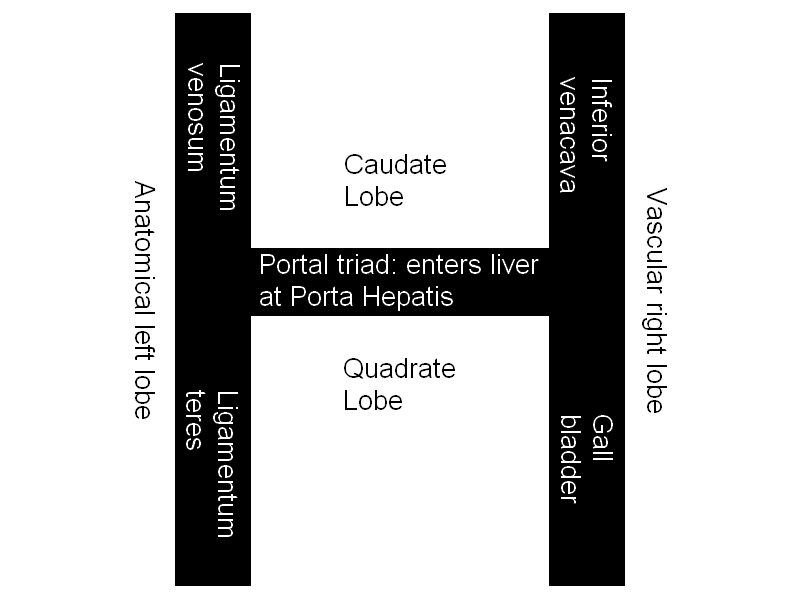
schematic posteroinferior liver surface

Anatomical halves are separated by Ligamentum venosum and Ligamentum teres.

Vascular halves are separated by IVC and Gall bladder.

Caudate lobe and Quadrate lobe:

  • Anatomically: Right lobe
  • Functionally (Vascular): Left lobe

Mnemonic: IVC are in one line

  • Inferior venacava (IVC)
  • ligamentum Venosum
  • Caudate lobe

Mnemonic: LGBTQ are in one line

  • Ligamentum Teres
  • Gall Bladder
  • Quadrate lobe

Porta hepatis separates the caudate and quadrate lobes. It transmits all the vessels, nerves and ducts entering or leaving the liver with the exception of the hepatic veins. The order of the structures in the porta hepatis from anterior to posterior can be remembered using the mnemonic “DAVE”:

  1. Ducts (right and left hepatic duct branches)
  2. Arteries (right and left hepatic artery branches)
  3. Vein (portal vein; NOT hepatic vein)
  4. Epiploic foramen (of Winlsow)

Hepatic Segmentation

Liver Segments Explained with Mnemonic

Liver Zonation

Mnemonic: Cen-three-lobular zone

Functionally, liver can be divided into 3 zones, based upon oxygen supply.

  1. Zone 1: Periportal zone
    • Predominantly involved in autoimmune and viral hepatitis (ALT > AST)
  2. Zone 2: Transitional zone
  3. Zone 3: Centrilobular zone
    • Predominantly involved in ischemic and toxic events, heart failure and Budd-chiari syndrome (AST > ALT)
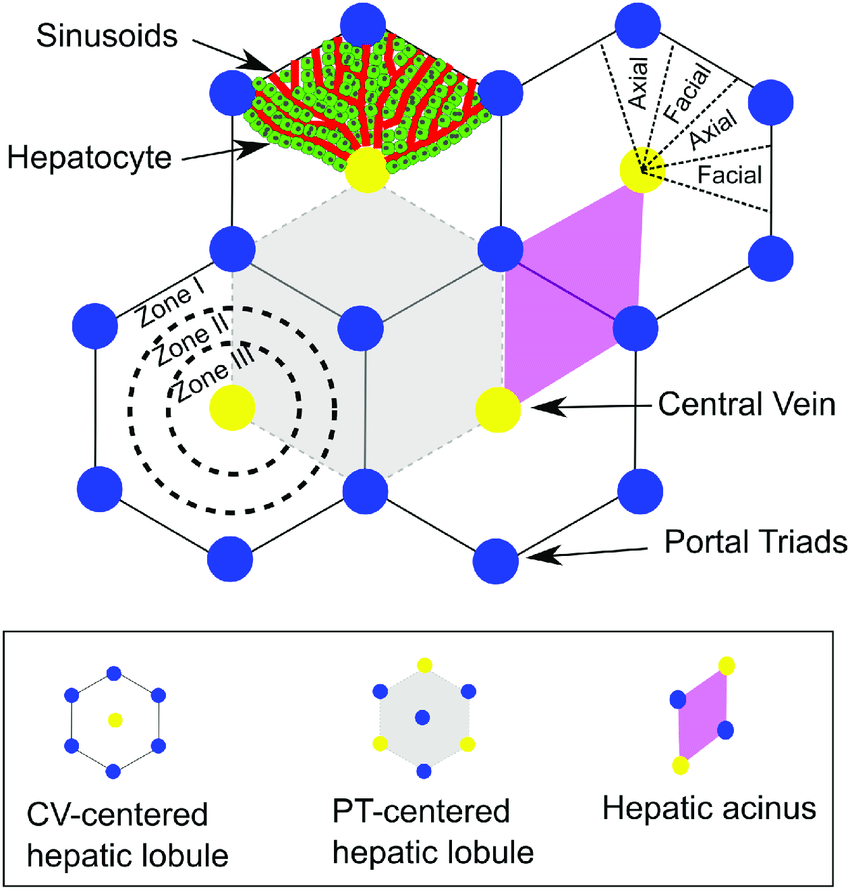
liver lobules

Blood and Nerve Supply of Liver

1. Arteries:

  • Hepatic artery (30%) – branch of celiac trunk
  • Portal vein (70%)

2. Veins: IVC via right and left hepatic veins

3. Lymphatics: Celiac nodes

4. Nerves:

  • Sympathetic: Celiac plexus
  • Parasympathetic: Anterior vagal trunk
  • Facebook
  • Twitter
PGMEE, MRCS, USMLE, MBBS, MD/MS AnatomyGastrointestinal system

Post navigation

Previous post
Next post

Related Posts

PGMEE, MRCS, USMLE, MBBS, MD/MS Caserean Section Picture

Cesarean Section

May 20, 2019May 23, 2020

Labour/Delivery– A Normal Physiological process which takes place in the body of a woman at the end of Pregnancy where the fetus is expelled out of the uterus through the Vaginal Canal. Cesarean Section/Delivery– A procedure conducted in a pregnant woman leading to Birth of a fetus through incisions given…

Read More
PGMEE, MRCS, USMLE, MBBS, MD/MS

Refeeding Syndrome : Mnemonics

Jul 1, 2024Jul 1, 2024

Risk factors Mnemonic: ABCD Pathophysiology Mnemonic: PPM Malnourished (depleted intracellular Phosphate, Potassium, Magnesium) → Refeeding → Increased glucose load → Insulin spikes → Drives PPM into cells → Hypophosphatemia (major abnormality), hypokalemia, hypomagnesemia Prevention If patient hasn’t not eaten for >5 days, aim to refeed at <50% energy and protein…

Read More
PGMEE, MRCS, USMLE, MBBS, MD/MS

Hyponatremia : SIADH vs Cerebral Salt Wasting Syndrome

Aug 9, 2019Aug 9, 2019

SIADH causes Mnemonic: SIADH Surgery Intracranial – Infection, Head injury, CVA Alveolar – Carcinoma, Pus Drugs – Opiates, Antiepileptics, Cytotoxics, Anti-psychotics Hormonal – Hypothyroid, Low corticosteroid level SIADH diagnostic criteria Mnemonic: SOD-IUM/S Serum Osmollity Decreased (<275 mOsm/kg) Increased Urine Molality/osmolality (>100 mOsm/kg) Increased Urine Sodium/Na+ (>40 Meq/L) Others: Euvolemic (Normal…

Read More

Leave a Reply Cancel reply

Your email address will not be published. Required fields are marked *

This site uses Akismet to reduce spam. Learn how your comment data is processed.

Epomedicine. Liver Anatomy : Mnemonics [Internet]. Epomedicine; 2024 May 13 [cited 2026 Jan 1]. Available from: https://epomedicine.com/medical-students/liver-anatomy-mnemonics/.

Pre-clinical (Basic Sciences)

Anatomy

Biochemistry

Community medicine (PSM)

Embryology

Microbiology

Pathology

Pharmacology

Physiology

Clinical Sciences

Anesthesia

Dermatology

Emergency medicine

Forensic

Internal medicine

Gynecology & Obstetrics

Oncology

Ophthalmology

Orthopedics

Otorhinolaryngology (ENT)

Pediatrics

Psychiatry

Radiology

Surgery

RSS Ask Epomedicine

  • What to study for Clinical examination in Orthopedics?
  • What is the mechanism of AVNRT?

Epomedicine weekly

  • About Epomedicine
  • Contact Us
  • Author Guidelines
  • Submit Article
  • Editorial Board
  • USMLE
  • MRCS
  • Thesis
©2026 Epomedicine . All rights reserved.