Skip to content
Epomedicine

Mnemonics, Simplified Concepts & Thoughts

Epomedicine

Mnemonics, Simplified Concepts & Thoughts

Ketamine : Mnemonic

Epomedicine, Feb 11, 2023Feb 11, 2023
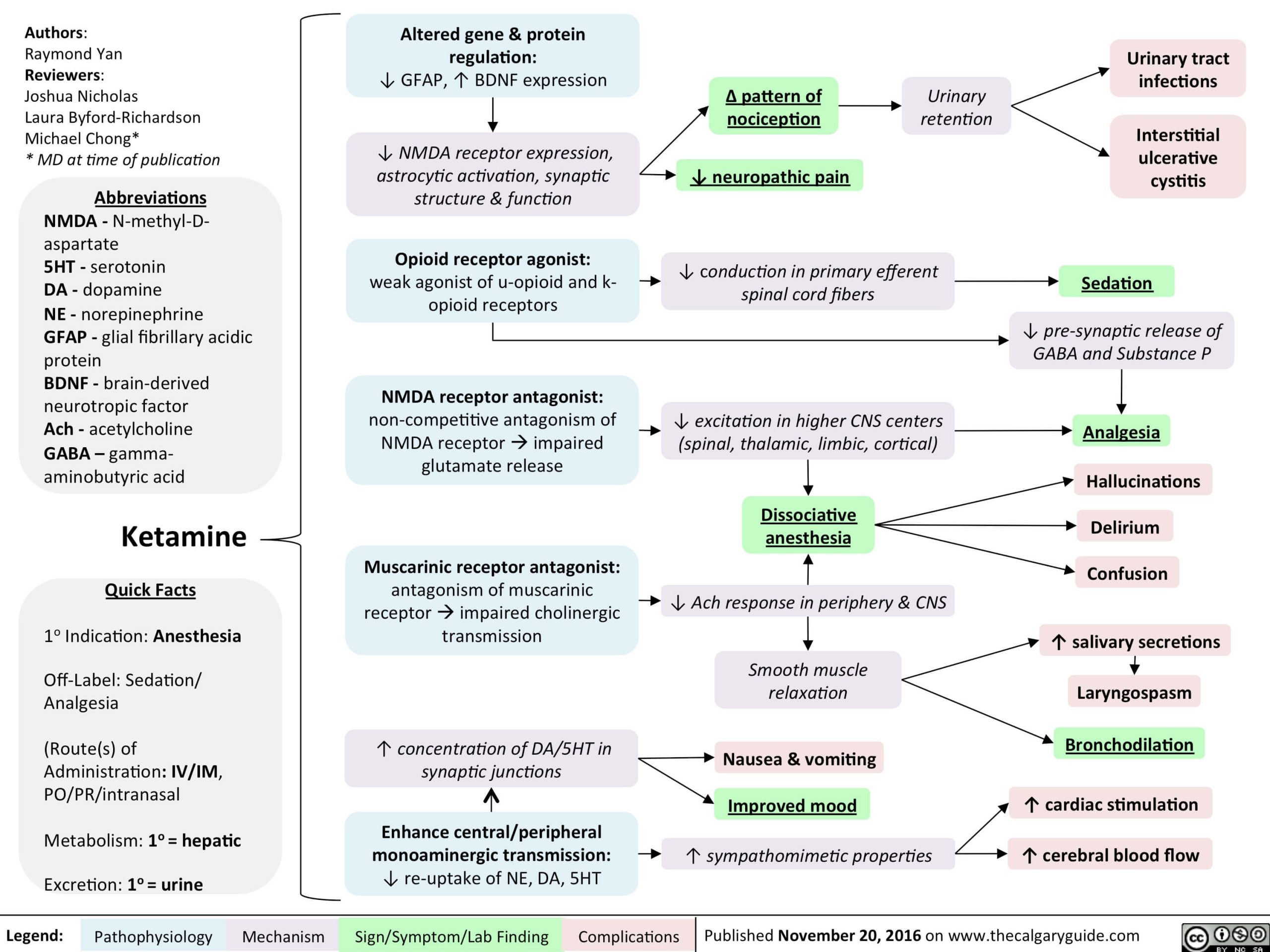
ketamine flowchart
Source: Ketamine | Calgary Guide (ucalgary.ca) [CC BY-NC-SA]

K: Kids (Induction agent of choice in children)

E: Emergence reaction (floating sensations, vivid dreams and hallucination; reduced using benzodiazepines), Enantiomers (S-Ketamine and R-Ketamine)

T: Thalamo-cortical dissociation with limbic system causing dissociative anesthesia

A: Analgesic, Amnesic, Antidepressant, All routes (IV, IM, PO, Intranasal, Epidural, Intrathecal)

M: Meals – can be given after meals, Muscarinic receptor antagonist (increased secretions, bronchodilation), Metabolism (primary) – hepatic

I: Increases all pressures (BP, ICP, IOP)

N: NMDA (N-Methyl-D-Aspartate) Glutamate receptor blocker, Norketamine (Major metabolite), Nausea/vomiting (due to increased concentration of DA/5HT in synaptic junctions)

E: Excretion (primary) – renal
  • Facebook
  • Twitter
PGMEE, MRCS, USMLE, MBBS, MD/MS AnesthesiaEmergency medicinePharmacology

Post navigation

Previous post
Next post

Related Posts

PGMEE, MRCS, USMLE, MBBS, MD/MS tourniquet

Bruner’s Ten Rules of Pneumatic Tourniquet Use

Oct 17, 2019Oct 18, 2019

APPLICATION: Apply only to a healthy limb or with caution to an unhealthy limb SIZE OF TOURNIQUET: Arm, 10 cm; leg, 15 cm or wider in large legs SITE OF APPLICATION: Upper arm; mid/upper thigh ideally PADDING: At least two layers of orthopaedic felt SKIN PREPARATION: Occlude to prevent soaking…

Read More
PGMEE, MRCS, USMLE, MBBS, MD/MS dependence cycle

Substance abuse vs Substance dependence

Nov 4, 2016Nov 10, 2016

Both of these substance use disorders are maladpative patterns of substance use, leading to clinically significant impairment/distress but defined by separate criteria. Substance abuse ≥1 of the following occurring within a 12 month period: Mnemonic: 4 Rs Role failure: Recurrent use resulting in failure to fulfill role obligation Risky behavior:…

Read More
PGMEE, MRCS, USMLE, MBBS, MD/MS

Ollier’s Disease and Maffucci Syndrome : Mnemonic

Dec 1, 2024Dec 1, 2024

Ollier’s disease Maffucci syndrome

Read More

Leave a Reply Cancel reply

Your email address will not be published. Required fields are marked *

This site uses Akismet to reduce spam. Learn how your comment data is processed.

Pre-clinical (Basic Sciences)

Anatomy

Biochemistry

Community medicine (PSM)

Embryology

Microbiology

Pathology

Pharmacology

Physiology

Clinical Sciences

Anesthesia

Dermatology

Emergency medicine

Forensic

Internal medicine

Gynecology & Obstetrics

Oncology

Ophthalmology

Orthopedics

Otorhinolaryngology (ENT)

Pediatrics

Psychiatry

Radiology

Surgery

RSS Ask Epomedicine

  • What to study for Clinical examination in Orthopedics?
  • What is the mechanism of AVNRT?

Epomedicine weekly

  • About Epomedicine
  • Contact Us
  • Author Guidelines
  • Submit Article
  • Editorial Board
  • USMLE
  • MRCS
  • Thesis
©2026 Epomedicine | WordPress Theme by SuperbThemes