Skip to content
Epomedicine

Mnemonics, Simplified Concepts & Thoughts

Epomedicine

Mnemonics, Simplified Concepts & Thoughts

Ketamine : Mnemonic

Epomedicine, Feb 11, 2023Feb 11, 2023
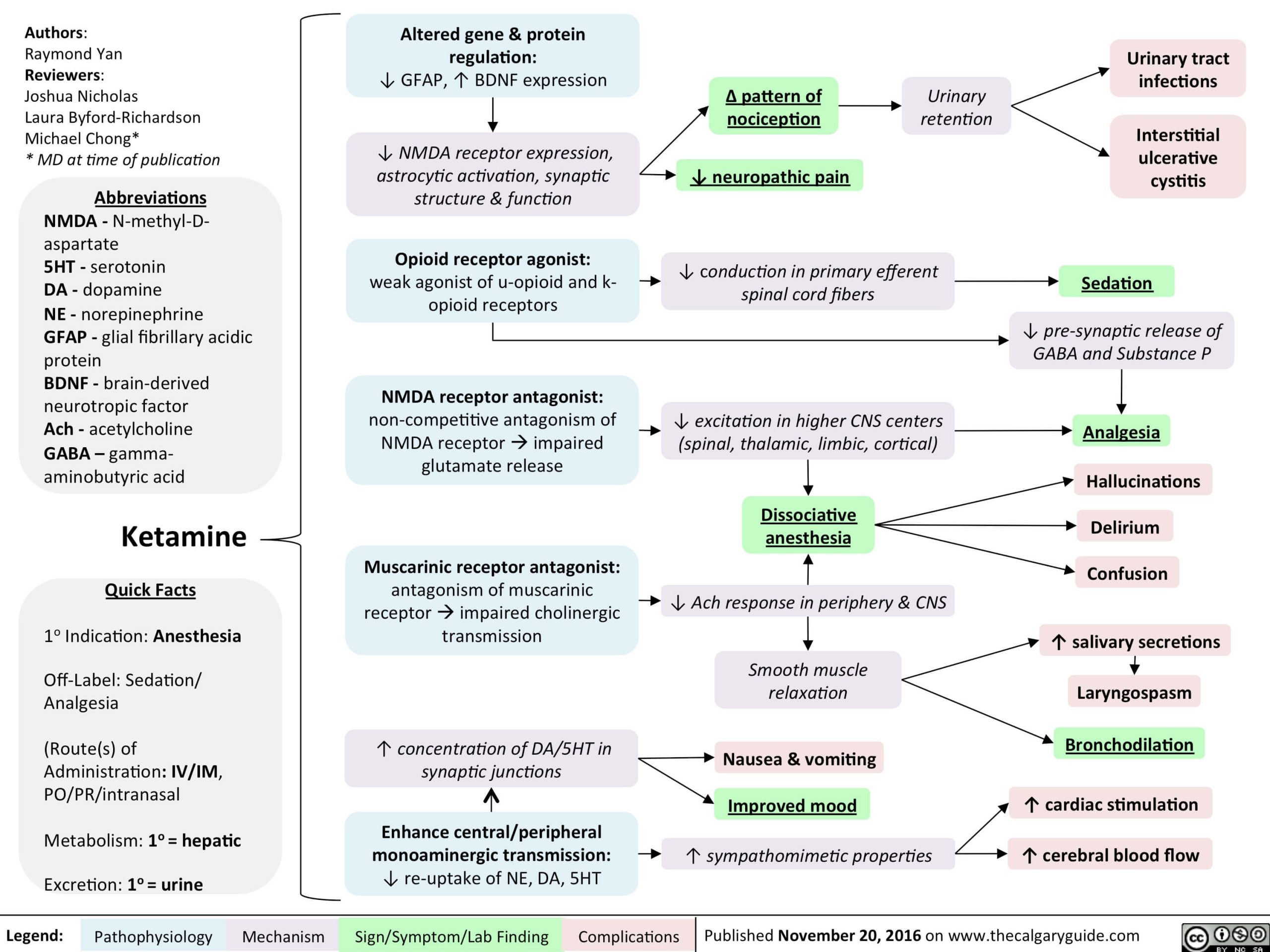
ketamine flowchart
Source: Ketamine | Calgary Guide (ucalgary.ca) [CC BY-NC-SA]

K: Kids (Induction agent of choice in children)

E: Emergence reaction (floating sensations, vivid dreams and hallucination; reduced using benzodiazepines), Enantiomers (S-Ketamine and R-Ketamine)

T: Thalamo-cortical dissociation with limbic system causing dissociative anesthesia

A: Analgesic, Amnesic, Antidepressant, All routes (IV, IM, PO, Intranasal, Epidural, Intrathecal)

M: Meals – can be given after meals, Muscarinic receptor antagonist (increased secretions, bronchodilation), Metabolism (primary) – hepatic

I: Increases all pressures (BP, ICP, IOP)

N: NMDA (N-Methyl-D-Aspartate) Glutamate receptor blocker, Norketamine (Major metabolite), Nausea/vomiting (due to increased concentration of DA/5HT in synaptic junctions)

E: Excretion (primary) – renal

  • Facebook
  • Twitter
PGMEE, MRCS, USMLE, MBBS, MD/MS AnesthesiaEmergency medicinePharmacology

Post navigation

Previous post
Next post

Related Posts

PGMEE, MRCS, USMLE, MBBS, MD/MS

Glucagonoma : 6 D’s

Jun 18, 2023Jun 18, 2023

Glucagonoma is an alpha-cell tumor of pancreas. Mnemonic: 6 D’s 1. Diabetes 2. Dermatitis (Necrolytic migratory erythema) 3. Declining weight 4. Diarrhea 5. Deep vein thrombosis 6. Dilated cardiomyopathy

Read More
PGMEE, MRCS, USMLE, MBBS, MD/MS gastric lymph node stations

Gastric Carcinoma : Quick Review

Feb 28, 2018

Etiology and Risk factors of Gastric Carcinoma Mnemonic: 14 “A”s Animal foods (smoked, cured or preserved – contains high nitroso- compounds) Anti-oxidant poor foods Acetaldehyde in Alcohol Acid peptic disease or Antigen i.e. H.pylori Atrophic gastritis and Achlorhydria Adenomatous polyps (precursor of intestinal type of gastric cancer) A type Blood group Asians…

Read More
PGMEE, MRCS, USMLE, MBBS, MD/MS Advanced glaucomatous changes diagram

Glaucomatous Optic Disc Changes Made Simple

May 3, 2014May 5, 2014

Optic disc changes in Glaucoma is one of the most frequently asked topics in Ophthalmology. However, students are often found to have difficulty in understanding and remembering them. Hence, I came up with an idea to illustrate them with schematic diagrams and mnemonics to simplify the topic. The diagrams are…

Read More

Leave a Reply Cancel reply

Your email address will not be published. Required fields are marked *

This site uses Akismet to reduce spam. Learn how your comment data is processed.

Pre-clinical (Basic Sciences)

Anatomy

Biochemistry

Community medicine (PSM)

Embryology

Microbiology

Pathology

Pharmacology

Physiology

Clinical Sciences

Anesthesia

Dermatology

Emergency medicine

Forensic

Internal medicine

Gynecology & Obstetrics

Oncology

Ophthalmology

Orthopedics

Otorhinolaryngology (ENT)

Pediatrics

Psychiatry

Radiology

Surgery

RSS Ask Epomedicine

  • What to study for Clinical examination in Orthopedics?
  • What is the mechanism of AVNRT?

Epomedicine weekly

  • About Epomedicine
  • Contact Us
  • Author Guidelines
  • Submit Article
  • Editorial Board
  • USMLE
  • MRCS
  • Thesis
©2026 Epomedicine | WordPress Theme by SuperbThemes