Skip to content
Epomedicine

Mnemonics, Simplified Concepts & Thoughts

Epomedicine

Mnemonics, Simplified Concepts & Thoughts

gastrinoma triangle

Gastrinoma (Passaro’s) triangle

Epomedicine, Feb 17, 2017

Boundaries of Gastrinoma Triangle

It is an imaginary triangle formed by 3 points in upper abdomen:

  1. Apex: Cystic duct-CBD junction
  2. Inferior point: 2nd part duodenum-3rd part duodenum junction
  3. Left lateral point: Pancreatic neck-body junction
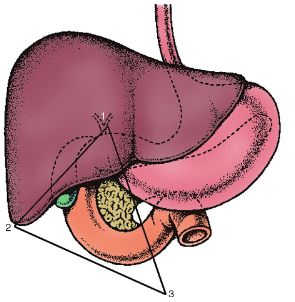
gastrinoma triangle

This area is located to the right of Superior Mesenteric Artery (SMA) i.e. Proximal duodenum and head of pancreas.

Importance of Gastrinoma Triangle

1. Tumor localization: 60-90% gastrinomas arise within the Gastrinoma triangle. Gastrinoma is more common in duodenum than in pancreas.

2. Hepatic metastases: Gastrinomas that arise from the tail of pancreas have higher rate of hepatic metastases compared to that which arises in gastrinoma triangle.
  • Facebook
  • Twitter
PGMEE, MRCS, USMLE, MBBS, MD/MS AnatomyEndocrine systemGeneral SurgeryInternal medicine

Post navigation

Previous post
Next post

Related Posts

PGMEE, MRCS, USMLE, MBBS, MD/MS hla

HLA association mnemonics

Jun 1, 2019Jan 20, 2022

The genes that encode HLA (Human Leukocyte Antigen) are on chromosome 6. MHC class Type Location Function I HLA-A, -B, -C All cells Recognized by CD8+ lymphocytes II HLA-DP, -DQ, -DR Antigen presenting cells Recognized by CD4+ lymphocytes III Complement components Plasma Chemotaxis, opsonization, lysis of bacteria and cells The…

Read More
PGMEE, MRCS, USMLE, MBBS, MD/MS

Rheumatoid Arthritis Criteria Mnemonics

Sep 1, 2020Feb 21, 2023

The 2 commonly used criteria for diagnosis of rheumatoid arthritis will be discussed here. 1987 ACR Criteria Mnemonic: DMARDs if MADRAS Mnemonic: EARS For diagnosis of RA: 4 out of 7 criteria must be present (except duration) and criteria listed above in number 1, 2, 7 and 8 must be…

Read More
PGMEE, MRCS, USMLE, MBBS, MD/MS cellular adaptations

Cellular Adaptations

Jun 17, 2016Aug 31, 2018

Hypertrophy, Hyperplasia, Atrophy and Metaplasia are the main four types of cellular adaptations. Adaptations are: Reversible changes In the number, size, phenotype, metabolic activity or functions of cells In response to the changes in the environment (stress).   Hypertrophy Definition: Increase in cell size Occurs in: non-dividing (permanent) cells: cardiac and…

Read More

Comment

  1. vijay says:
    Jan 14, 2018 at 5:40 am

    cost of full treatment of gas and acid treatment i suffering from last 35 years . i am now 56

    Reply

Leave a Reply Cancel reply

Your email address will not be published. Required fields are marked *

This site uses Akismet to reduce spam. Learn how your comment data is processed.

Pre-clinical (Basic Sciences)

Anatomy

Biochemistry

Community medicine (PSM)

Embryology

Microbiology

Pathology

Pharmacology

Physiology

Clinical Sciences

Anesthesia

Dermatology

Emergency medicine

Forensic

Internal medicine

Gynecology & Obstetrics

Oncology

Ophthalmology

Orthopedics

Otorhinolaryngology (ENT)

Pediatrics

Psychiatry

Radiology

Surgery

RSS Ask Epomedicine

  • What to study for Clinical examination in Orthopedics?
  • What is the mechanism of AVNRT?

Epomedicine weekly

  • About Epomedicine
  • Contact Us
  • Author Guidelines
  • Submit Article
  • Editorial Board
  • USMLE
  • MRCS
  • Thesis
©2026 Epomedicine | WordPress Theme by SuperbThemes