Skip to content
Epomedicine

Mnemonics, Simplified Concepts & Thoughts

Epomedicine

Mnemonics, Simplified Concepts & Thoughts

Friedreich’s Ataxia : Mnemonic

Epomedicine, Oct 21, 2022Oct 21, 2022

Friedreich’s ataxia is a hereditary spinocerebellar degenerative disorder named after German neurologist, Professor Nicholaus Friedreich.
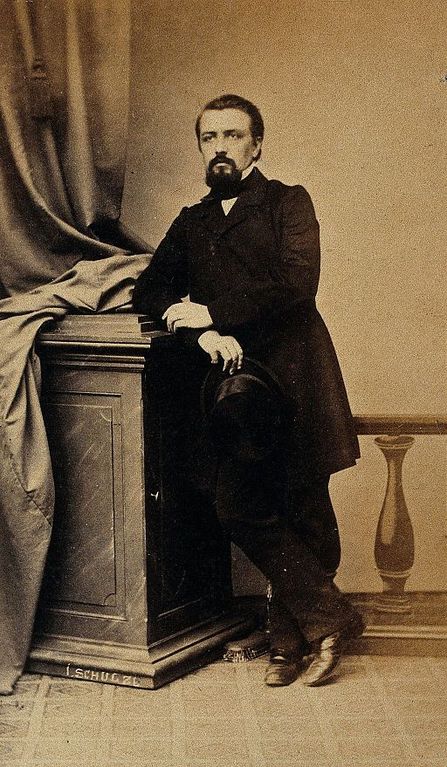
Nicholaus Friedreich
Unknown author, CC BY 4.0, via Wikimedia Commons

Mnemonic: FRIEDREICH’S Ataxia

1. Foot deformity (progressive cavo-varus), Frataxin expression reduced

2. Recessive (autosomal), Repeat of trinucleotide GAA (chromosome 9)

3. Iron accumulation in mitochondria

4. Extensor plantar response

5. Dysarthria (within 5 years of onset), Dorsal column involvement, Diabetes mellitus

6. Reflexes (DTR) absent

7. Early onset (within 25 years of age)

8. Incoordination

9. Cerebellar and Corticospinal tract involvement

10. Hypertrophic cardiomyopathy

11. Scoliosis

12. Ataxia (progressive)
  • Facebook
  • Twitter
PGMEE, MRCS, USMLE, MBBS, MD/MS Internal medicinePediatrics

Post navigation

Previous post
Next post

Related Posts

PGMEE, MRCS, USMLE, MBBS, MD/MS pupillary light reflex

Visual Pathway : Supplement Knowledge

Jul 29, 2016Jun 17, 2023

Everyone must be aware of the normal visual pathway and their defects. Here, I’ve tried to enlist the topics related to the visual pathway that are “nice to know” but you may have missed it or failed to understand properly. Below is the basic visual pathway:   Wilbrand’s knee Anterior…

Read More
PGMEE, MRCS, USMLE, MBBS, MD/MS

Valproic acid (Valproate) : Pharmacology

Sep 23, 2021Sep 23, 2021

Dosage and Absorption VPA is absorbed through the small intestine, and delayed- and extended-release forms are designed to extend the dosage interval and bypass the stomach to reduce dyspepsia. The liquid and tablet forms have a more than 10-fold higher absorption rate constant than the extended-release forms and peak at…

Read More
PGMEE, MRCS, USMLE, MBBS, MD/MS s2 split

Abnormalities of First and Second Heart Sound

Aug 30, 2016

In the chapter of cardiac cycle, we have discussed the mechanism of production of heart sounds and their physiologic splitting. First Heart Sound (S1) Mechanism Closure of atrioventricular valves. It is best appreciated in mitral and tricuspid area of chest for respective components. Loud S1 Slamming a door from a…

Read More

Comment

  1. Amna says:
    Oct 12, 2023 at 1:14 pm

    Very informative and easiest for memorization

    Reply

Leave a Reply Cancel reply

Your email address will not be published. Required fields are marked *

This site uses Akismet to reduce spam. Learn how your comment data is processed.

Pre-clinical (Basic Sciences)

Anatomy

Biochemistry

Community medicine (PSM)

Embryology

Microbiology

Pathology

Pharmacology

Physiology

Clinical Sciences

Anesthesia

Dermatology

Emergency medicine

Forensic

Internal medicine

Gynecology & Obstetrics

Oncology

Ophthalmology

Orthopedics

Otorhinolaryngology (ENT)

Pediatrics

Psychiatry

Radiology

Surgery

RSS Ask Epomedicine

  • What to study for Clinical examination in Orthopedics?
  • What is the mechanism of AVNRT?

Epomedicine weekly

  • About Epomedicine
  • Contact Us
  • Author Guidelines
  • Submit Article
  • Editorial Board
  • USMLE
  • MRCS
  • Thesis
©2026 Epomedicine | WordPress Theme by SuperbThemes