Skip to content
Epomedicine

Mnemonics, Simplified Concepts & Thoughts

Epomedicine

Mnemonics, Simplified Concepts & Thoughts

Facet Joint Orientation : Mnemonic

Epomedicine, May 25, 2023May 25, 2023

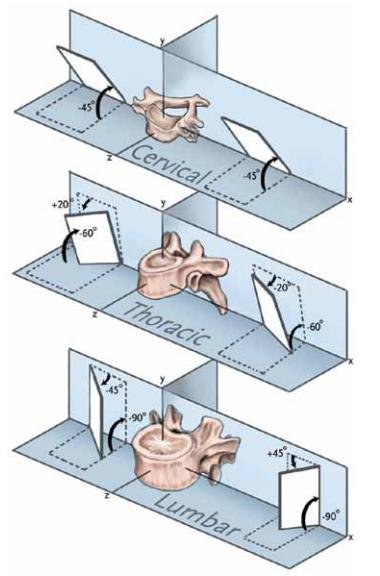
Mnemonic: BUM BUL BUM

The superior articular process faces:

1. Cervical vertebra: BUM

  • Back and Up (45 degrees to transverse plane)
  • Medial

2. Thoracic vertebra: BUL

  • Back and Up (60 degrees to transverse plane)
  • Lateral (20 degrees)

3. Lumbar vertebra: BUM

  • Back and Up (90 degrees to transverse plane)
  • Medial (45 degrees)
spine facet orientation
Source: http://dx.doi.org/10.13140/RG.2.1.4314.4722
  • Facebook
  • Twitter
PGMEE, MRCS, USMLE, MBBS, MD/MS AnatomyMusculoskeletal systemNervous systemOrthopedics

Post navigation

Previous post
Next post

Related Posts

PGMEE, MRCS, USMLE, MBBS, MD/MS

Congenital Pseudoarthrosis of Tibia (CPT)

Mar 24, 2023Jul 31, 2024

Origin of Pathology Periosteum Clinical features Mnemonic: ABCDeF Boyd Classification Mnemonic: B-2C-2D-E I – Bowing II – Constriction (hourlgass) III – Cyst IV – Dense (Sclerotic) V – Dysplastic fibula VI – “Endosseous” (Intraosseous) neurofibroma or schwannoma Paley Classification Type Bone ends Pseudoarthrosis mobility Previous surgical intervention 1 Atrophic Mobile…

Read More
PGMEE, MRCS, USMLE, MBBS, MD/MS

Neuroanatomy Notes

Sep 20, 2019Jul 25, 2021

This is a compilation of high yield topics on neuroanatomy with visual mnemonics and illustrations targeted for undergraduate medical students who find difficulty in conceptualizing the nervous system. Author: Dr. Sulabh Kumar Shrestha Key features: Covers clinically and academically important topics Schematic diagrams Visual mnemonics Useful for medical students, PG…

Read More
PGMEE, MRCS, USMLE, MBBS, MD/MS choosing hypoglycemics

Approach to Uncomplicated Diabetes Mellitus : Simplified

Feb 19, 2016Jun 12, 2016

A) GLUCOSE LEVEL 1. Post-prandial: 140-200 mg/dl: Impaired glucose tolerance (Pre-diabetes) Diabetes prevented with: weight loss, exercise, metformin (in high risk) ≥200 mg/dl (+ Clinical symptoms): Diabetes confirmed 2. Fasting: 100-126 mg/dl: Impaired fasting glucose (Pre-diabetes) ≥126 mg/dl (+ Clinical symptoms): Diabetes confirmed

Read More

Leave a Reply Cancel reply

Your email address will not be published. Required fields are marked *

This site uses Akismet to reduce spam. Learn how your comment data is processed.

Pre-clinical (Basic Sciences)

Anatomy

Biochemistry

Community medicine (PSM)

Embryology

Microbiology

Pathology

Pharmacology

Physiology

Clinical Sciences

Anesthesia

Dermatology

Emergency medicine

Forensic

Internal medicine

Gynecology & Obstetrics

Oncology

Ophthalmology

Orthopedics

Otorhinolaryngology (ENT)

Pediatrics

Psychiatry

Radiology

Surgery

RSS Ask Epomedicine

  • What to study for Clinical examination in Orthopedics?
  • What is the mechanism of AVNRT?

Epomedicine weekly

  • About Epomedicine
  • Contact Us
  • Author Guidelines
  • Submit Article
  • Editorial Board
  • USMLE
  • MRCS
  • Thesis
©2026 Epomedicine | WordPress Theme by SuperbThemes