Skip to content
Epomedicine

Mnemonics, Simplified Concepts & Thoughts

Epomedicine

Mnemonics, Simplified Concepts & Thoughts

Diagnosis of Spinal Instability (White & Panjabi) : Mnemonic

Epomedicine, Apr 3, 2021Apr 10, 2021

Mnemonic: Remember 4 D common to all + 3 D for C-spine and 1 D for L-spine

Diagnosis requires: Score >4

Denis column disruption:

  1. Anterior column destroyed or unable to function (2 points)
  2. Posterior column destroyed or unable to function (2 points)

Deformity: Will have a maximum score of 4 points (2 points assigned for ART – angulation, rotation and translation each)

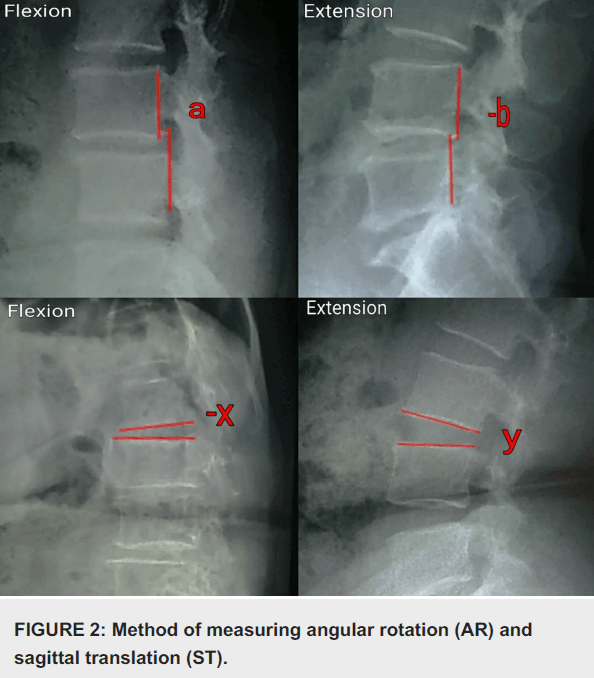
  1. Sagittal plane translation/displacement: 2 points
    • C-spine: >3.5 mm or 20% in flexion-extension or resting x-rays
    • T-spine: >2.5 mm
    • L-spine: >4.5 mm or 15% in flexion-extension or resting x-rays
    • Mnemonic: Remember C/T/L – 3.5/2.5/4.5
  2. Sagittal plane rotation in flexion-extension X-rays: 2 points
    • C-spine: >20 degrees
    • L-spine:
      • >15 degrees at L1-L2, L2-L3 and L3-L4
      • >20 degrees at L4-L5
      • >25 degrees at L5-S1
      • Mnemonic: Multiply by 5 (L3: 3X5 = 15; L4: 4X5 = 20; L5: 5X5 = 25)
  3. Sagittal plane angulation (relative) in resting X-rays: 2 points
    • C-spine: >11 degrees
    • T-spine: >5 degrees
    • L-spine: >22 degrees
angular rotation and sagittal translation method
Rathod A K, Dhake R P (April 04, 2018) Radiographic Incidence of Lumbar Spinal Instability in Patients with Non-spondylolisthetic Low Backache. Cureus 10(4): e2420. doi:10.7759/cureus.2420

Damage of spinal cord/nerve root:

  1. C-spine: Spinal cord damage (2 points) and Nerve root damage (1 point)
  2. T-spine: Spinal cord damage (2 points)
  3. L-spine: Cauda equina syndrome (3 points)

Dangerous loading anticipated: 1 point

Other elements specific to C-spine:

  1. Distraction test (Stretch test) positive: 2 points
    • Lateral view X-ray or C-arm with crutchfield tong traction or head-halter traction with 5 pounds of weight increment every 5 minutes (upto 1/3 of body weight) until test is positive (neurologic deficit or abnormal separation of anterior and posterior elements)
  2. Developmentally narrow spinal canal (Sagittal diameter <13 mm or Pavlov’s ratio <0.8): 1 points
  3. Disc narrowing (abnormal): 1 points

Other elements specific to T-spine:

  1. Disarticulation of costovertebral articulation: 1 point

Reference: Kim, C. W., Perry, A., & Garfin, S. R. (2005). Spinal Instability: The Orthopedic Approach. Seminars in Musculoskeletal Radiology, 09(01), 77–87. doi:10.1055/s-2005-867098 
22 shares
  • Facebook22
  • Twitter
PGMEE, MRCS, USMLE, MBBS, MD/MS Musculoskeletal systemNervous systemOrthopedics

Post navigation

Previous post
Next post

Related Posts

PGMEE, MRCS, USMLE, MBBS, MD/MS

Mnemonic based Clinical Diagnosis of Covid-19

Apr 24, 2021Apr 24, 2021

Mnemonic: Covid-MATCH65 Covid-19 patient exposure or international travel: 2.5 points Myalgia/Malaise: 1 point Anosmia or Aguesia: 2.5 points Temperature (any reported fever): 0.5 point Coryza/sore throat: -1 point Hypoxia – oxygen saturation <97%: 1 point 65 years or older: 1 point Scoring assessment: <1 = Low risk (0.5%) 1-1.5 =…

Read More
PGMEE, MRCS, USMLE, MBBS, MD/MS decorticate decerebrate

Decorticate and Decerebrate Rigidity – Mnemonics

Jun 3, 2019Jun 3, 2019

Rubrospinal tract mediates flexor of the upper arm. Here is a way to remember these two postures and never forget again. Decerebrate has more “E” and more “R”. Extended upper limbs Rubrospinal tract transected (Red nucleus is above the level of lesion, i.e. below midbrain level) Decorticate has “COR”. Upper…

Read More

Glaucoma Basics – Aqueous humor dynamics and Intraocular pressure

Jan 8, 2014

Volume of aqueous: 0.25 ml (Anterior chamber) + 0.06 ml (Posterior chamber) Composition of aqueous: similar to plasma except- higher concentration of ascorbate, pyruvate and lactate lower concentration of protein, urea and glucose Functions of aqueous: Maintains Intra-ocular Pressure (IOP) Provides nutrition to avascular lens and cornea Optical transparency Place…

Read More

Leave a Reply Cancel reply

Your email address will not be published. Required fields are marked *

This site uses Akismet to reduce spam. Learn how your comment data is processed.

Epomedicine. Diagnosis of Spinal Instability (White & Panjabi) : Mnemonic [Internet]. Epomedicine; 2021 Apr 3 [cited 2025 Dec 6]. Available from: https://epomedicine.com/medical-students/diagnosis-spinal-instability-white-panjabi-mnemonic/.

Pre-clinical (Basic Sciences)

Anatomy

Biochemistry

Community medicine (PSM)

Embryology

Microbiology

Pathology

Pharmacology

Physiology

Clinical Sciences

Anesthesia

Dermatology

Emergency medicine

Forensic

Internal medicine

Gynecology & Obstetrics

Oncology

Ophthalmology

Orthopedics

Otorhinolaryngology (ENT)

Pediatrics

Psychiatry

Radiology

Surgery

RSS Ask Epomedicine

  • What to study for Clinical examination in Orthopedics?
  • What is the mechanism of AVNRT?

Epomedicine weekly

  • About Epomedicine
  • Contact Us
  • Author Guidelines
  • Submit Article
  • Editorial Board
  • USMLE
  • MRCS
  • Thesis
©2025 Epomedicine . All rights reserved.