Skip to content
Epomedicine

Mnemonics, Simplified Concepts & Thoughts

Epomedicine

Mnemonics, Simplified Concepts & Thoughts

Achondroplasia Mnemonic

Dr. Sulabh Kumar Shrestha, MS Orthopedics, Jul 25, 2021Jul 25, 2021
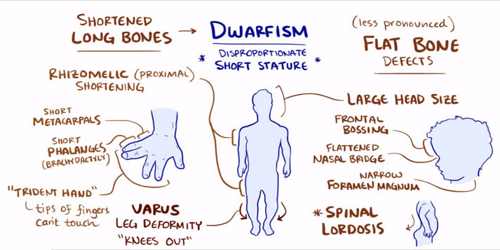
Achondroplasia mnemonic
Osmosis, CC BY-SA 4.0, via Wikimedia Commons

A: Autosomal dominant

C: “Champange glass” pelvis in X-rays

H: Hypotonia

O: Ossification affected (Enchondral > Appositional)

N: Nasal bridge small

D: Disproportionate Dwarfism

R: Rhizomelic (proximal i.e. humerus and femur shortening)

O: Out knees (varus deformity)

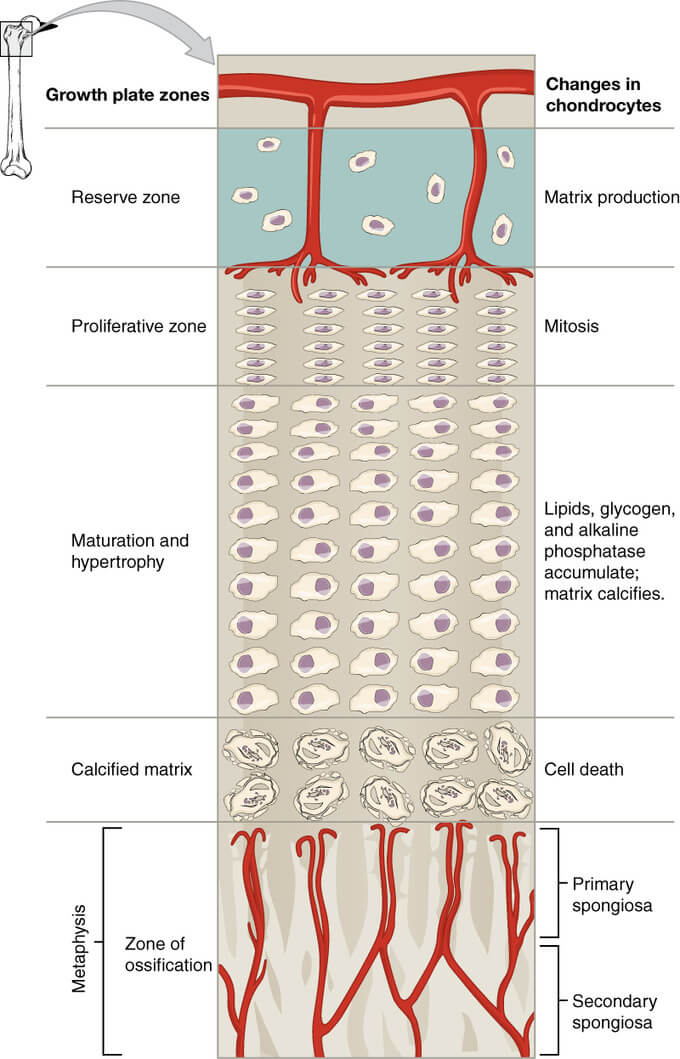
P: Proliferative zone quantitative defect

L: Little phalanx (brachydactyly) and metacarpals with Leister (trident) hand

A: Automatically resolving kyphosis

S: Spinal stenosis and Short pedicles; Subluxation of radial head

I: Interpedicular distance in spine decreased

A: Alteration (mutation) of FGF-3

It is different from pseudoachondroplasia which is also an autosomal dominant disorder with disproportionate dwarfism caused by mutation in COMP (Collagen Olimetric Protein) but presents with normal facies and cervical instability and also causes early osteoarthritis.

dr. sulabh kumar shrestha
Dr. Sulabh Kumar Shrestha, MS Orthopedics

He is the section editor of Orthopedics in Epomedicine. He searches for and share simpler ways to make complicated medical topics simple. He also loves writing poetry, listening and playing music. He is currently pursuing Fellowship in Hip, Pelvi-acetabulum and Arthroplasty at B&B Hospital.
  • Facebook
  • Twitter
PGMEE, MRCS, USMLE, MBBS, MD/MS OrthopedicsPediatrics

Post navigation

Previous post
Next post

Related Posts

PGMEE, MRCS, USMLE, MBBS, MD/MS tourniquet

Bruner’s Ten Rules of Pneumatic Tourniquet Use

Oct 17, 2019Oct 18, 2019

APPLICATION: Apply only to a healthy limb or with caution to an unhealthy limb SIZE OF TOURNIQUET: Arm, 10 cm; leg, 15 cm or wider in large legs SITE OF APPLICATION: Upper arm; mid/upper thigh ideally PADDING: At least two layers of orthopaedic felt SKIN PREPARATION: Occlude to prevent soaking…

Read More
PGMEE, MRCS, USMLE, MBBS, MD/MS rosette types

Rosettes in Pathology

Jan 26, 2017Jan 27, 2017

Rosette refers to a decoration or pattern resembling a rose. In pathology, rosette refers to aa halo or “spoke-wheel” arrangement of cells around a central structure especially in neoplasms of neuroblastic or neuroectoderma origin. The central structure can be: a. Empty lumen: True ependymal rosette Well differentiated ependymomas (minority of cases)…

Read More
PGMEE, MRCS, USMLE, MBBS, MD/MS tourniquet

Tourniquet Paralysis Syndrome

Feb 27, 2021Feb 27, 2021

Synonym: Pressure paralysis Mechanism: Direct extrinsic pressure (displacement of ranvier node) or axonal hypoxia on the nerves beneath the tourniquet and are related to the cuff pressure and duration of application.\ It is different from post tourniquet syndrome which caused due to combined effect of muscle ischemia, edema and microvascular…

Read More

Leave a Reply Cancel reply

Your email address will not be published. Required fields are marked *

This site uses Akismet to reduce spam. Learn how your comment data is processed.

Pre-clinical (Basic Sciences)

Anatomy

Biochemistry

Community medicine (PSM)

Embryology

Microbiology

Pathology

Pharmacology

Physiology

Clinical Sciences

Anesthesia

Dermatology

Emergency medicine

Forensic

Internal medicine

Gynecology & Obstetrics

Oncology

Ophthalmology

Orthopedics

Otorhinolaryngology (ENT)

Pediatrics

Psychiatry

Radiology

Surgery

RSS Ask Epomedicine

  • What to study for Clinical examination in Orthopedics?
  • What is the mechanism of AVNRT?

Epomedicine weekly

  • About Epomedicine
  • Contact Us
  • Author Guidelines
  • Submit Article
  • Editorial Board
  • USMLE
  • MRCS
  • Thesis
©2026 Epomedicine | WordPress Theme by SuperbThemes