Introduction
Mohr syndrome, or Orofaciodigital syndrome type II (OFD2), represents a very rare genetic disorder in which there is a triad of craniofacial anomalies, oral malformations, and digital deformities. While classic findings such as lobulated tongue, cleft palate, and broad nasal root mainly remain in the domain of pediatricians and geneticists, the orthopedic features often remain underappreciated.
A case report recently published me described a newborn with features of polysyndactyly and complex limb malformations, thus further illustrating the musculoskeletal spectrum of this syndrome.
Overview
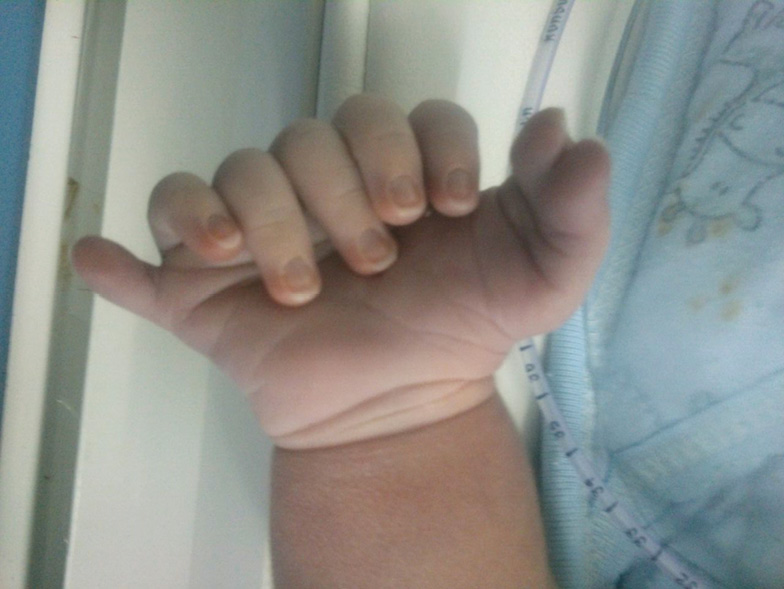
This newborn presented shortly after birth with multiple digital anomalies involving both hands and feet.
Major findings in this case include:
- Polysyndactyly consists of extra digits fused to adjacent ones both in soft tissue and bony components.
- Bilateral involvement: More pronounced on one side, consistent with asymmetric expression typical of OFD syndromes.
- Associated craniofacial features are a broad nasal bridge, hypertelorism, and oral anomalies compatible with OFD2.
- Radiographs confirmed duplications of phalanges and metacarpals, indicating true polysyndactyly rather than soft tissue syndactyly alone. Systemic work-up excluded other major organ anomalies.
Genetics and Pathophysiology
Mohr syndrome has an autosomal recessive mode of inheritance, and hence the inheritance is different from the X-linked OFD1 variant. The basic defect consists of abnormalities of cilia-related genes, which explains the overlapping features among the various orofaciodigital syndromes.
These ciliary dysfunctions result in disrupted embryonic patterning and limb morphogenesis that explain unusual combinations of craniofacial and skeletal findings.
Orthopedic Significance
While the craniofacial and oral abnormalities often feature most predominantly in early diagnostic considerations, orthopedic surgeons make a very important contribution to functional reconstruction and the correction of the limbs.
Key orthopedic concerns include:
- Functional impairment resulting from complex polysyndactyly
- Cosmetic deformities affecting psychosocial development
- Possible associated skeletal dysplasia that requires long-term follow-up
Our report emphasizes the need for early orthopedic review in such cases, preferably in conjunction with pediatric genetics and plastic surgery teams.
Management and Counseling
Management is largely multidisciplinary. Surgical correction of polysyndactyly is generally postponed until the infant is older and growth patterns are more predictable. Genetic counseling is important for the parents, especially in communities where consanguinity is common.
Long-term follow-up should be done for:
- Speech and feeding difficulties due to oral anomalies
- Skeletal growth patterns
- Motor milestones and limb function
Take-Home Message
Though rare, Mohr syndrome has distinct orthopedic implications that need greater emphasis in neonatal evaluation. The recognition of digital malformations may provide an early diagnostic clue and help in the timely conduct of a genetic work-up.
Cases like this remind the orthopedic surgeon of how often the hands and feet represent the story of a systemic syndrome-and how early collaboration among specialists is key to holistic care.
Further reading: Shrestha SK. Polysyndactyly and Limb Malformations in a Newborn with Mohr Syndrome (OFD2): A Rare Orthopedic Perspective. Pediatric Traumatology, Orthopaedics and Reconstructive Surgery. 2025;13(3):293-298. doi: 10.17816/PTORS687125

He is the section editor of Orthopedics in Epomedicine. He searches for and share simpler ways to make complicated medical topics simple. He also loves writing poetry, listening and playing music. He is currently pursuing Fellowship in Hip, Pelvi-acetabulum and Arthroplasty at B&B Hospital.