Skip to content
Epomedicine

Mnemonics, Simplified Concepts & Thoughts

Epomedicine

Mnemonics, Simplified Concepts & Thoughts

acyclovir

Acyclovir Post-exposure Prophylaxis for Varicella: Is it helpful?

Dr. Sulabh Kumar Shrestha, MS Orthopedics, Jun 11, 2019May 31, 2020

Dose: 80 mg/kg/day in 4 divided doses for 7 days; maximum 800 mg 4 times a day

Time to start prophylaxis: 7-10 days after exposure (late incubation period)

Indication: People without evidence of immunity and with contraindications for varicella vaccination (VZIg) 1 https://wwwnc.cdc.gov/travel/yellowbook/2018/infectious-diseases-related-to-travel/varicella-chickenpox
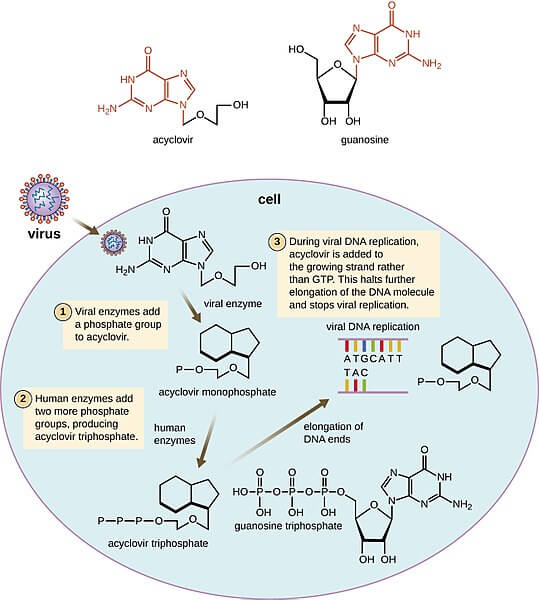
acyclovir mechanism
CNX OpenStax [CC BY 4.0], via Wikimedia Commons

Results from some studies

Among 27 children in the treatment group, only 7.4% developed the disease while 77% of control subjects developed clinical varicella and seroconversion was observed in 63% of the patients. 2Lin TY, Huang YC, Ning HC, Hsueh C. Oral acyclovir prophylaxis of varicella after intimate contact. Pediatr Infect Dis J. 1997 Dec;16(12):1162-5. PubMed PMID: 9427463.

Among 25 children in the treatment group, only 16% developed the disease while 100% of control subjects developed the disease. Seroconversion was observed in 85% of subjects. The incidence of fever and the severity of skin rashes were significantly lower in the treatment group. 3Postexposure Prophylaxis of Varicella in Family Contact by Oral AcyclovirYoshizo Asano, Tetsushi Yoshikawa, Sadao Suga, Ikuko Kobayashi, ToshihikoNakashima, Takehiko Yazaki, Takao Ozaki, Akira Yamada, Jiro Imanishi Pediatrics Aug 1993, 92 (2) 219-222

Controversy

Some author mentions that additional data about acyclovir prophylaxis is needed because of the potential interference with the host response, which may predispose to early recurrent infection or incomplete protection from subsequent exposures, and enhanced selection of resistant VZV. He recommends, following the patient closely and giving the drug immediately after the onset of symptoms. 4Principles and Practice of Pediatric Infectious Disease By Sarah S. Long, Larry K. Pickering, Charles G. Prober

dr. sulabh kumar shrestha
Dr. Sulabh Kumar Shrestha, MS Orthopedics

He is the section editor of Orthopedics in Epomedicine. He searches for and share simpler ways to make complicated medical topics simple. He also loves writing poetry, listening and playing music. He is currently pursuing Fellowship in Hip, Pelvi-acetabulum and Arthroplasty at B&B Hospital.

  • Facebook
  • Twitter
Blog DermatologyPediatricsPharmacology

Post navigation

Previous post
Next post

Related Posts

Blog

Understanding Overtime Violations and Legal Recovery Options

Jan 16, 2026Jan 16, 2026

Los Angeles, California, is a city driven by long hours, demanding schedules, and a workforce that keeps its industries moving day and night. From entertainment and hospitality to healthcare, logistics, and tech, many workers here routinely put in time beyond the standard workweek. Ambition and dedication fuel careers across the…

Read More
Blog

Tools to Prevent Foodborne Illness in Your Kitchen

Nov 3, 2024Nov 3, 2024

Let’s face it—nobody wants to deal with foodborne illness, especially when it could’ve been avoided with just a few small changes in the kitchen. The last thing anyone needs after a delicious home-cooked meal is a stomachache that ruins the day! But here’s the good news: you’ve got the power…

Read More
Blog medical support un mission

Levels of Medical Facilities in Peacekeeping Operations

Feb 23, 2018

Basic Level (Soldier level or Buddy-Aid) Immediate first-aid is provided by the nearest person-on-site (all personnel operating away from medical care must undergo standard first-aid training and carry personal and vehicular first-aid kits). Level 1 (Mobile/Battalion level) Provides immediate life-saving and resuscitation capabilities along with routine clinical care. Staffing: ATLS…

Read More

Leave a Reply Cancel reply

Your email address will not be published. Required fields are marked *

This site uses Akismet to reduce spam. Learn how your comment data is processed.

Pre-clinical (Basic Sciences)

Anatomy

Biochemistry

Community medicine (PSM)

Embryology

Microbiology

Pathology

Pharmacology

Physiology

Clinical Sciences

Anesthesia

Dermatology

Emergency medicine

Forensic

Internal medicine

Gynecology & Obstetrics

Oncology

Ophthalmology

Orthopedics

Otorhinolaryngology (ENT)

Pediatrics

Psychiatry

Radiology

Surgery

RSS Ask Epomedicine

  • What to study for Clinical examination in Orthopedics?
  • What is the mechanism of AVNRT?

Epomedicine weekly

  • About Epomedicine
  • Contact Us
  • Author Guidelines
  • Submit Article
  • Editorial Board
  • USMLE
  • MRCS
  • Thesis
©2026 Epomedicine | WordPress Theme by SuperbThemes