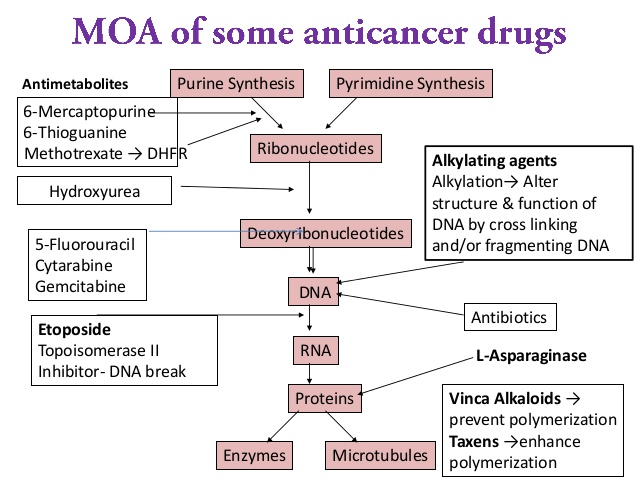
Master the knowledge of clinically relevant cell cycle to understand the principles of chemotherapy. Tumors that are highly responsive to chemotherapeutic agents (e.g., testicular cancer, lymphomas) tend to have a very rapid doubling time compared to tumors that are less responsive to chemotherapy (e.g., pancreatic and prostate cancers). The tumor doubling time of metastases…
Category: PGMEE, MRCS, USMLE, MBBS, MD/MS
Medical knowledge in bullet points with understandable language, simplified images and graspable mnemonics.
PGMEE, MRCS, USMLE, MBBS, MD/MS
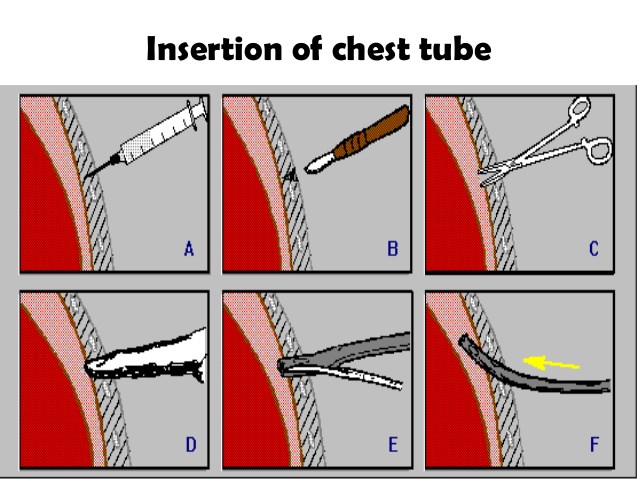
Chest Tube Insertion or Tube Thoracostomy
Indications of chest tube insertion Pneumothorax: In any ventilated patient (positive airway pressure will force air into the pleural cavity and produce tension pneumothorax) Tension pneumothorax after initial needle thoracocentesis Persistent or Recurrent pneumothorax after simple aspiration Large secondary spontaneous pneumothorax in patients >50 years Pleural effusion: Malignant pleural effusion…
PGMEE, MRCS, USMLE, MBBS, MD/MS
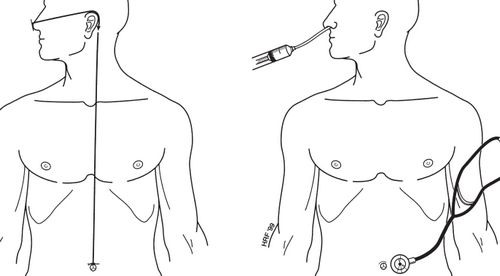
NG tube insertion
Indications Gastric decompression Gavage (feeding) Gastric lavage (irrigation or dilution of gastric contents) Sampling of the gastric contents for analysis Sometimes used to instil air into the stomach to detect a gastric perforation on erect CXR Contraindications Basilar skull fractures (Risk of NG reaching brain) Facial fractures (risk of cribiform…
PGMEE, MRCS, USMLE, MBBS, MD/MS

Aspirin and Clopidegrol : Perioperative Guidelines
The average lifespan of platelets is 7 to 10 days. Aspirin and Clopidegrol inhibits platelets for around 21 days. Hence, when these agents are stopped 7 days before the surgery, it allows 33% regeneration of platelets. Stents and coronary lesions act as unstable plaque until they are completely covered by…
PGMEE, MRCS, USMLE, MBBS, MD/MS
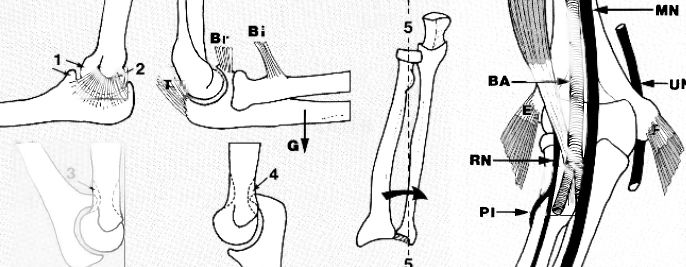
Pediatric Lateral Condyle Humerus Fracture : Review
A) Epidemiology: B) Mechanism of Injury: C) Classifications: a. Milch: Fracture line based – b. Jakob and Weiss: Displacement and articular congruency based – Modified Weiss classification: No need for arthrogram1. Type I: <2 mm displacement2. Type II: 2-4 mm displacement 3. Type III: >4 mm displacement (displacement of >4…
PGMEE, MRCS, USMLE, MBBS, MD/MS
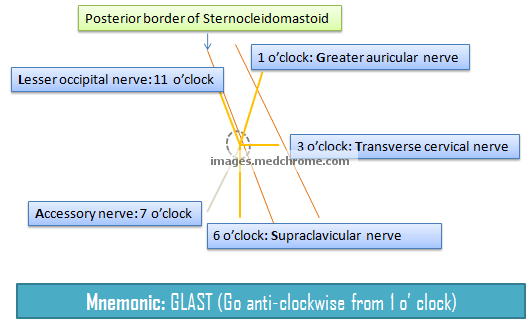
Superficial Cervical Plexus Block : Mnemonic
This is a visual mnemonic for the nerve arrangement of superficial cervical cutaneous branches of cervical plexus. This mnemonic was created only for the ease to remember and may not resemble exact anatomy. The site of injection for superior cervical plexus nerve block is the midpoint of posterior border of…
PGMEE, MRCS, USMLE, MBBS, MD/MS
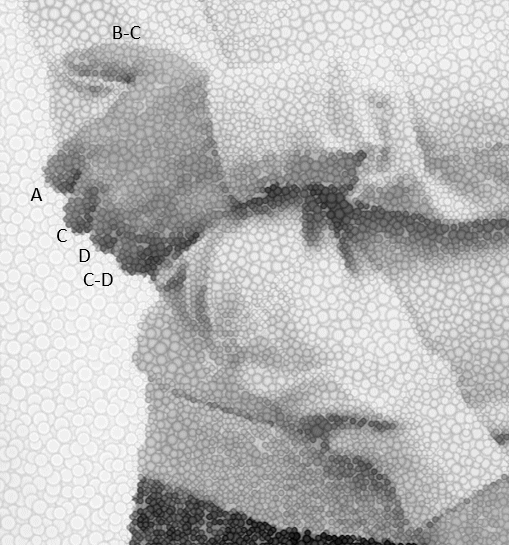
Forearm muscles : Tricks to remember
Anterior Forearm (Compartment) Muscles Total muscles: 8 (4 superficial + 1 intermediate + 3 deep) Mnemonic: Do it yourself as shown in the figure below! Place your thenar/hypothenar eminence over medial epicondyle and fan out 5 fingers with thumb resting below the 4 fingers. The 4 fingers represent superficial flexors…
PGMEE, MRCS, USMLE, MBBS, MD/MS
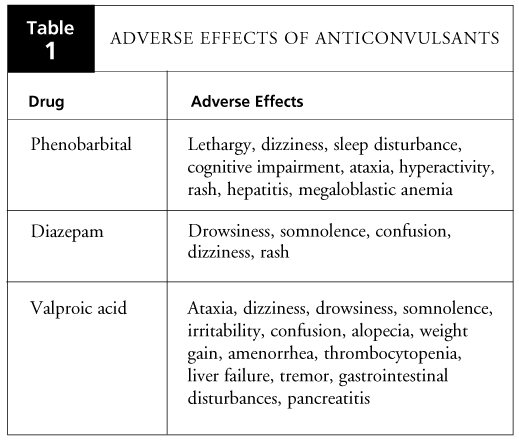
Febrile Seizure : Clinical approach
A) General consideration: Febrile seizures are seizures during fever occuring between 6 months and 5 years of age in absence of: CNS infections Abnormal neurologic findings Types of febrile seizure: Simple febrile seizure: Solitary Brief (< 15 minutes) Within 24 hours of onset of fever Generalized Tonic Clonic Seizure (GTCS)…